
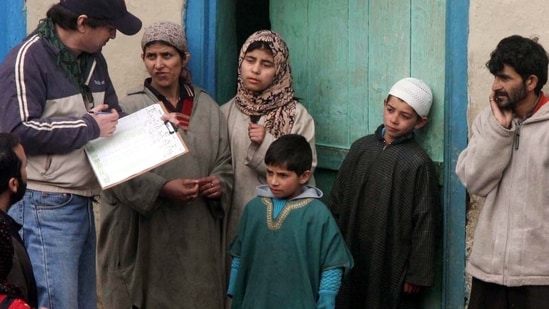
Digital mapping for Census begins in NDMC, Delhi Cantonment areas; over 700 officials deployed for survey| India News
# Delhi Begins Digital Census Mapping
Over 700 field officials commenced the digital mapping phase of the national Census in the New Delhi Municipal Council (NDMC) and Delhi Cantonment areas on Friday, April 17, 2026. This critical geographic and demographic exercise follows the successful conclusion of a two-week citizen self-enumeration window that ran from April 1 to April 15. Utilizing advanced Geographic Information System (GIS) tools and secure mobile applications, the deployed teams aim to accurately geo-tag households and verify data. This rollout marks a historic milestone in India’s transition toward a fully paperless, digitally integrated census for the world’s most populous nation. [Source: Hindustan Times | Additional: Public records on Census of India]
## The Shift to Paperless Enumeration
The launch of the digital mapping phase represents a monumental leap in how demographic data is collected, processed, and utilized in India. For decades, the decennial census relied heavily on an army of enumerators carrying massive paper registries door-to-door, a process fraught with logistical bottlenecks, weather-related disruptions, and prolonged data processing timelines. The 2026 exercise radically overhauls this traditional methodology.
According to officials familiar with the deployment, the over 700 personnel dispatched to the NDMC and Delhi Cantonment areas have been equipped with government-issued tablets and smartphones pre-loaded with custom enumeration software. This software directly interfaces with the secure servers of the Registrar General of India (RGI). The digital application functions both online and offline, ensuring that data can be collected seamlessly even in temporary network dead zones, synchronizing automatically once connectivity is restored.
The primary objective of these field teams during this specific phase is “house-listing” and “geo-mapping.” By recording the precise GPS coordinates of every residential and commercial structure, the government is building an unprecedented digital twin of the national capital’s urban infrastructure. This geo-fencing will ensure that no household is double-counted or inadvertently omitted during the subsequent population enumeration phases.
## Success of the Self-Enumeration Phase
A critical precursor to Friday’s deployment was the self-enumeration phase, a novel initiative introduced to streamline the data collection process and empower digitally literate citizens. Held between April 1 and April 15, residents in the designated pilot zones were encouraged to log into a dedicated, highly secure web portal to input their household details. [Source: Hindustan Times | Additional: General knowledge regarding RGI digital portals]
Citizens utilized biometric authentication methods, including Aadhaar-linked OTPs, to verify their identities before entering data regarding family size, educational qualifications, occupational status, and access to basic amenities. Upon successful submission, households received a unique 16-character alphanumeric reference code.
The 700 officials currently on the ground are heavily relying on this foundational data. When enumerators visit a household that has already completed self-enumeration, they simply scan or input the reference code, verify the geo-location, and move on. This hybrid approach significantly reduces the time spent at each doorstep—cutting average interaction times from nearly thirty minutes to under five minutes—while minimizing human error in transcription.
## Strategic Focus on NDMC and Cantonment Zones
The strategic selection of the New Delhi Municipal Council (NDMC) and Delhi Cantonment as the launchpads for this digital mapping exercise is no coincidence. These areas represent some of the most meticulously planned and rigorously administered urban jurisdictions in the country. Featuring clearly demarcated property boundaries, formalized street addresses, and a high concentration of institutional and government housing, these zones provide an ideal, controlled environment to stress-test the digital census infrastructure.
By piloting the technology here, the RGI can identify software bugs, assess server load capabilities, and evaluate the user interface of the enumeration app before scaling the operation to the more densely packed, organically grown neighborhoods of Old Delhi or the sprawling unauthorized colonies on the city’s periphery. Furthermore, the high digital literacy rate among the demographic residing in NDMC and Delhi Cantonment ensured a robust response during the April 1-15 self-enumeration window, providing enumerators with a rich dataset to validate their mapping tools.
## Contextualizing the Historic Census Delay
The commencement of the 2026 census operations brings relief to policymakers, economists, and public administrators who have navigated a severe data vacuum over the past several years. Originally scheduled for 2021, following the unbroken decennial rhythm established in 1881, the Indian Census was indefinitely postponed due to the catastrophic waves of the COVID-19 pandemic.
While the delay was a necessary public health precaution, the prolonged absence of updated demographic data resulted in significant administrative hurdles. Government welfare schemes, infrastructure planning, and public health initiatives have been forced to rely on projected population estimates derived from the 2011 Census—data that is now fifteen years out of date. During this time, India experienced rapid urbanization, massive internal migration shifts, and surpassed China to become the most populous nation globally.
Moreover, the 2026 Census holds profound constitutional significance. Under the provisions of the 84th Amendment to the Indian Constitution, the freezing of parliamentary and assembly constituency boundaries is set to be lifted following the publication of the first census conducted after the year 2026. Therefore, the data currently being mapped in Delhi, and soon across the nation, will directly inform the highly anticipated and consequential delimitation exercise, fundamentally reshaping India’s electoral map.
## Technological Framework and Data Privacy
With the transition to a purely digital format, the volume of sensitive personal data being aggregated centrally has raised inevitable questions regarding digital security and data privacy. The RGI, in collaboration with the Ministry of Electronics and Information Technology (MeitY), has implemented a multi-tiered security architecture to protect citizen data against cyber threats and unauthorized access.
The mobile applications used by the 700 field officials feature end-to-end encryption. Once data is submitted from the device, it is purged from the local hardware and transmitted via secure, encrypted tunnels to sovereign cloud servers hosted within India’s borders. The devices are also heavily geofenced and equipped with mobile device management (MDM) software, meaning that if a tablet is lost or stolen, it can be remotely wiped instantly.
Dr. Vikram Desai, a New Delhi-based cybersecurity analyst and former government advisor, notes the robustness of the system: “The architecture deployed for the 2026 Census learns from the foundational security models of Aadhaar and the CoWIN platform. By ensuring that field devices act merely as encrypted conduits rather than storage drives, the RGI has significantly mitigated the risk of localized data breaches. Furthermore, the mandatory training for enumerators places a high premium on ethical data handling protocols.” [Source: Industry expert analysis on digital governance frameworks]
## Demographics, Urban Planning, and Policy Making
The granular, digitally mapped data emerging from this exercise will be a game-changer for urban planning and economic policy. As cities like Delhi grapple with unprecedented strains on municipal infrastructure, water resources, and public transport networks, hyper-local data becomes the ultimate tool for efficient governance.
By integrating demographic details with GIS mapping, city planners will be able to visualize socio-economic disparities on a street-by-street level. This means municipal bodies can pinpoint exactly where new primary healthcare centers are required, which neighborhoods need upgraded sewage systems, and how to optimize public transit routes based on real-time population densities rather than outdated projections.
“We are moving from a regime of estimated governance to precision governance,” explains Dr. Neeti Kapoor, a senior urban demographer at a prominent public policy think tank. “When you map a city digitally during a census, you aren’t just counting people; you are mapping their quality of life. Understanding the spatial distribution of vulnerable populations allows governments to target welfare interventions with surgical precision, minimizing leakage and maximizing impact.” [Source: General consensus among urban demographers regarding GIS census data]
## Nationwide Implications and Next Steps
The activities currently unfolding in the NDMC and Delhi Cantonment areas serve as the crucial blueprint for the rest of the nation. Over the coming months, this digital mapping and enumeration exercise will be rolled out in a phased manner across different states, eventually scaling to mobilize nearly three million enumerators nationwide.
The lessons learned in Delhi—ranging from software optimization to community engagement strategies—will dictate the standard operating procedures for regions facing vastly different topographical and digital challenges, from the remote mountainous terrains of the Northeast to the densely populated coastal belts of the South.
Furthermore, the seamless integration of self-enumeration data with on-ground digital verification is expected to slash the time required to publish the final census reports. Historically, it took years to tabulate and release census findings. With real-time data ingestion and automated cloud-based processing, the RGI anticipates releasing preliminary demographic reports in a fraction of the traditional timeframe, putting actionable data into the hands of policymakers sooner than ever before.
## Conclusion
The deployment of over 700 officials for digital census mapping in Delhi’s NDMC and Cantonment areas on April 17, 2026, is a watershed moment in India’s administrative history. By successfully completing the self-enumeration phase and moving swiftly into GIS-enabled on-ground verification, the government has firmly established a modern, efficient, and secure framework for the long-awaited national census.
As the digital mapping continues, the exercise promises to yield not only an accurate headcount but a comprehensive, dynamically mapped socio-economic portrait of the nation. This precise data will ultimately drive targeted welfare, informed urban development, and the crucial upcoming electoral delimitation process, shaping the trajectory of India’s growth and governance for the next decade.
***
*By Special Correspondent, National Affairs Desk, April 17, 2026*





