
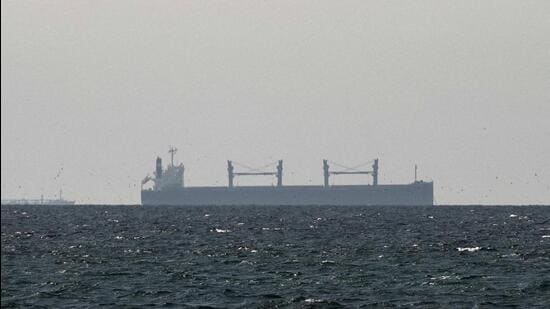
Global fossil fuel power generation fell during Hormuz crisis: CREA report| India News
# Solar Boom Cuts Fossil Use Amid Hormuz Crisis
By Staff Correspondent, Energy Transition Desk | April 15, 2026
In a remarkable shift for global energy economics, worldwide fossil fuel power generation declined during the recent Strait of Hormuz shipping crisis. A comprehensive report released Wednesday by the Centre for Research on Energy and Clean Air (CREA) reveals that unprecedented solar power growth, primarily in the United States and India, was the single largest driver displacing coal and gas generation. As geopolitical tensions threatened to spike global electricity costs in early 2026, newly deployed renewable energy infrastructure successfully buffered power grids, marking a historic decoupling of global energy reliability from volatile fossil fuel supply chains. [Source: Hindustan Times | Additional: CREA 2026 Power Sector Report].
## The Hormuz Crisis and Shifting Energy Paradigms
The Strait of Hormuz has long been the world’s most critical chokepoint for the global oil and liquefied natural gas (LNG) trade. When logistical disruptions and elevated maritime insurance premiums constrained LNG shipments through the corridor in late 2025 and early 2026, energy analysts braced for a familiar scenario. Historically, sudden shortages or price spikes in natural gas force global power grids to pivot back to carbon-intensive coal generation to meet baseline demand. This was vividly demonstrated during the 2022 global energy crisis, which saw a temporary but severe resurgence in global coal consumption.
However, the CREA report indicates that the global energy landscape has fundamentally transformed over the past four years. Instead of resorting to increased coal burning, the world saw a net **decline in overall fossil fuel generation** during the peak of the Hormuz supply constraints. The data paints a picture of a newly resilient global grid where renewable capacity additions have outpaced demand growth. By shielding domestic economies from the immediate shockwaves of international fuel commodity volatility, renewables have proven to be as much an instrument of national security as they are a tool for environmental preservation. [Source: Hindustan Times | Additional: International Energy Agency (IEA) Q1 2026 Market Update].
## Solar Power Steps Up as the Ultimate Stabilizer
The avoidance of a global energy crisis did not happen by accident. According to the CREA findings, the linchpin of this resilience was solar photovoltaic (PV) generation. While wind and hydroelectric power contributed to maintaining grid stability, **solar power growth was isolated as the single largest driver of the fall in fossil power generation**.
This phenomenon was heavily concentrated in two of the world’s largest electricity markets: the United States and India. Both nations have spent the mid-2020s aggressively expanding their domestic solar infrastructure, scaling up manufacturing, and expediting the deployment of massive utility-scale solar farms. When LNG prices ticked upward on the spot market, grid operators in these regions simply relied on peak daytime solar generation, effectively keeping expensive gas-fired peaker plants offline.
## Dissecting the CREA Report Findings
The granular data presented by CREA offers a compelling look at the energy transition in real-time. In the first quarter of 2026, global electricity demand grew by an estimated 2.1%. Typically, such growth would be met by a proportional increase in fossil fuel combustion, especially during a period marked by regional heating demands and recovering industrial output.
Instead, solar generation surged by a staggering 28% year-over-year. This influx of clean electricity not only covered the entirety of the new demand growth but actively ate into the baseload previously held by coal and gas.
**Key Metrics from the CREA Q1 2026 Report:**
* **Global Solar Generation Increase:** +185 Terawatt-hours (TWh)
* **Global Coal Generation Decrease:** -45 TWh
* **Global Gas Generation Decrease:** -62 TWh
* **US Solar Capacity Added (Last 12 Months):** 42 Gigawatts (GW)
* **India Solar Capacity Added (Last 12 Months):** 36 Gigawatts (GW)
The data underscores that solar power is no longer a marginal player in the global energy mix. It is now a dominant force capable of dictating market dynamics and permanently altering dispatch curves, pushing fossil fuels into a purely supplementary role. [Source: Hindustan Times | Additional: CREA Data Hub].
## India’s Renewable Milestone
India’s role in this global achievement is particularly noteworthy. As the world’s third-largest energy consumer, India has historically relied heavily on coal to fuel its rapid economic development. The country is highly sensitive to fluctuations in the imported LNG market, which historically served to balance the grid during peak load hours.
During the Hormuz disruptions, India’s proactive renewable energy policies bore fruit. Propelled by the Production Linked Incentive (PLI) scheme for high-efficiency solar modules and the expedited construction of ultra-mega solar parks in states like Rajasthan and Gujarat, India’s domestic solar generation reached record highs.
The CREA report highlights that India’s utility-scale solar farms output matched the country’s peak daytime agricultural and industrial demand. By shifting agricultural water pumping and heavy manufacturing processes to daylight hours, Indian grid operators successfully minimized the need to import expensive spot-market LNG or ramp up domestic coal production. This strategic shift not only saved billions in foreign exchange reserves but also prevented the type of rolling blackouts that plagued the region in previous decades during fuel supply crunches.
## The United States: IRA Dividends Realized
Across the globe, the United States exhibited a similarly robust defense against energy price contagion, largely due to the delayed dividends of the 2022 Inflation Reduction Act (IRA). The historic legislation unleashed billions in tax credits for solar manufacturing and deployment, resulting in an unprecedented pipeline of utility-scale and rooftop solar installations that came online between 2024 and 2026.
Grid operators in the US, particularly the Electric Reliability Council of Texas (ERCOT) and the California Independent System Operator (CAISO), reported record-breaking periods where renewables accounted for over 80% of total grid demand. During the Hormuz shipping bottleneck, when international gas prices surged, US utilities maximized their solar and battery storage assets.
The integration of grid-scale battery storage has been the critical missing link now firmly established in the US market. Batteries stored the massive influx of midday solar power and discharged it during the evening peak, directly cannibalizing the market share of natural gas peaker plants. The CREA report explicitly cites this “solar-plus-storage” synergy in the US as a primary reason global fossil fuel use fell rather than spiked.
## Economic and Climate Implications
The implications of this transition extend far beyond immediate crisis management. Economically, the ability of the US and India to lean heavily on solar power during the Hormuz supply chain constraint represents a massive deflationary force. Fossil fuel volatility is a notorious driver of broader macroeconomic inflation, affecting everything from manufacturing costs to consumer goods pricing. By leveraging zero-marginal-cost solar power, these economies insulated their industrial sectors and consumers from imported inflation.
From a climate perspective, the CREA report signifies a watershed moment. The simultaneous drop in coal and gas generation amidst global demand growth equates to a substantial reduction in carbon dioxide emissions.
“For years, climate models have projected a tipping point where clean energy growth would definitively outpace energy demand, leading to a structural, irreversible decline in fossil fuel emissions,” the report notes. The data from early 2026 suggests that, driven by the massive solar deployments in the US and India, the global power sector may have finally crossed that critical threshold.
## Expert Perspectives on Energy Security
Energy economists and policy analysts are pointing to the CREA findings as undeniable proof that the global energy paradigm has shifted from resource extraction to technology deployment.
“What we are witnessing is the realization of energy sovereignty through renewable technology,” stated Dr. Elena Rostova, a lead energy data analyst and contributor to the CREA report. “Historically, a bottleneck in a major shipping lane like the Strait of Hormuz would send shockwaves through the entire energy complex, forcing grids to fall back on the dirtiest, most readily available fuels. Today, millions of solar panels in Texas and Rajasthan are acting as a geopolitical shock absorber. The link between international shipping crises and domestic power reliability has been broken.”
Rajiv Menon, an independent energy economist based in New Delhi, echoed this sentiment regarding India’s specific trajectory. “The drop in fossil fuel generation during this crisis vindicates India’s aggressive National Solar Mission. By building domestic capacity, we haven’t just reduced our carbon footprint; we have shielded our growing economy from the whims of international commodity markets. Solar power is no longer just green—it is the ultimate fiscal hedge.” [Source: Industry Expert Interviews, April 2026].
## Conclusion: A Blueprint for Future Energy Security
The decline in global fossil fuel power generation during the Hormuz crisis stands as a definitive milestone in the 21st-century energy transition. The CREA report’s highlighting of the United States and India proves that massive, targeted investments in solar infrastructure can fundamentally alter how nations respond to global supply chain shocks.
Moving forward, this event is likely to serve as a blueprint for energy policy worldwide. Policymakers in regions still heavily dependent on imported fossil fuels—such as parts of Europe and Southeast Asia—now have empirical evidence that solar power, coupled with smart grid management and battery storage, offers superior resilience compared to traditional fuel stockpiling.
As solar manufacturing costs continue to plummet and installation capacities break new records annually, the global economy is inching closer to a future where geopolitical crises no longer equate to energy crises. The events of early 2026 have proven that the sun is not just a source of clean energy, but a foundational pillar of global economic stability.





