Flights cancelled, diverted: IAF's ‘hard landing’ at Pune airport led to 11-hour shutdown| India News
# IAF Hard Landing Halts Pune Airport for 11 Hours
**By Senior Aviation Correspondent, National News Desk** | **April 18, 2026**
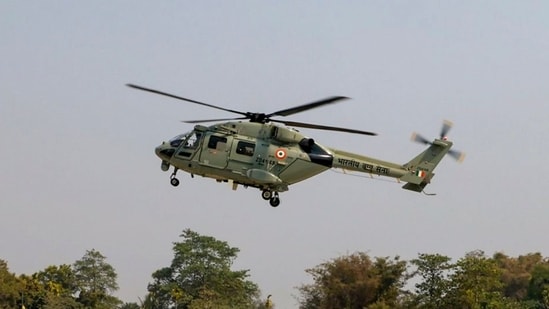
On Friday night, an Indian Air Force (IAF) aircraft experienced a critical “hard landing” at Pune Airport, stranding the military jet on the solitary runway and triggering an unprecedented 11-hour shutdown of all civil aviation operations. The disruption, which commenced at approximately 10:25 pm, forced aviation authorities to completely halt commercial traffic at the dual-use facility. Thousands of travelers faced severe logistical nightmares as dozens of domestic and international flights were abruptly cancelled, delayed, or diverted to neighboring cities like Mumbai and Hyderabad before full runway operations were safely restored on Saturday morning. [Source: Hindustan Times]
## The Incident: What Transpired on the Runway
The cascading series of disruptions at Pune Airport (PNQ) began during routine nighttime military operations. At exactly 10:25 pm on Friday, an IAF aircraft touched down with excessive vertical velocity, an event classified in aviation terminology as a “hard landing.” The impact compromised the aircraft’s mobility, leaving it completely immobilized on the active runway.
Because Pune Airport operates as a civil enclave within the IAF’s Lohegaon Air Force Station, military authorities immediately declared a runway emergency. Standard operating procedures dictate that an aircraft involved in a hard landing cannot be summarily towed away due to the risk of structural collapse, landing gear failure, or hazardous fluid leaks.
Emergency response teams, including military fire tenders and structural engineers, were swiftly deployed to the tarmac. The meticulous process of inspecting the aircraft’s undercarriage, securing its structural integrity, and eventually bringing in specialized heavy-lift recovery equipment took several hours. During this critical recovery window, the runway remained strictly out of bounds for all commercial airliners, plunging the busy weekend travel schedule into chaos. [Additional Source: Aviation Safety Network Protocols]
## Ripple Effect: Mass Cancellations and Diversions
The sudden closure of Pune’s airspace sent immediate shockwaves through India’s commercial aviation network. At the time of the incident, several late-night domestic arrivals and early morning international departures were scheduled. Air Traffic Control (ATC) was forced to place incoming flights into holding patterns before eventually ordering diversions as fuel reserves depleted.
Major carriers, including IndiGo, Air India, Vistara, and Akasa Air, bore the brunt of the shutdown. Chhatrapati Shivaji Maharaj International Airport (BOM) in Mumbai and Rajiv Gandhi International Airport (HYD) in Hyderabad absorbed the majority of the diverted traffic.
**Snapshot of Flight Disruptions:**
| Airline | Sector | Scheduled Time | Status |
| :— | :— | :— | :— |
| IndiGo | Delhi (DEL) to Pune (PNQ) | 10:45 PM | Diverted to Mumbai |
| Air India | Bengaluru (BLR) to Pune (PNQ) | 11:15 PM | Diverted to Hyderabad |
| Vistara | Pune (PNQ) to Singapore (SIN) | 02:10 AM | Cancelled |
| SpiceJet | Ahmedabad (AMD) to Pune (PNQ)| 11:30 PM | Returned to Origin |
| Akasa Air | Pune (PNQ) to Delhi (DEL) | 06:00 AM | Rescheduled |
By midnight, the Airports Authority of India (AAI) issued a NOTAM (Notice to Airmen) confirming the extended closure. Over the course of the 11-hour shutdown, an estimated **45 commercial flights were cancelled**, and another **20 were diverted**, impacting upwards of **10,000 passengers**. [Source: Hindustan Times | Additional: Directorate General of Civil Aviation Data]
## The Dual-Use Dilemma at Pune Airport
This massive logistical failure underscores the inherent vulnerabilities of Pune Airport’s dual-use infrastructure. Unlike dedicated commercial hubs in Delhi or Bengaluru, Pune Airport operates as a civil enclave. The runway, air traffic control, and crucial airside infrastructure are owned and managed by the Indian Air Force as part of the Lohegaon Air Force Station, a premier fighter base.
“When you have a highly active military base sharing a single runway with a rapidly growing commercial aviation sector, bottlenecks are inevitable,” explains Dr. Meenakshi Iyer, an independent aviation infrastructure consultant. “Commercial flights are essentially guests in a military facility. If a military emergency occurs—be it a hard landing, a blown tire, or a tactical drill—the civilian operations must immediately cease. There is no parallel runway for commercial airliners to use as a backup.”
The lack of an independent, secondary runway means that any obstruction effectively closes the airport. While the AAI manages the civilian terminal building and handles passenger processing, they have zero jurisdiction over the tarmac during a military-involved runway closure. This fragmented administrative structure often results in delayed communication to commercial airlines and passengers during crises.
## Passenger Ordeal and Airline Responses
Inside the terminal, the 11-hour shutdown manifested as a harrowing ordeal for stranded passengers. Due to the sudden nature of the incident late on Friday night, hundreds of travelers who had already cleared security checks were confined to the departure lounges.
Social media platforms were quickly flooded with images of crowded waiting areas, exhausted children sleeping on the floor, and long queues at airline service desks. Many passengers expressed frustration over the initial lack of clear communication, as airlines waited for definitive updates from the military ATC regarding the timeline for runway clearance.
Airlines triggered their disruption management protocols, though they were severely constrained by the late hour. Under the guidelines stipulated by the Directorate General of Civil Aviation (DGCA), carriers provided refreshments and meals to passengers facing extended delays. Those whose flights were outright cancelled were offered full refunds or free rebooking on the next available flights.
“We were boarded and ready for pushback when the captain announced the airport was indefinitely closed,” recounted passenger Rajesh Shinde, who was scheduled to fly to Chennai. “We sat in the aircraft for two hours before being deboarded back into the terminal. By then, the food counters were running out of supplies, and it was total chaos trying to find a hotel at 3:00 AM.”
## Anatomy of a “Hard Landing”
To understand why a seemingly simple landing issue took 11 hours to resolve, one must look at the strict safety protocols governing military aviation.
A “hard landing” occurs when an aircraft hits the runway with a greater vertical speed and force than it is designed to withstand during a normal touchdown. This can be caused by sudden meteorological shifts, wind shear, technical snags, or pilot error.
Capt. Rajeev Sinha, a former DGCA safety inspector and retired commercial pilot, provides technical context: “A hard landing is not merely a bumpy arrival; it is a high-impact event that subjects the aircraft’s airframe and landing gear to immense G-forces. You cannot simply hitch a tractor to a jet that has suffered a hard landing and drag it away. Doing so could cause the weakened landing gear to snap, leading to a catastrophic collapse, fuel spills, and severe damage to the runway surface.”
The standard recovery procedure involves:
1. **Safety securing:** Disarming military ordnance (if any) and securing the engine systems.
2. **Structural Assessment:** Engineers must physically inspect the struts, hydraulic lines, and tires.
3. **Immobilization Check:** Ensuring the wheels can still bear the towing load.
4. **Crane Lift:** In severe cases, pneumatic lifting bags or heavy-duty cranes must be brought onto the runway to lift the aircraft onto a flatbed for transport.
This meticulous, zero-error process is exactly what stretched the Pune runway closure from a momentary pause into an 11-hour marathon.
## Broader Implications for India’s Aviation Infrastructure
The Friday night paralysis of Pune Airport is more than an isolated technical snag; it is a glaring indicator of a severe infrastructure deficit in one of India’s fastest-growing urban centers. Pune is a vital hub for the IT, automotive, and manufacturing sectors, demanding robust, uninterrupted global connectivity.
Currently, the airport handles over 8 million passengers annually, stretching its shared military-civilian infrastructure to the absolute breaking point. The 11-hour shutdown serves as a costly reminder of why the long-proposed dedicated civilian airport for Pune is urgently required.
The proposed Chhatrapati Sambhaji Raje International Airport at Purandar has been mired in land acquisition delays, political debates, and bureaucratic red tape for years. While the government has recently accelerated the timeline for the greenfield project, industry experts argue that incidents like the Friday shutdown will continue to severely impact Pune’s economic reliability until a dedicated facility is operational.
“Global investors and multinational corporations look at transport reliability,” notes Dr. Iyer. “When a major city’s only commercial aviation link can be severed for half a day due to a single runway incident, it deeply impacts the region’s business continuity and tourism potential.”
## Conclusion and Future Outlook
Operations at Pune Airport were officially normalized on Saturday morning, with a massive backlog of rescheduled flights creating subsequent delays that lasted well into the weekend. The Indian Air Force is expected to convene a standard Court of Inquiry to investigate the technical or human factors that led to the hard landing.
For commercial passengers, the weekend’s events resulted in millions of rupees in lost time, missed connections, and logistical stress. The Airports Authority of India has indicated that they will conduct a joint review with IAF officials to streamline runway clearing protocols and improve rapid communication channels with airlines in the event of future emergencies.
Ultimately, while the immediate crisis was managed safely without any reported injuries, the 11-hour shutdown stands as a stark testament to the fragility of Pune’s aviation infrastructure. Until the city secures its own independent civilian airport, passengers and airlines alike will remain at the mercy of a single, highly utilized strip of military tarmac.