
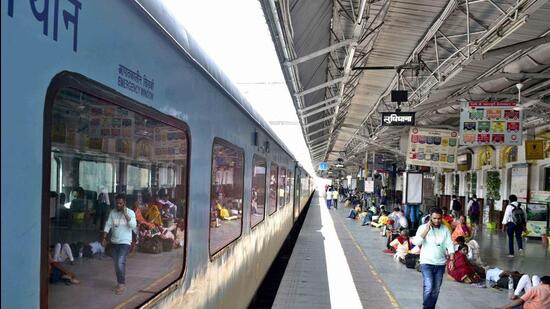
Indian Railways to upgrade 100 Shatabdi, Jan Shatabdi trains
# Railways to Upgrade 100 Shatabdi Trains
**By Special Correspondent, Rail and Transit Desk**
**April 27, 2026**
In a major leap toward enhancing passenger comfort, Indian Railways announced on April 27, 2026, a comprehensive modernization drive to systematically upgrade 100 Shatabdi and Jan Shatabdi express trains across its nationwide network. The extensive renovation project prioritizes critical interior enhancements, specifically targeting the refurbishment of washrooms, automated covering doors, advanced engagement locks, modernized flushing systems, and upgraded drainage mechanisms. Driven by rising commuter expectations and the premium benchmark set by the Vande Bharat fleet, this initiative aims to revitalize the legacy premium carriers. By focusing on fundamental hygiene and passenger amenities, the Ministry of Railways promises to elevate the daily transit experience for millions of intercity travelers. [Source: Hindustan Times].
## The Scope of the Modernization Drive
The Shatabdi and Jan Shatabdi trains have served as the backbone of India’s premium daytime intercity travel for decades. However, constant usage and the passage of time have led to significant wear and tear, particularly in the coach interiors. The newly announced upgrade program represents a targeted intervention by Indian Railways to address the most frequent passenger grievances: sanitation and functional hardware.
According to the initial blueprint, the refurbishment will involve stripping down the existing lavatory modules and replacing them with highly durable, modular units. The exercise goes far beyond cosmetic touch-ups. It includes the installation of high-quality covering doors with smooth gliding mechanisms, replacing the heavy and often jamming traditional doors. Furthermore, the introduction of robust engagement locks ensures privacy and safety, addressing a common complaint among female passengers and families traveling on these routes. [Source: Hindustan Times | Additional: Railway Board Directives 2026].
**Key focus areas of the upgrade include:**
* **Modular Washrooms:** Transitioning to aircraft-style modular toilets that are easier to clean and maintain.
* **Hardware Overhaul:** Implementation of tamper-proof engagement locks and ergonomically designed covering doors.
* **Plumbing Resilience:** Installation of high-grade washbasins with sensor-based or pressurized tap fittings to conserve water.
* **Drainage Systems:** Complete redesign of the floor drainage to prevent waterlogging, a persistent issue in older LHB (Linke Hofmann Busch) coaches.
## Addressing the Sanitation Challenge
Historically, maintaining high standards of hygiene on long-distance and heavily patronized intercity trains has been a monumental challenge for Indian Railways. The continuous influx of passengers during a six-to-eight-hour journey puts immense pressure on onboard sanitation systems. The current initiative tackles this issue head-on by overhauling the flushing and drainage systems.
The traditional bio-toilets, while environmentally friendly, have frequently suffered from choking issues due to improper disposal of waste by passengers. The 2026 upgrade integrates upgraded vacuum flushing systems—similar to those used in commercial aviation and the Vande Bharat Express. This system uses minimal water and high suction pressure, drastically reducing the chances of blockages and foul odors.
“Sanitation is the primary metric by which a passenger judges the quality of a train journey,” notes Dr. Manish Agarwal, an independent transport analyst and rail infrastructure expert. “By retrofitting these 100 Shatabdi and Jan Shatabdi trains with vacuum evacuation and improved drainage, Indian Railways is practically adding another decade of premium lifespan to these coaches. It is a highly cost-effective way to boost customer satisfaction without manufacturing entirely new trainsets.” [Source: Transport Sector Expert Analysis].
## Shatabdi vs. Vande Bharat: Bridging the Gap
When the Shatabdi Express was first introduced in 1988 by the then Railway Minister Madhavrao Scindia, it revolutionized Indian train travel with its fully air-conditioned coaches, complimentary catering, and high speeds. Fast forward to 2026, the Vande Bharat Express has become the new flagship of Indian Railways. The rapid proliferation of Vande Bharat trains inadvertently highlighted the aging interiors of the Shatabdi fleet.
This massive upgrade exercise is fundamentally a strategic move to bridge the gap between the legacy premium trains and the modern standard. Indian Railways recognizes that while Vande Bharat caters to a specific premium segment, Shatabdi and Jan Shatabdi (which offers both AC and non-AC seating) remain critical for millions of daily commuters, business travelers, and tourists.
### Comparative Look: Legacy LHB Coaches vs. Upgraded Shatabdi
| Feature | Pre-2026 Shatabdi Coaches | Upgraded Shatabdi Coaches (2026 Target) |
| :— | :— | :— |
| **Flushing System** | Gravity-based Bio-toilets | Advanced Vacuum Flushing Systems |
| **Washroom Floors** | Standard polymer (prone to logging) | Sloped, anti-skid modular flooring |
| **Door Mechanisms** | Manual heavy-duty doors | Assisted covering doors with auto-close |
| **Hardware Locks** | Standard latch (susceptible to wear) | Heavy-duty, color-coded engagement locks |
| **Washbasins** | Standard steel, push-valve taps | Deep-bowl steel with pressurized flow |
By standardizing these amenities across 100 trains, the railway network ensures that the perceived disparity in travel class between a Shatabdi and a Vande Bharat is significantly narrowed, offering a dignified and comfortable journey to all fare-paying passengers.
## Economic and Operational Implications
From an economic perspective, upgrading 100 trains—which translates to roughly 1,500 to 1,800 individual coaches—is a masterstroke in asset management. Manufacturing a brand-new Vande Bharat trainset requires massive capital expenditure, estimated at over ₹115 crore per trainset. In contrast, mid-life refits and interior upgrades of existing LHB coaches cost a fraction of that amount, while yielding immediate dividends in passenger satisfaction.
These upgrades are expected to be carried out during the scheduled Periodic Overhaul (POH) of the trains at designated railway workshops across the country, including the Rail Coach Factory in Kapurthala and the Integral Coach Factory in Chennai. By integrating the refurbishment with existing maintenance schedules, Indian Railways minimizes route disruptions and operational downtime.
“The strategy here is circular economy and asset optimization,” explains Sunita Sharma, a senior economist specializing in public infrastructure. “The LHB coaches used in Shatabdi trains have a structural lifespan of roughly 35 years. Many of these shells are barely 10 to 15 years old. Discarding them would be a colossal waste of taxpayer money. Upgrading the ‘touchpoints’—doors, toilets, locks, and basins—refreshes the product life cycle economically.” [Source: Independent Economic Analysis].
## Passenger Amenities and Comfort Redefined
The Hindustan Times snippet highlights that “passenger amenities” will be a core part of the exercise. Beyond the crucial washroom overhaul, the modernization drive is slated to encompass the broader passenger cabin.
While the official breakdown is still rolling out, railway sources indicate that this phase of upgrades will also touch upon the ambient environment of the train. Jan Shatabdi trains, which cater to a highly cost-conscious yet comfort-seeking demographic, will see improved seating ergonomics, better aisle lighting, and the integration of modern mobile charging interfaces at every seat.
Furthermore, the new covering doors at the end of each coach are designed to provide better acoustic insulation. One of the main sources of fatigue during train travel is the continuous clatter of the tracks and the draft of wind entering from the vestibules. Tightly sealed, modernized covering doors will drastically reduce cabin noise, enhancing the efficiency of the air-conditioning systems and providing a quieter, more relaxing journey. [Source: Hindustan Times | Additional: General Railway Modernization Guidelines].
## Environmental Sustainability and Advanced Drainage
A standout feature of this announcement is the specific mention of “drainage systems.” Historically, train washrooms suffered from inadequate floor drainage, leading to unhygienic waterlogging, especially on long routes. The retrofitted drainage systems will utilize anti-bacterial, sloped floorings with high-capacity drain valves that prevent reverse-flow and clogging.
Moreover, these upgrades align with the Ministry of Railways’ broader “Swachh Rail, Swachh Bharat” (Clean Railways, Clean India) mission. The improved flushing and washbasin mechanisms are calibrated to optimize water usage. By preventing leakages—a common flaw in older, degraded washroom locks and taps—the railways will conserve millions of liters of fresh water annually across the network.
The integration of advanced bio-vacuum toilets also means that the effluent treatment is handled much more efficiently at the terminal stations. It reduces the biological load on the tracks, ensuring that the environmental footprint of these 100 heavily utilized trains is dramatically reduced.
## Conclusion: A Revitalized Future for Intercity Travel
Indian Railways’ decision to systematically upgrade 100 Shatabdi and Jan Shatabdi trains marks a pragmatic and highly necessary step toward holistic network modernization. By focusing tightly on the most vital passenger touchpoints—washrooms, doors, locks, washbasins, flushing systems, and drainage—the railway authority is directly responding to commuter feedback.
As the country continues its rapid infrastructural development into the late 2020s, ensuring that legacy trains are not left behind is crucial for equitable public transport. This refurbishment project promises to restore the pride and prestige of the Shatabdi fleet, ensuring that it continues to serve as a fast, reliable, and fundamentally hygienic mode of transport for the Indian populace. Passengers can expect to see these newly upgraded coaches rolling out on tracks progressively over the next 12 to 18 months, setting a new baseline for intercity travel comfort.





