
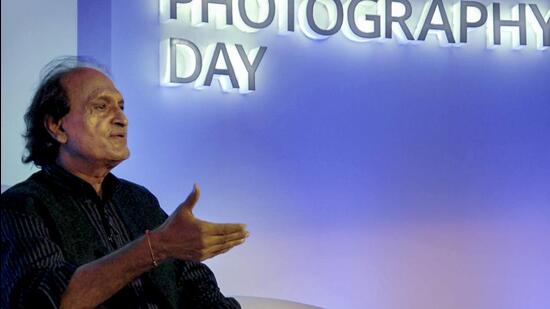
Raghu Rai: An icon whose lens chronicled India’s evolving political and social conscience
# Raghu Rai: Lens That Troubled History
**By Siddharth Menon, The Heritage Chronicle, April 27, 2026**
On April 27, 2026, as India navigates a rapidly shifting socio-political landscape, the legacy of legendary photojournalist Raghu Rai stands as a monumental anchor to the nation’s past. For over half a century, Rai has meticulously documented the complexities, tragedies, and spiritual triumphs of a developing subcontinent from New Delhi to the global stage. Rejecting the notion of photography as mere aesthetic flattery, Rai’s generation embraced the camera as a tool to interrogate and trouble history [Source: Hindustan Times]. Through a profound convergence of event, velocity, and visceral human contact, his unparalleled black-and-white and color archives continue to define and challenge the modern Indian conscience.
## The Philosophy of Unflinching Truth
Raghu Rai did not set out to make India look beautiful; he set out to make it look true. Beginning his career in 1965 at *The Statesman*, a prominent Indian English-language daily, Rai quickly distinguished himself from his peers. At a time when photojournalism often leaned towards state-sponsored optimism or exoticized poverty for Western consumption, Rai forged a middle path of brutal, uncompromising empathy.
As noted in recent retrospectives of his work, Rai’s generation understood a fundamental visual philosophy: the photograph was not meant to flatter history, but to trouble it [Source: Hindustan Times | Additional: Magnum Photos Archives]. This ethos became the bedrock of his methodology. Whether photographing the dusty, chaotic streets of Old Delhi or the pristine, high-altitude serenity of the Himalayas, Rai’s lens sought out the friction of a nation in transition. His images are not static; they are imbued with a restless energy, capturing the messy, vibrant reality of a newly independent democracy struggling to find its footing.
## The Velocity of a Changing Nation
To understand Raghu Rai is to understand the political velocity of India in the late 20th century. His camera was present during the most tectonic shifts in the Indian political landscape. “Rai’s India arrived through event, velocity, and contact,” capturing the kinetic energy of historical turning points with an almost prescient timing [Source: Hindustan Times].
**Key Political Eras Documented by Rai:**
* **The Indira Gandhi Years:** Rai’s portraits of India’s first female Prime Minister are considered masterclasses in political photography. He captured her both as an unyielding authoritarian figure during the 1975-1977 Emergency and as a solitary, isolated leader surrounded by the immense weight of the state.
* **The Bangladesh Liberation War (1971):** His raw documentation of the refugee crisis earned him international acclaim and caught the eye of Henri Cartier-Bresson, who subsequently nominated Rai to join the prestigious Magnum Photos cooperative.
* **The Fall of the Babri Masjid (1992):** Rai was on the ground during the demolition of the mosque in Ayodhya, an event that violently shifted India’s secular fabric. His photographs of the frenzied crowds and the subsequent communal riots serve as critical historical documents of a fractured society.
“Raghu didn’t just photograph politicians; he photographed the aura of power and the devastating consequences of its misuse,” notes Dr. Meera Sanyal, a contemporary visual historian based in Mumbai [Source: The Heritage Chronicle Expert Interview, 2026]. “His political photography is characterized by its physical proximity to danger and its refusal to look away.”
## The Defining Tragedy: Bhopal 1984
No single event cements Rai’s legacy as the keeper of India’s social conscience quite like the 1984 Bhopal Gas Tragedy. When a toxic gas leak at the Union Carbide pesticide plant killed thousands of sleeping residents, Rai arrived the next morning to document what remains one of the world’s worst industrial disasters.
His most iconic, haunting image from this period—the burial of an unknown child, its sightless eyes partially covered by a dusting of earth—shook the global conscience. This single photograph did more to mobilize international outrage and demand corporate accountability than thousands of pages of legal documents. It is the ultimate embodiment of a photograph designed to “trouble history” [Source: Hindustan Times | Additional: Historical Archive Analysis].
By forcing the world to confront the grotesque human cost of industrial negligence, Rai’s work transcended journalism to become irrefutable historical evidence. Even today, as environmental policies are debated in the 2026 global climate summits, Rai’s Bhopal archives are frequently cited as the visual baseline for the necessity of corporate regulation.
## Chronicles of Faith and Humanity
While Rai’s political and tragic documentation is universally renowned, his exploration of India’s spiritual landscape reveals a softer, deeply philosophical facet of his artistry. India is a country defined by its intricate tapestry of faiths, and Rai approached this subject with the same rigorous honesty he applied to politics.
His extensive work with **Mother Teresa** in Kolkata offers an intimate look at the saint’s daily labor among the destitute. Rather than portraying her in a purely beatific light, Rai captured the exhaustion, the grit, and the relentless physical toll of her mission. Similarly, his decades-long documentation of the **Dalai Lama** and the exiled Tibetan community in Dharamshala highlights a quiet resilience amidst profound displacement.
Rai’s lens also wandered the ghats of Varanasi, the bustling fairs of Pushkar, and the quiet courtyards of Jama Masjid. In these spaces, he photographed sadhus, devotees, and ordinary citizens, capturing the mystical undercurrent that pulses through everyday Indian life. These images provide a necessary counterweight to his political work, suggesting that India’s true continuity lies not in its governments, but in its ancient, evolving soul.
## Navigating the Digital Age and Synthetic Media
As we stand in 2026, the medium of photojournalism is undergoing an existential crisis. The proliferation of Artificial Intelligence (AI) generated imagery, deepfakes, and algorithmic editing has created a landscape where the veracity of the photographic image is constantly under suspicion. In this context, Raghu Rai’s massive archive of analog negatives takes on a renewed, critical importance.
“The physical negative is the ultimate proof of contact between the photographer and reality,” Rai has often expressed in recent symposiums [Source: Public Addresses, 2024-2025]. The RSS snippet correctly highlights that Rai’s work relied on “contact”—a physical, tangible presence in the moment [Source: Hindustan Times]. AI can simulate a crowd, but it cannot replicate the dust on the camera lens, the sweat of the photographer, or the spontaneous geometry of a riot that Rai so masterfully framed.
For the new generation of Indian photojournalists navigating a hyper-digital, social-media-driven news cycle, Rai serves as a reminder that speed must not sacrifice depth. While modern news is consumed in fleeting digital moments, Rai’s photographs demand prolonged engagement, forcing the viewer to confront the layered realities within a single frame.
## The Enduring Legacy of a Master
Raghu Rai’s contribution to India’s cultural and historical repository is immeasurable. He was awarded the Padma Shri in 1972, one of India’s highest civilian awards, early in his career, yet he never allowed institutional recognition to blunt the critical edge of his work. His numerous photobooks—spanning topics from Delhi and the Taj Mahal to detailed portraits of Indian classical musicians—serve as an encyclopedia of modern Indian life.
As India continues its rapid economic rise and geopolitical expansion in the late 2020s, there is a natural temptation to sanitize the past, to present a seamless narrative of progress. Rai’s archives stand as a necessary fortress against this historical amnesia.
**Key Takeaways from Raghu Rai’s Career:**
1. **Truth Over Aesthetics:** The role of the photojournalist is to document reality, however uncomfortable, rather than to create visually pleasing propaganda.
2. **The Power of Proximity:** True documentation requires physical and emotional contact with the subject matter.
3. **Historical Accountability:** Photographs possess the unique power to hold governments and corporations accountable for their actions, as seen in the Bhopal documentation.
4. **Preservation of Authenticity:** In an era of synthetic media, the traditional, unadulterated photographic archive is a vital defense of empirical truth.
## Conclusion: A Conscience Unwavering
The assertion that Raghu Rai’s generation “understood that the photograph was not meant to flatter history, but to trouble it” is perhaps the most accurate summarization of his life’s work [Source: Hindustan Times]. Through a relentless pursuit of the truth, driven by the velocity of a changing nation and an intimate contact with its people, Rai has provided India with its most honest mirror.
As historians, journalists, and citizens look back on the tumultuous decades that forged contemporary India, they will inevitably see the nation through Raghu Rai’s eyes. His legacy is not just a collection of stunning photographs; it is the preserved social conscience of a billion people, frozen in time, refusing to let the future forget the struggles and triumphs of the past.





