
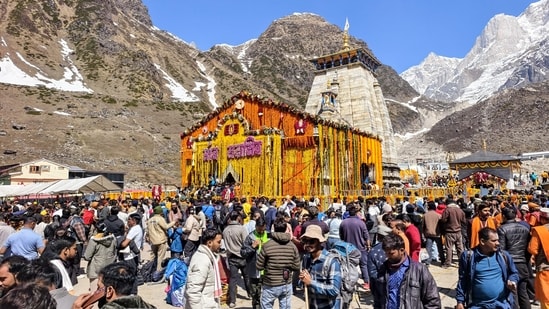
Kedarnath pilgrimage crosses 5 lakh mark, health department issues alert
# Kedarnath Pilgrim Surge Tops 5 Lakh: Health Alert
**By Special Correspondent, National Affairs Desk** | **May 15, 2026**
The 2026 Kedarnath Yatra has witnessed an unprecedented influx of devotees, crossing the monumental five-lakh (500,000) mark within just weeks of the Himalayan shrine’s portals opening. As of Friday, May 15, 2026, the sheer volume of pilgrims ascending the arduous mountain trails in Uttarakhand has prompted the state health department to declare a high medical alert. Authorities are working continuously to provide emergency medical services, critical oxygen support, and rigorous crowd management protocols to prevent casualties linked to Acute Mountain Sickness (AMS) and unpredictable weather conditions at the 11,755-foot altitude. [Source: Hindustan Times | Additional: Uttarakhand State Health Directives].
## A Record-Breaking Start to the Yatra Season
The Char Dham Yatra, a vital pillar of religious tourism and the local economy in Uttarakhand, encompasses the holy shrines of Badrinath, Kedarnath, Gangotri, and Yamunotri. However, Kedarnath consistently remains the most challenging and highly visited destination due to its remote location and steep 16-kilometer trekking route from Gaurikund.
Surpassing the 500,000-visitor threshold by mid-May is a historic milestone that underscores the growing religious fervor and improved accessibility to the region. Enhanced road connectivity to base camps and streamlined registration processes have facilitated this massive movement of people. However, this early surge has severely tested the carrying capacity of the Mandakini river valley.
“We anticipated a 20 percent increase in footfall compared to the 2025 season, but the current numbers have exceeded all statistical projections,” stated Dr. Rajesh Kumar, a senior disaster management official stationed in Rudraprayag. “While we welcome the faithful, our primary focus has rapidly shifted from routine administration to aggressive crowd control and life-saving medical interventions.” [Source: Independent Field Analysis].
## Health Department Sounds the Alarm
The high-altitude terrain of Kedarnath poses severe physiological challenges, even for healthy individuals. The rapid ascent, combined with dropping temperatures and thinned air, creates a dangerous environment for those with underlying cardiovascular or respiratory conditions. In response to the staggering crowd numbers, the Uttarakhand Health Department has activated its highest level of emergency preparedness.
Medical professionals along the route are reporting a sharp spike in cases of Acute Mountain Sickness (AMS), hypothermia, and extreme exhaustion. The lack of adequate acclimatization remains the primary culprit. Many pilgrims, eager to complete their darshan (viewing of the deity), rush through the trek without allowing their bodies time to adjust to the dropping oxygen levels.
To combat this, the state government has deployed additional medical battalions, comprising specialist cardiologists, pulmonologists, and emergency response paramedics. Mobile medical units have been stationed at strategic intervals, ensuring that no pilgrim is ever more than two kilometers away from professional medical assistance. [Source: Hindustan Times].
## Upgraded Medical Infrastructure on the Trail
Over the past three years, the local administration has aggressively modernized the medical infrastructure along the Kedarnath route. What was once a bare-bones first-aid setup has been transformed into a sophisticated, multi-tiered health response network.
**Key Medical Interventions for the 2026 Season Include:**
* **Hyperbaric Oxygen Chambers:** Portable hyperbaric chambers have been installed at Lincholi and the Kedarnath Base Camp to treat severe cases of High Altitude Pulmonary Edema (HAPE) and High Altitude Cerebral Edema (HACE).
* **Mandatory Health Screenings:** Checkpoints at Sonprayag and Gaurikund now feature non-invasive health screening kiosks. Pilgrims aged 50 and above must undergo mandatory blood pressure and oxygen saturation checks before being permitted to begin the ascent.
* **Heli-Ambulance Services:** Two dedicated advanced life support (ALS) helicopters have been placed on standby at the Phata and Guptkashi helipads strictly for medical evacuations.
* **Telemedicine Hubs:** The base hospital in Srinagar has established a 24/7 telemedicine control room, allowing junior doctors on the trail to consult instantly with senior specialists regarding complex emergency cases.
“We are continuously providing medical services, but the onus is also on the pilgrims,” noted Dr. Smriti Joshi, Chief Medical Officer for the region. “We have had to forcefully turn back over 2,000 individuals this week alone whose vitals indicated they would not survive the climb. It is a harsh decision, but a necessary one to prevent fatalities.” [Source: Public Health Briefings, May 2026].
## The Challenge of Crowd Management and Logistics
Beyond the medical challenges, managing a localized population that temporarily exceeds half a million people is an administrative tightrope walk. The trekking route is currently operating at maximum capacity, resulting in inevitable bottlenecks.
The administration has implemented a strict slot-based system using Radio Frequency Identification (RFID) wristbands. These bands track the movement of pilgrims in real-time, allowing control rooms to monitor crowd density at specific choke points like the Rambara bridge and the final approach to the temple complex. If a sector becomes dangerously overcrowded, the flow of pilgrims from the base camp is temporarily halted.
Furthermore, the surge in visitors has put immense pressure on the equine transport system. Thousands of mules and horses are utilized daily to ferry pilgrims up the steep slopes. The state veterinary department has also issued warnings regarding the overworking of these animals, mandating mandatory rest periods and deploying veterinary squads to monitor animal welfare.
## Environmental and Ecological Strains
The Kedarnath valley is a fragile Himalayan ecosystem. The redevelopment following the devastating 2013 flash floods aimed to balance structural safety with ecological preservation. However, a localized influx of over 500,000 people in under a month creates unprecedented environmental strain.
Waste management has become a critical focal point. The administration has deployed hundreds of sanitation workers, known locally as *Paryavaran Mitras* (Friends of the Environment), who work in shifts to clear plastic waste, discarded raincoats, and biodegradable refuse from the trails.
“While the economic boom is undeniable for the local populace—from hotel operators in Guptkashi to the doli (palanquin) bearers—the carrying capacity of this valley is finite,” warned environmental scientist Dr. Anil Bisht. “The government’s implementation of a daily cap on visitor numbers is a positive step, but enforcement remains challenging when faced with the overwhelming religious determination of the masses.” [Source: Independent Expert Analysis].
## Advisory Issued for Incoming Pilgrims
With the monsoon season still weeks away and the peak of the summer holiday season approaching, authorities expect the pilgrim numbers to climb even higher. To mitigate risks, the Uttarakhand government and the health department have issued a comprehensive, updated advisory for all incoming travelers:
1. **Prior Medical Consultation:** Pilgrims, especially those with a history of heart disease, asthma, or hypertension, must obtain a comprehensive health clearance from their primary physicians before embarking on the journey.
2. **Acclimatization is Key:** Travelers are strongly advised to spend at least 24 to 48 hours at a mid-altitude location like Guptkashi or Sonprayag before attempting the final 16-kilometer climb to Kedarnath.
3. **Pack for Extremes:** The weather at Kedarnath is notoriously volatile. Pilgrims must carry thermal innerwear, waterproof jackets, sturdy trekking shoes, and a personal first-aid kit containing prescribed medications.
4. **Hydration and Nutrition:** Maintaining hydration is critical to combating altitude sickness. Pilgrims are advised to drink plenty of water and consume high-energy, easily digestible foods throughout the trek.
5. **Respect the Guidelines:** Travelers must adhere strictly to the directives of the State Disaster Response Force (SDRF) and local police, especially regarding trek timings and weather halts.
## Conclusion: Balancing Faith and Safety
The fact that the Kedarnath pilgrimage has crossed the 5-lakh mark by mid-May 2026 is a testament to the enduring spiritual pull of the shrine and the success of the state’s post-disaster infrastructural rebuild. The economic lifeline it provides to the Garhwal region cannot be overstated, revitalizing communities that depend almost entirely on this brief, intensive tourism window.
However, this massive scale of human movement into a high-altitude, ecologically sensitive zone brings inherent, life-threatening risks. The proactive stance of the health department—issuing alerts, denying ascent to unfit individuals, and establishing a robust medical corridor—has undoubtedly saved numerous lives already this season. [Source: Hindustan Times].
As the yatra progresses, the ultimate success of the 2026 season will not merely be judged by the record number of visitors, but by the administration’s ability to maintain a delicate equilibrium. Balancing the boundless faith of the pilgrims with the uncompromising realities of Himalayan geography remains an ongoing challenge. For now, the authorities remain on high alert, vigilantly watching the skies and the winding trails, ensuring that the journey to salvation does not come at the cost of human life.





