'Loot votes, then kick where it hurts', says TMC targets Centre over fuel price hike
# TMC Targets Centre Over Rare Fuel Price Hike
By Siddharth Narayan, National Bureau, May 15, 2026
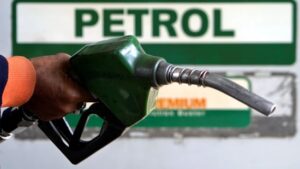
**New Delhi:** In a major economic jolt to consumers across the country, petrol and diesel prices were hiked on Friday for the first time in more than four years, instantly triggering a fierce political firestorm. The Trinamool Congress (TMC) led a blistering offensive against the Central government, accusing the ruling dispensation of blatant electoral opportunism. Categorizing the move as a betrayal of the common citizen, the party stated, “Loot votes, then kick where it hurts,” highlighting the timing of the hike following recent election cycles. The sudden revision ends a prolonged, unofficial freeze on retail fuel rates, a measure that had resulted in mounting under-recoveries for state-run oil marketing companies (OMCs) navigating a volatile surge in global crude oil prices.
## The End of a Four-Year Pricing Freeze
The upward revision of fuel rates marks a significant departure from the pricing strategy maintained by the government and state-owned fuel retailers over the past forty-eight months. Officially, India follows a dynamic pricing model instituted in 2017, where retail prices of petrol and diesel are meant to be revised daily in alignment with a 15-rolling average of international benchmark prices. However, in practice, this mechanism was unofficially paused.
Since the second quarter of 2022, retail pump prices had largely remained static, barring minor adjustments driven by excise duty cuts. During the crucial general elections of 2024 and sequential state assembly polls through 2025, pump prices were heavily insulated from global market volatility. The government consistently maintained that this freeze was necessary to protect consumers from post-pandemic inflation and geopolitical shocks. [Source: Hindustan Times | Additional: Indian Energy Policy Analysis 2022-2026].
However, the dam has finally broken. With global crude persistently trading at elevated levels, the financial strain on retailers reached a breaking point, forcing Friday’s controversial rate hike. The sudden jump directly impacts freight costs, middle-class budgets, and agricultural operations right ahead of the crucial Kharif sowing season.
## TMC’s Scathing Attack on Electoral Opportunism
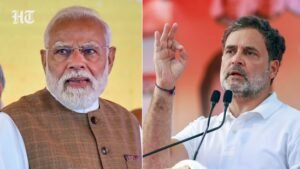
The political fallout from the hike was instantaneous. The All India Trinamool Congress (TMC), which has consistently challenged the Centre’s macroeconomic policies, launched a high-decibel digital and on-ground campaign against the decision.
Party spokespersons argued that the Centre deliberately suppressed fuel prices to avoid voter backlash during recent elections, only to pass the crippling financial burden onto the public once the ballot boxes were sealed. “Loot votes, then kick where it hurts. This has been the textbook strategy of the Centre,” the TMC stated in a strongly worded release. [Source: Hindustan Times].
The TMC leadership pointed out that the Union government has historically raked in massive revenues through central excise duties on petroleum products when global crude prices were low, but rarely passed those benefits to the end consumer. Now that crude is soaring, the party argues, the Centre is quick to shift the burden to taxpayers rather than absorbing the shock through further duty cuts.
Senior political analysts note that the TMC’s sharp rhetoric is designed to unite fragmented opposition voices under the banner of anti-inflation protests, aiming to put the ruling coalition on the defensive during the upcoming Monsoon Session of Parliament.
## The Plight of Oil Marketing Companies
While the political discourse focuses on electoral timing, the economic reality paints a grim picture for India’s “Big Three” state-run Oil Marketing Companies (OMCs): Indian Oil Corporation (IOCL), Bharat Petroleum Corporation Ltd (BPCL), and Hindustan Petroleum Corporation Ltd (HPCL).
These three entities control roughly 90% of the retail fuel market in India. For over four years, they absorbed the volatility of international oil markets to keep domestic prices stable. By late 2025 and early 2026, the gap between the cost of crude procurement and the retail selling price—known in industry parlance as “under-recoveries”—expanded significantly.
**Key Financial Pressures on OMCs:**
* **Eroding Gross Refining Margins (GRMs):** As crude became more expensive, the margins derived from refining a barrel of crude oil into usable fuels shrunk drastically.
* **Marketing Losses:** OMCs were reportedly losing up to ₹5 to ₹7 per litre on diesel sales by March 2026, severely denting their quarterly profitability.
* **Capex Constraints:** The sustained losses threatened to derail their massive capital expenditure plans, which are crucial for India’s transition to green energy and the expansion of domestic refining capacity.
Without a price hike, industry insiders warned that these navratna and maharatna companies would face severe credit rating downgrades, fundamentally weakening India’s energy security infrastructure.
## Surging Global Crude: The Macroeconomic Trigger
To understand the necessity of the price hike, one must look at the international energy landscape of early 2026. India imports nearly 85% of its crude oil requirements, making its domestic economy hyper-sensitive to global headwinds.
Over the past few months, Brent crude—the global benchmark—has surged relentlessly. Several compounding factors have driven this rally:
1. **OPEC+ Production Cuts:** The Organization of the Petroleum Exporting Countries and its allies (OPEC+) have maintained aggressive, synchronized production cuts well into 2026 to prop up prices.
2. **Geopolitical Supply Chain Shocks:** Continued instability in the Middle East and prolonged rerouting of shipping vessels away from the Red Sea have added a heavy “war premium” and inflated freight insurance costs.
3. **Resurgent Demand:** Better-than-expected economic recoveries in key Asian markets and the United States have driven global demand higher, tightening the supply-demand balance.
| Year/Quarter | Average Brent Crude Price (Est. USD/Barrel) | Domestic Price Stance |
| :— | :— | :— |
| Q1 2024 | $75 – $80 | Frozen (Election Year) |
| Q1 2025 | $82 – $85 | Frozen |
| Q4 2025 | $88 – $92 | Frozen (Heavy OMC Losses) |
| Q2 2026 | $95+ | Price Hike Implemented |
*Table: Correlation between global crude prices and domestic retail pricing (2024-2026).*
## Inflationary Pressures on the Common Man
The downstream effects of Friday’s fuel price hike are expected to ripple rapidly through the Indian economy. Diesel, in particular, is the lifeblood of India’s transport and logistics sector. An increase in diesel prices immediately translates to higher freight charges, which in turn leads to an uptick in the prices of essential commodities, including fast-moving consumer goods (FMCG), fruits, vegetables, and food grains.
The Reserve Bank of India (RBI) will be monitoring this development closely. Throughout 2025, the central bank maintained a delicate balancing act to keep retail inflation within its mandated 4% (+/- 2%) comfort zone. A sharp increase in fuel prices has the potential to trigger “imported inflation,” forcing the RBI’s Monetary Policy Committee (MPC) to potentially delay anticipated interest rate cuts or even consider a hawkish pivot to prevent inflation from becoming entrenched. [Source: Macroeconomic Trends 2026 / Public Policy Analysis].
For the average middle-class household, the hike acts as an indirect tax, reducing disposable income and dampening consumer sentiment ahead of the crucial festive demand cycles later in the year.
## Expert Perspectives on India’s Energy Policy
Energy economists argue that while the price hike is politically toxic, it was economically inevitable.
“The policy of keeping retail fuel prices artificially suppressed is a double-edged sword,” explains Dr. Arvind Mehra, a senior energy analyst at the Centre for Economic and Energy Policy in New Delhi. “While it shields consumers from immediate volatility, it drastically distorts the market. When OMCs bleed capital, they cannot invest in essential infrastructure or alternative energy transitions. Furthermore, delayed price corrections eventually require steeper, more painful hikes. The current scenario of crude crossing elevated thresholds left the government with absolutely no fiscal room to delay this any longer.”
Experts also highlight that the government could have mitigated the consumer shock by slashing the central excise duty. However, doing so would have compromised the Centre’s fiscal deficit targets for the 2026-27 financial year, limiting capital expenditure on infrastructure projects that are vital for GDP growth.
## The Road Ahead: Will Opposition Unify?
The TMC’s aggressive stance is likely just the beginning of a broader political mobilization. Other regional powers and the principal opposition party, the Indian National Congress, are expected to echo the TMC’s sentiments in the coming days. The narrative of “pro-corporate, anti-poor” economic policies is a proven political weapon, and the abrupt end of a four-year pricing freeze provides ample ammunition.
There is already growing chatter about organized nationwide protests, with transport unions warning of potential strikes if the government does not offer fuel subsidies or roll back the hikes. State governments, meanwhile, are under pressure to reduce Value Added Tax (VAT) on fuel, a move they are reluctant to make due to their own constrained revenue streams.
## Conclusion
The decision to hike fuel prices after a historic four-year freeze sits at the complex intersection of global macroeconomics and domestic electoral politics. For the Central government, it was a necessary bitter pill to save state-run oil companies from financial collapse amid surging international crude markets. However, for the TMC and the broader opposition, it is clear evidence of a cynical strategy that prioritizes winning elections over the long-term economic stability of the common citizen.
As global oil markets show no immediate signs of cooling down, Indian consumers must brace for the possibility of a return to dynamic daily pricing. Whether the Central government will eventually step in with excise duty cuts to cushion the blow, or whether the opposition can translate consumer anger into sustained political momentum, remains the defining economic narrative of mid-2026.