
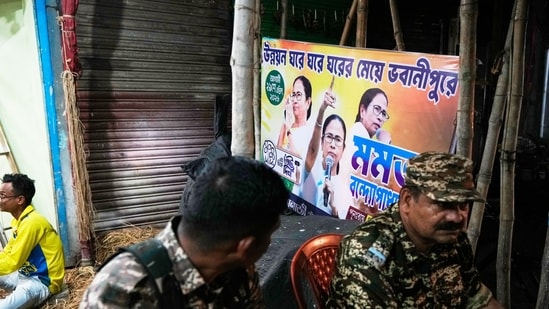
'No important files to be removed or damaged’: Top official as TMC loses Bengal
# TMC Loses Bengal: Official Secures Key Files
By Senior Political Correspondent, The National Herald | May 4, 2026
Following a historic electoral defeat for the Trinamool Congress (TMC) in the 2026 West Bengal Assembly elections, the state’s bureaucratic machinery has been put on high alert to secure all government records. On Monday, May 4, 2026, the West Bengal Chief Secretary issued an urgent, sweeping directive to all department heads, district magistrates, and administrative personnel, mandating that “no important paper or any file is removed/damaged or otherwise taken out from the offices.” This critical administrative order aims to preserve institutional memory, prevent potential tampering of sensitive documents, and ensure a seamless, transparent transition of power to the incoming government.
## The Urgent Directive from Nabanna
As the election results confirmed a massive mandate for the opposition, signaling the end of the Trinamool Congress’s 15-year rule, the atmosphere at Nabanna—the West Bengal state secretariat—shifted rapidly from political anticipation to strict administrative compliance. The Chief Secretary, acting as the highest-ranking civil servant and the custodian of state governance during the transition, immediately enacted protocols to safeguard state assets.
The directive, dispatched via urgent digital and physical memoranda to all departmental secretaries, directorates, and regional offices, was unequivocal. It emphasized the legal and administrative imperative to freeze the movement of non-essential files and strictly monitor the handling of crucial government documents.
[Source: Hindustan Times | Additional: West Bengal State Administrative Protocols]
According to the order, security personnel at all government installations have been instructed to monitor the exit of individuals carrying briefcases, boxes, or bulk documents. Additionally, IT departments have been tasked with securing digital servers to prevent unauthorized deletions or data wiping. This dual approach ensures that both physical paper trails and digital footprints remain intact for the incoming administration.
## The End of an Era: Contextualizing the Regime Change
To understand the gravity of this bureaucratic mobilization, one must look at the broader political landscape of West Bengal. The Trinamool Congress, led by Mamata Banerjee, first swept to power in 2011, dismantling the 34-year rule of the Left Front. For a decade and a half, the TMC dominated the state’s political narrative. However, the 2026 elections proved to be a watershed moment, driven by severe anti-incumbency, economic anxieties, and a highly organized opposition campaign.
During its tenure, particularly in its third term (2021-2026), the TMC government faced intense scrutiny over various administrative practices. High-profile controversies, including investigations into the School Service Commission (SSC) recruitment, municipal job allotments, and public distribution system anomalies, dominated the headlines. Central investigative agencies, including the Central Bureau of Investigation (CBI) and the Enforcement Directorate (ED), had frequently visited state departments to seize records.
With the TMC now exiting power, the incoming government will likely initiate its own audits and reviews of the outgoing administration’s financial and administrative decisions. Consequently, the preservation of departmental files is not merely a procedural formality; it is a critical legal necessity. The loss or destruction of these files could severely hamper future investigations, stalling justice and undermining democratic accountability.
## Standard Protocol vs. High-Stakes Paranoia
While issuing orders to secure files during a transition of power is a standard operating procedure in the Indian democratic framework, the intensity of this specific directive highlights the high stakes involved in West Bengal’s current political climate.
**Key areas of focus for file preservation include:**
* **Public Works Department (PWD) and Urban Development:** Contracts, tenders, and financial disbursements related to state infrastructure projects.
* **Education and Health Departments:** Recruitment records, procurement logs, and transfer orders.
* **Finance Department:** Budgetary allocations, expenditure sanctions, and debt servicing records.
* **Home Department:** Police postings, confidential intelligence dossiers, and law and order directives.
In past transitions across various Indian states, there have been recurring allegations of “midnight bonfires” or “accidental fires” breaking out in record rooms immediately following an incumbent government’s defeat. The Chief Secretary’s preemptive strike aims to completely neutralize the possibility of such “accidents” in West Bengal. By putting the onus directly on senior IAS (Indian Administrative Service) and WBCS (West Bengal Civil Service) officers, the directive ensures accountability at the highest bureaucratic levels.
## The Bureaucracy Pivots: Loyalty to the Constitution
The transition period reveals the unique nature of India’s permanent executive—the bureaucracy. While politicians hold temporary mandates based on electoral outcomes, the civil service is designed to be the permanent, neutral backbone of state administration.
When a government falls, the bureaucracy must immediately pivot from serving the outgoing political masters to preparing the groundwork for the incoming ones. The Chief Secretary’s order is a manifestation of this pivot. It sends a clear signal throughout the administrative ranks: the political executive has lost its mandate, and the bureaucracy must now safeguard the state’s interests until the new cabinet is sworn in.
“During a regime change, the bureaucracy often undergoes a brief period of extreme vulnerability and high tension,” notes Dr. Rajat Sen, a former IAS officer and administrative historian. “Officers who were closely aligned with the outgoing regime might feel pressured to cover tracks, while others are eager to demonstrate their neutrality to the incoming leadership. A strict, written directive from the Chief Secretary removes ambiguity. It gives lower-level officers the legal cover they need to refuse any illicit verbal orders from outgoing ministers.”
[Source: Independent Administrative Analysis | Additional: Public Policy Precedents in India]
Furthermore, access controls at Nabanna and other key directorates have been temporarily recalibrated. Biometric access for the personal staff of outgoing ministers is traditionally revoked during this window, and the movement of external vendors is highly restricted.
## Digital Governance and the New Frontier of Record Keeping
Unlike the 2011 transition when the TMC took over from the Left Front, the 2026 transition occurs in an era of advanced e-governance. The state relies heavily on the `e-Bhazar` (procurement) and `e-Office` systems. Therefore, securing files is no longer just about locking filing cabinets or posting guards outside the record room; it requires sophisticated cybersecurity protocols.
State data centers have been placed under elevated monitoring. The IT department has been tasked with ensuring that daily backups of all departmental servers are securely archived. System administrators have been warned to watch for bulk deletion requests or unauthorized attempts to alter metadata on existing documents.
“Digital forensics makes it incredibly difficult to permanently destroy electronic files without leaving a trace,” explains cybersecurity expert Ananya Chatterjee. “However, sophisticated actors can still corrupt databases or use ransomware-style tactics to render data inaccessible. The Chief Secretary’s directive implicitly covers these digital assets, ensuring that login logs and server access histories are meticulously preserved.”
## Implications for the Incoming Administration
For the incoming government, the preservation of these files is the foundation upon which they will build their governance strategy—and potentially, their political retribution. Election campaigns in West Bengal are notoriously fierce, with the opposition promising sweeping investigations into alleged TMC-era corruption.
If the new Chief Minister and their cabinet assume office and discover that critical files regarding land allotments, mining leases, or civil service recruitments are missing, it will immediately trigger a political firestorm. The incoming administration will likely form Special Investigation Teams (SITs) or judicial commissions to probe the outgoing government’s flagship schemes. These investigations rely entirely on the integrity of the paper trail.
Moreover, the state’s financial health will be a primary concern. West Bengal has been grappling with significant public debt. The incoming finance minister will require completely unadulterated access to the state’s ledger to present a “White Paper” on the economy—a common practice for new governments seeking to highlight the fiscal mismanagement of their predecessors.
## Legal Ramifications of Tampering with Public Records
The Indian Penal Code (IPC) and the Prevention of Corruption Act deal strictly with the destruction of public records. Section 204 of the IPC makes the destruction of a document to prevent its production as evidence a punishable offense. Furthermore, the Public Records Act mandates the proper management, administration, and preservation of public documents.
Any official—whether a lower-level clerk or a senior bureaucrat—found guilty of shredding, misplacing, or digitally wiping government files during this transition period faces severe consequences, including suspension, dismissal, and criminal prosecution. By issuing a formal directive, the Chief Secretary has effectively eliminated the defense of “ignorance” for any employee caught tampering with records.
## Conclusion: A Test of Democratic Maturity
The directive to secure West Bengal’s government files in the wake of the Trinamool Congress’s electoral defeat is a vital exercise in democratic hygiene. It underscores the principle that governments are merely temporary custodians of the state; the state itself, and its records, belong to the public.
As West Bengal navigates this profound political shift, the eyes of the nation remain fixed on Nabanna. The efficiency and neutrality with which the state’s bureaucracy handles this transition will be a testament to the resilience of India’s democratic institutions. The incoming administration faces a monumental task in steering the state forward, and that journey must begin with an honest, unvarnished look at the administrative realities left behind by the outgoing regime. Securing the files is not just about preserving the past—it is the essential first step in charting West Bengal’s future.





