
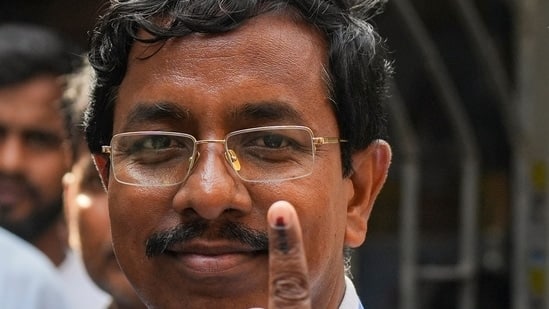
Pabitra Kar: TMC’s grassroots challenger in the high-stakes Nandigram battle| India News
# TMC Kar Takes on BJP in Nandigram
By Special Political Correspondent, Electoral News Desk | April 25, 2026
Nandigram has once again emerged as the ultimate epicenter of West Bengal’s electoral battleground. In the high-stakes 2026 state assembly elections, the ruling Trinamool Congress (TMC) has strategically fielded grassroots organizer Pabitra Kar to challenge the incumbent Bharatiya Janata Party (BJP) heavyweight and Leader of the Opposition, Suvendu Adhikari. As Purba Medinipur prepares for a fiercely contested polling day, this specific electoral fight transcends local administration; it is a battle for ideological supremacy, political prestige, and the deeply entrenched historical legacy of a constituency that reshaped Indian politics nearly two decades ago.
## The Historical Weight of Ground Zero
To understand the magnitude of the 2026 Nandigram battle, one must look back at its volatile political history. Nandigram catapulted to national prominence in 2007 following a bloody anti-land acquisition movement that ultimately ended the 34-year rule of the Left Front government and propelled TMC supremo Mamata Banerjee to the Chief Minister’s office.
In the 2021 assembly elections, Nandigram witnessed the “Mother of All Battles” when Mamata Banerjee herself contested against her former trusted lieutenant-turned-BJP leader, Suvendu Adhikari. Adhikari won that election by a razor-thin margin of just under 2,000 votes—a controversial outcome that the TMC has contested legally and politically ever since.
For the 2026 elections, the TMC has shifted its strategy. Instead of fielding a national or state-level celebrity, the party has banked on **Pabitra Kar**, a leader deeply rooted in the local Panchayat system and rural organization. This tactical pivot aims to re-establish the TMC’s connection with the agrarian base, positioning a “son of the soil” against the formidable political machinery of the Adhikari family. [Source: Hindustan Times | Additional: Election Commission of India Historical Data].
## Who is Pabitra Kar? The Grassroots Challenger
Pabitra Kar is not a politician known for massive billboards or sensational television soundbites. Instead, his political currency is built on decades of silent, door-to-door organizing within the Purba Medinipur district. As a dedicated TMC cadre, Kar has been instrumental in executing the state government’s welfare delivery mechanisms at the micro-level.
The TMC’s decision to elevate a grassroots worker to the status of a giant-slayer candidate is a calculated risk. The party’s high command hopes to counter Suvendu Adhikari’s towering VIP persona with Kar’s accessible, everyman image.
“Pabitra Kar knows every alley, every agricultural tract, and every family grievance in the Nandigram blocks. He is not flying in on a helicopter; he is riding a bicycle through the villages,” notes Dr. Ratan Sen, a Kolkata-based political sociologist analyzing the 2026 electoral landscape. “By fielding Kar, the TMC is framing the narrative as the common man versus the powerful elite, attempting to strip Adhikari of his undisputed local baron status.”
Kar’s campaign heavily emphasizes hyper-local issues: the timely repair of embankments, improved rural healthcare facilities, and the maximization of the state government’s agricultural subsidies. His messaging strictly avoids national polarization, focusing instead on the tangible, everyday survival of the rural electorate.
## Suvendu Adhikari: Defending the Fortress
On the opposite end of the spectrum is Suvendu Adhikari, the architect of the BJP’s expansion in southern West Bengal. Since his narrow victory in 2021, Adhikari has consolidated his power, becoming the most vocal and aggressive opposition face against the Mamata Banerjee administration.
For Adhikari, retaining Nandigram is an existential necessity. A loss here would severely dent his ambition to be the undisputed Chief Ministerial face for the BJP in West Bengal, while a decisive victory would cement his authority over both the state BJP unit and the broader regional political landscape.
Adhikari’s campaign in 2026 blends local paternalism with the BJP’s larger national narrative. He frequently highlights allegations of corruption within the TMC ranks, the need for central industrial investment in the region, and the promise of a “double-engine” government that aligns state policies with the Prime Minister’s national agenda. His rallies are massive shows of strength, featuring central BJP leaders and extensive media coverage, sharply contrasting with Kar’s localized courtyard meetings.
## The Demographic Mathematics of Nandigram
The electoral arithmetic of Nandigram is notoriously complex. The constituency comprises two distinct community blocks: Nandigram I and Nandigram II. The voting populace is roughly divided along demographic lines that both parties are aggressively attempting to court.
**Nandigram Constituency Electoral Dynamics (2026 Estimates):**
| Electoral Factor | TMC Strategy (Pabitra Kar) | BJP Strategy (Suvendu Adhikari) |
| :— | :— | :— |
| **Female Voters** | Leveraging “Lakshmir Bhandar” and welfare schemes to secure a silent, loyal vote bank. | Highlighting safety, anti-corruption, and central government women-centric initiatives. |
| **Minority Vote** | Ensuring 100% consolidation to prevent any division of anti-BJP votes. | Relying on the consolidation of the majority Hindu vote to offset the minority deficit. |
| **Agrarian Communities** | Focusing on state subsidies, crop insurance, and immediate local dispute resolution. | Promising central agricultural funds, better MSPs, and large-scale infrastructure development. |
| **Youth Electorate** | Promoting state-level employment drives and student credit cards. | Capitalizing on anti-incumbency, state-level job scams, and promising industrialization. |
The minority vote, which constitutes over 25% of the electorate in the region, remains a steadfast pillar for the TMC. However, the BJP’s strategy relies heavily on the total consolidation of the remaining demographic segments. Adhikari’s camp has historically succeeded in this polarization, but Pabitra Kar’s localized appeal threatens to fracture the consolidated anti-TMC vote by appealing to shared agrarian identities rather than religious affiliations. [Source: Hindustan Times | Additional: Demographic Data Projections based on past ECI reports].
## Welfare Economics vs. The Anti-Incumbency Wave
At the heart of the TMC’s campaign machinery is Chief Minister Mamata Banerjee’s extensive network of direct benefit transfer (DBT) schemes. Initiatives like *Lakshmir Bhandar* (a monthly allowance for female heads of families), *Swasthya Sathi* (health insurance), and *Kanyashree* (financial aid for girl students) have created a massive buffer of goodwill among the rural poor. Pabitra Kar, having been a critical cog in the distribution of these schemes, is heavily banking on the gratitude of the female electorate.
“The women of Nandigram know who puts food on their table during tough times. The central government talks big, but the state government delivers directly to our bank accounts,” claims a local TMC panchayat member campaigning for Kar.
Conversely, the BJP is heavily weaponizing anti-incumbency. Suvendu Adhikari’s speeches are laced with sharp attacks on the TMC’s governance record over the past 15 years. He frequently cites recent state-level controversies regarding teacher recruitment irregularities and municipal corruption, attempting to paint the entire TMC leadership, including localized candidates like Kar, as complicit in a systemic failure of governance.
## Security Measures and Election Commission Oversight
Given the violent legacy of elections in the Purba Medinipur region, the Election Commission of India (ECI) has designated Nandigram as a “hypersensitive” constituency for the 2026 polls. An unprecedented number of Central Armed Police Forces (CAPF) companies have been deployed to ensure a free and fair voting process.
Route marches, aerial drone surveillance, and strict monitoring of inter-district borders have been implemented weeks in advance. The heavy security presence is aimed at preventing voter intimidation, booth capturing, and post-poll violence—issues that have historically marred the democratic process in the region. Both political factions have engaged in preemptive blame games, accusing each other of harboring anti-social elements, making the role of the central security forces critical in maintaining peace.
## Political Implications: Beyond a Single Seat
The outcome of the Nandigram battle between Pabitra Kar and Suvendu Adhikari holds massive implications for the future of West Bengal politics.
If Pabitra Kar manages to pull off an upset victory, it will be viewed as a monumental vindication for Mamata Banerjee. It would symbolize the ultimate revenge for her 2021 defeat, validate the TMC’s strategy of empowering grassroots leaders over dynastic or celebrity politicians, and severely curtail Suvendu Adhikari’s political trajectory within the BJP.
On the other hand, if Suvendu Adhikari retains his seat—especially if he increases his victory margin—it will solidify his position as the most formidable political force in West Bengal outside of the TMC ecosystem. A resounding win would validate the BJP’s aggressive opposition tactics and prove that Adhikari’s initial victory over the Chief Minister was not a fluke, but rather a permanent shift in the political allegiance of the Purba Medinipur electorate.
## Future Outlook
As the dust settles on the campaign trail and voters line up outside polling booths, Nandigram stands at a crossroads. The election is a classic study in political contrasts: the localized, welfare-driven grassroots appeal of TMC’s Pabitra Kar versus the nationalistic, anti-incumbency powerhouse of BJP’s Suvendu Adhikari.
Regardless of who emerges victorious when the electronic voting machines are unsealed, this high-stakes battle has already succeeded in keeping the nation’s political gaze firmly fixed on a rural constituency in West Bengal. The final verdict will not only decide the legislative representative for Nandigram but will also set the tone for the political narrative of Eastern India for the next half-decade.





