
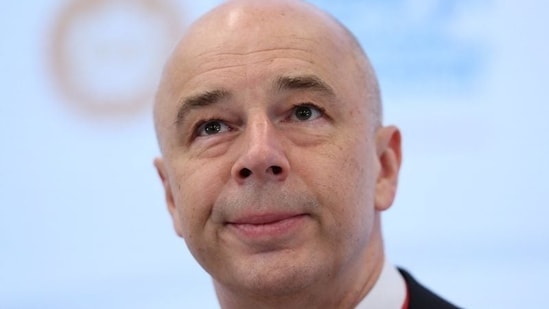
Russia says UAE's exit from OPEC will increase global production, bring down oil prices in future
# UAE Quits OPEC: Russia Sees Oil Prices Dropping
**By Energy Markets Desk** | **April 29, 2026**
The global energy landscape experienced a seismic tremor on Wednesday after the United Arab Emirates officially announced its unprecedented departure from the Organization of the Petroleum Exporting Countries (OPEC). In immediate response to the geopolitical shockwave, Russia—a pivotal leader in the broader OPEC+ alliance—projected that the UAE’s unconstrained output will inevitably surge global production supplies and drive down international oil prices in the near future. The monumental exit shatters decades of cartel solidarity, fundamentally altering the balance of power in the Middle East and redefining the future of global crude oil economics.
## A Historic Rupture in the Energy Market
For decades, the UAE has served as a cornerstone of OPEC, utilizing its massive hydrocarbon reserves to help the cartel stabilize global prices through coordinated production cuts. However, Abu Dhabi’s strategic pivot away from the bloc signals a profound shift in global energy dynamics. The immediate aftermath of the announcement sent shockwaves across trading floors from London to Singapore, with Brent Crude and West Texas Intermediate (WTI) futures both experiencing sharp intraday declines.
According to statements emanating from Moscow, the Kremlin views the UAE’s departure not as a crisis, but as a structural market adjustment. Officials in Moscow noted that the removal of quota constraints on one of the world’s most efficient oil producers will inevitably lead to a supply glut. Russia, an essential non-OPEC partner that has meticulously coordinated its energy policies with the cartel since 2016 to form OPEC+, recognizes that Abu Dhabi will now maximize its sovereign production capabilities without waiting for consensus from Riyadh or Vienna.
[Source: Hindustan Times | Additional: Global Energy Market Analysis]
## Russia’s Stance and the OPEC+ Conundrum
Russia’s reaction to the UAE’s departure is remarkably calculated. Despite being heavily reliant on oil revenues, Moscow has publicly acknowledged the reality of the situation: global production will rise. Russian energy analysts have pointed out that the UAE has been operating well below its maximum capacity for years.
“Russia is a member of the OPEC+ group of countries and has been coordinating its policies with OPEC members to maintain market equilibrium,” a spokesperson for the Russian Energy Ministry noted during a press briefing in Moscow on Wednesday. “The sovereign decision of the UAE to exit the framework will naturally lead to an increase in their domestic production. Consequently, the global market must price in a higher baseline of supply, which will bring down oil prices in the foreseeable future.”
By front-running the narrative, Russia is attempting to calm global markets and prevent a chaotic speculative sell-off. Furthermore, Moscow’s acknowledgment indicates a strategic preparation within the Kremlin to adapt to a lower-price environment, potentially relying on its discounted crude exports to Asian markets to sustain its own market share.
## The Catalyst: Why the UAE Walked Away
The fracture between the UAE and OPEC has been widening for years, primarily over the issue of production baselines. Abu Dhabi has invested tens of billions of dollars over the last decade into expanding its oil production infrastructure, successfully raising its maximum capacity to an estimated 5 million barrels per day (bpd) by early 2026.
Despite this massive capital expenditure, stringent OPEC+ quotas forced the UAE to leave roughly a third of its production capacity offline. This generated immense frustration in Abu Dhabi. From the UAE’s perspective, the global energy transition toward renewables and electric vehicles presents a closing window of opportunity. The nation’s leadership believes that hydrocarbon reserves must be monetized now to fund their own aggressive domestic transition toward a post-oil, diversified, and high-tech economy.
“The UAE could no longer justify stranding billions of dollars in oil assets to subsidize higher prices for less efficient producers,” explains Dr. Aris Vangelis, a senior commodities analyst at the Oxford Institute for Energy Studies. “They want volume over price. Abu Dhabi’s strategy is to pump at maximum sustainable capacity, capture market share, and use that immense cash flow to fund their artificial intelligence, green energy, and infrastructure sectors.”
## Geopolitical Ramifications for Saudi Arabia and Russia
The departure of the UAE leaves Saudi Arabia and Russia to shoulder the burden of market management almost entirely on their own. For Riyadh, the exit is a profound diplomatic and economic blow. Saudi Arabia has traditionally acted as the de facto leader of OPEC, and the loss of its closest regional ally from the cartel underscores growing economic rivalries in the Gulf.
Without the UAE’s compliance, any future production cuts mandated by OPEC+ will be significantly less effective. If Saudi Arabia and Russia cut production to prop up prices, the UAE will simply pump more, absorbing the market share that Riyadh and Moscow surrender. This dynamic raises the specter of a potential price war reminiscent of the 2020 market crash, should Saudi Arabia decide to flood the market to punish defectors and defend its own market share.
**Current Major Oil Producers Capacity vs Quotas (Pre-Exit Estimates, April 2026):**
| Country | Estimated Max Capacity (bpd) | Recent OPEC+ Quota (bpd) | Unused Capacity |
| :— | :— | :— | :— |
| Saudi Arabia | 12.0 Million | 9.0 Million | 3.0 Million |
| Russia | 10.5 Million | 9.0 Million | 1.5 Million |
| **UAE** | **5.0 Million** | **3.2 Million** | **1.8 Million** |
| Iraq | 5.2 Million | 4.3 Million | 0.9 Million |
*Data reflects approximate market conditions preceding the UAE’s exit announcement.*
## Global Economic Implications: A Boon for Consumers?
While oil-producing nations face the prospect of shrinking fiscal revenues, the anticipated drop in crude prices offers a massive macroeconomic stimulus for the rest of the world. Heavy oil-importing nations, particularly emerging market giants like India and China, stand to benefit immensely from the UAE’s decision.
For India, which imports over 80% of its crude oil requirements, cheaper oil translates directly to a reduction in the national current account deficit, lower imported inflation, and reduced fuel subsidies. This fiscal breathing room could allow the Reserve Bank of India to ease monetary policy further, spurring domestic economic growth.
“Russia’s assessment is entirely correct; we are looking at a structural repricing of crude,” notes Sarah Jenkins, Chief Global Economist at Global Market Insights. “If oil settles in the $50-$60 range as a result of unrestricted Emirati pumping, we will see global inflation metrics cool dramatically by the third quarter of 2026. This is exactly the catalyst central banks in the US and Europe need to justify deeper interest rate cuts.”
[Source: Hindustan Times | Additional: Macroeconomic Market Indicators 2026]
## Accelerating or Delaying the Green Transition?
A counter-intuitive implication of the UAE’s exit and the subsequent drop in oil prices is its potential impact on the global green energy transition. Historically, high fossil fuel prices have accelerated consumer adoption of electric vehicles (EVs) and incentivized corporate investments in renewable energy infrastructure.
If crude oil becomes significantly cheaper over the next five years, the economic imperative to switch from internal combustion engine vehicles to EVs may soften slightly in price-sensitive developing markets. However, the UAE’s explicit rationale for the exit—to liquidate oil assets before peak demand renders them obsolete—highlights that smart money in the Middle East already views the long-term decline of fossil fuels as an inevitability. The UAE intends to use the capital generated from its final great oil boom to cement itself as a global leader in solar energy, green hydrogen, and advanced technology.
## Market Outlook: Where Do Oil Prices Go From Here?
Looking ahead, energy markets are bracing for a period of extreme volatility. Traders are currently pricing in a “UAE premium discount,” reflecting the extra 1.5 to 2 million barrels per day that Abu Dhabi is expected to inject into global supply chains over the next six months.
Industry analysts project three potential scenarios for the remainder of 2026:
1. **The Managed Decline (Most Likely):** The UAE gradually increases production to its 5 million bpd limit. OPEC+ maintains current quotas but loses pricing power, resulting in Brent crude stabilizing between $60 and $65 per barrel.
2. **The Price War (High Risk):** Infuriated by the loss of market share, Saudi Arabia and Russia abandon their quotas and flood the market to push the UAE out of profitability, potentially driving prices down to the $40 per barrel range.
3. **The Demand Surge (Low Probability):** The drop in oil prices triggers an unexpected boom in global manufacturing and travel, absorbing the UAE’s extra barrels and keeping prices hovering near $75.
## Conclusion: The End of an Era
The United Arab Emirates’ departure from OPEC marks the definitive end of an era in global energy politics. By prioritizing national economic sovereignty over cartel solidarity, Abu Dhabi has triggered a chain reaction that will fundamentally reshape the global economy.
Russia’s candid admission—that this move will definitively increase global production and force down prices—serves as a stark acknowledgment that the golden age of OPEC+ market control may be drawing to a close. For global consumers facing years of sticky inflation, the prospect of cheaper fuel brings welcome relief. For the traditional petrostates, however, it is a glaring signal that the race to the finish line of the fossil fuel era has officially begun. The coming months will test the resilience of the remaining OPEC+ alliance, as the world watches to see if Saudi Arabia and Russia can hold together a cartel that has just lost one of its most powerful pillars.





