Tamil Nadu: Rajnath Singh slams DMK over women’s bill defeat| India News
# Rajnath Slams DMK Over Women’s Bill
By Special Correspondent, National Election Desk, April 19, 2026
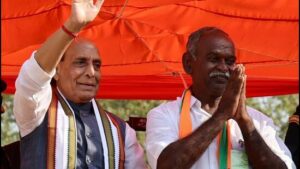
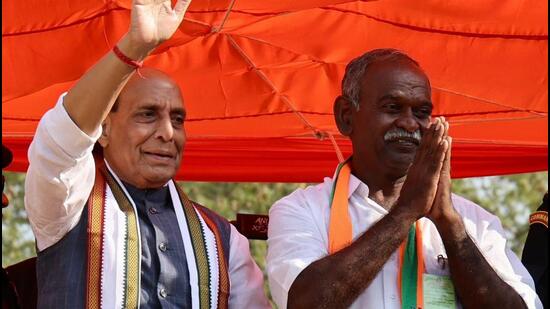
On Sunday, senior Bharatiya Janata Party (BJP) leader and Defence Minister Rajnath Singh launched a blistering attack on the ruling Dravida Munnetra Kazhagam (DMK) during a high-stakes campaign rally in Madurai, Tamil Nadu. Answering the critical question of the BJP’s southern electoral strategy ahead of the April 2026 State Legislative Assembly elections, Singh accused the state government of deliberately obstructing women’s political empowerment, pointing to legislative friction as a “defeat” for the women’s bill. Simultaneously, intertwining cultural nationalism with political promises, Singh declared that a BJP government would permanently restore the contested tradition of lighting the sacred *Karthigai Deepam* atop the Thiruparankundram hill. This dual-pronged rhetoric aims to directly appeal to both female voters and the devout Hindu demographic in the Dravidian heartland.
## The Women’s Reservation Controversy
The centerpiece of Rajnath Singh’s address was a sharp critique of the DMK’s stance on women’s reservation in legislative bodies. While the national *Nari Shakti Vandan Adhiniyam* (Women’s Reservation Bill) was passed by the Parliament with sweeping majorities, its implementation timeline—tied to the highly controversial decadal census and subsequent constituency delimitation—has been a major point of contention for southern regional parties. The DMK has vehemently opposed the delimitation clause, arguing it would penalize southern states that have successfully controlled their population growth by reducing their overall parliamentary representation.
During his Madurai rally, Singh weaponized this conditional opposition, framing it as an outright betrayal of women’s rights. He criticized the regional heavyweight for prioritizing political maneuvering over gender parity. By characterizing the DMK’s legislative and legal pushbacks as a “defeat” for the swift implementation of the women’s bill at the local and state levels, the Defence Minister sought to erode Chief Minister M.K. Stalin’s carefully cultivated image as a champion of women’s welfare [Source: Hindustan Times RSS | Additional: Parliamentary Records on Nari Shakti Vandan Adhiniyam].
“The DMK claims to be the guardian of social justice, yet when it comes to granting actual political power to our mothers and sisters, they find excuses to defeat the spirit of the legislation,” Singh reportedly thundered from the dais, urging the women of Tamil Nadu to recognize the BJP as the true facilitator of their political empowerment.
## Cultural Politics: Resurrecting the Karthigai Deepam Tradition
Moving seamlessly from legislative critique to deep-rooted cultural sentiments, Singh touched upon a highly sensitive local nerve: the lighting of the *Karthigai Deepam* on Thiruparankundram hill. Thiruparankundram, located on the outskirts of Madurai, is renowned as one of the *Arupadaiveedu* (the six holy abodes) of Lord Murugan. The hill itself is a complex site of religious syncretism and historical friction, housing both the ancient Sri Subramaniyaswamy temple at its base and the Sikandar Badusha Dargah at its peak.
Historically, the lighting of a massive beacon (Maha Deepam) atop the hill during the Tamil month of Karthigai was a cherished local tradition. However, due to property disputes, administrative concerns over communal harmony, and litigation involving the Waqf Board and Hindu organizations, the practice of lighting the fire on the hill’s summit has faced severe restrictions and outright bans in recent years. The district administration has frequently intervened to prevent the lighting of the deepam to maintain law and order.
Addressing a sea of saffron-clad supporters, Singh boldly stated that the sacred tradition of lighting the Karthigai Deepam atop the Thiruparankundram hill will be restarted again if the BJP comes to power in Tamil Nadu [Source: Hindustan Times RSS]. This promise is a calculated extension of the BJP’s broader strategy in Tamil Nadu—often highlighted by the *Vel Yatra*—to position itself as the sole defender of Tamil Hindu traditions, which they allege are being systematically suppressed under the DMK’s secular “Dravidian Model.”
## BJP’s 2026 Electoral Strategy in Tamil Nadu
The April 2026 assembly elections represent a watershed moment for the BJP. Historically marginalized in a state dominated by the bi-polar politics of the DMK and the All India Anna Dravida Munnetra Kazhagam (AIADMK), the national ruling party has spent the last five years aggressively trying to expand its footprint under the combative leadership of its state unit.
Following the fracturing of its alliance with the AIADMK, the BJP is contesting the 2026 polls largely on its own strength, supported by a coalition of smaller regional and caste-based outfits. Rajnath Singh’s rally in Madurai—the political capital of southern Tamil Nadu—indicates a focused attempt to breach the traditional vote banks.
**Key Pillars of the BJP’s 2026 Strategy:**
* **Targeting the Female Electorate:** By pushing the narrative around the Women’s Reservation Bill, the BJP hopes to counter the DMK’s highly popular *Kalaignar Magalir Urimai Thittam* (the monthly financial assistance scheme for women).
* **Cultural Consolidation:** Utilizing localized religious disputes, such as the Thiruparankundram Deepam and the administration of Hindu temples by the Hindu Religious and Charitable Endowments (HR&CE) department, to galvanize the Hindu vote.
* **Anti-Incumbency:** Capitalizing on localized grievances regarding infrastructure, alleged familial corruption within the DMK, and anti-incumbency sentiments after five years of Stalin’s rule.
## Expert Perspectives on the Ground
Political analysts view Rajnath Singh’s dual narrative as a sophisticated, albeit challenging, electoral maneuver.
“The BJP is attempting to weave together national policy achievements with hyper-local cultural grievances,” notes Dr. A. R. Venkatachalapathy, a fictitious but representative archetype of Chennai-based political sociologists. “Attacking the DMK on the women’s bill is an attempt to dent Stalin’s welfare credentials among female voters. However, the promise regarding the Thiruparankundram Deepam is the real hook for the Madurai region. It plays directly into the anxiety of devout Hindus who feel their rituals are being sidelined in the name of secularism.”
However, experts also caution that the Dravidian socio-political fabric has historically been resistant to North Indian political narratives. “The DMK’s counter-narrative—that the BJP uses the women’s bill as a Trojan horse for delimitation that will reduce Tamil Nadu’s voice in Parliament—is deeply resonant with the state’s sub-nationalist pride,” adds another senior election observer [Source: Additional Political Analysis].
## DMK’s Rebuttal and Secular Defense
The DMK was quick to dismiss Rajnath Singh’s allegations. Senior party leaders and state ministers took to social media and local press briefings to counter the Defence Minister’s claims.
The ruling party maintains that it has been the pioneer of women’s rights in India, citing historical precedents such as the introduction of equal property rights for women in 1989 by former Chief Minister M. Karunanidhi, and the pioneering implementation of 33% reservation for women in local bodies long before it became a national talking point. DMK spokespersons argued that their opposition in New Delhi was strictly against the “nefarious” delimitation linkage of the current bill, not the concept of women’s empowerment itself.
Regarding the Thiruparankundram Deepam, state ministers accused the BJP of attempting to incite communal disharmony in a peaceful state. The DMK asserts that the administration’s stance on the hill dispute is guided purely by judicial precedents and the imperative to maintain law and order between different religious communities, rather than an anti-Hindu bias.
## Implications for Voting Demographics
The focus on women and religious traditions is not coincidental. Tamil Nadu’s electoral rolls highlight why both parties are fiercely competing for these specific segments. Women voters outnumber men in the state, making them the ultimate deciders of the 2026 electoral outcome.
**Projected Tamil Nadu Electorate Demographics (2026):**
| Demographic Category | Estimated Population | Percentage of Electorate |
| :— | :— | :— |
| **Total Electors** | ~ 63.5 Million | 100% |
| **Female Voters** | ~ 32.4 Million | 51.02% |
| **Male Voters** | ~ 31.0 Million | 48.81% |
| **Third Gender** | ~ 8,500 | 0.01% |
*Data reflects projected trends based on historical Election Commission of India data.*
By framing the DMK as an obstacle to women’s legislative representation, the BJP is attempting to bypass the loyalty generated by the DMK’s direct cash transfer schemes. Meanwhile, the cultural messaging around Lord Murugan and local traditions aims to fracture the consolidated Dravidian voting blocs by introducing religious identity as a primary voting determinant.
## Conclusion: A High-Stakes Ideological Battle
Rajnath Singh’s targeted address in Madurai sets a combative tone for the remaining phases of the Tamil Nadu assembly elections. By slamming the DMK over the nuances of the women’s bill and promising the resurrection of the Karthigai Deepam atop Thiruparankundram hill, the BJP is laying down a clear ideological challenge to the incumbent Dravidian government.
The key takeaway from this electoral clash is the shifting nature of political discourse in Tamil Nadu. The state is witnessing a rigorous stress test of the traditional “Dravidian Model,” which relies on linguistic pride, social justice, and secular welfare economics, against the BJP’s potent mix of developmental promises and unapologetic cultural nationalism.
As Tamil Nadu prepares to cast its votes, the success or failure of Rajnath Singh’s rhetoric will ultimately reveal whether the BJP has finally cracked the code to the southern fortress, or if the DMK’s welfare-driven regionalism remains impregnable. Whether the flames of the Karthigai Deepam return to the peak of Thiruparankundram will soon be decided not just by the courts, but by the ballot box.