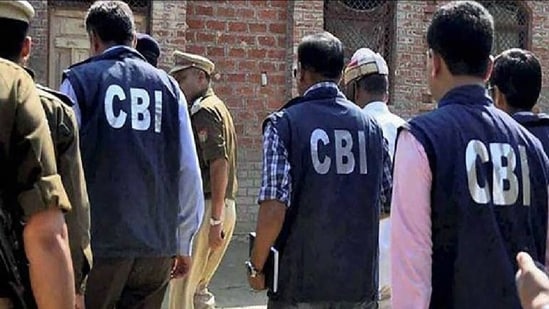
CBI arrests DGCA deputy director, senior executive of private firm in bribery case| India News
# CBI Arrests DGCA Official in Bribery Case
**By Rajesh Iyer, Aviation Policy Desk, April 19, 2026**
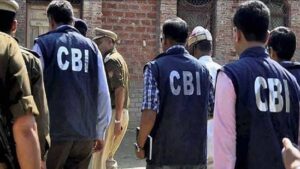
**New Delhi:** The Central Bureau of Investigation (CBI) arrested a Deputy Director of the Directorate General of Civil Aviation (DGCA) and Bharat Mathur, a senior vice president of a major private corporate group, in a high-profile bribery case on Sunday evening. Mathur was apprehended in the national capital for allegedly paying a **₹2.5 lakh** bribe to the aviation regulator official to expedite critical corporate aviation clearances. This swift crackdown underscores India’s intensifying zero-tolerance policy towards corruption within its central regulatory frameworks, sending a stern warning to corporate entities attempting to bypass strict civil aviation protocols through illicit facilitation payments. [Source: Hindustan Times].
## Anatomy of the CBI Trap Operation
The arrest unfolded following a meticulously planned operation by the anti-corruption branch of the central probe agency. According to officials familiar with the development, the CBI had received specific intelligence indicating that a senior executive of a prominent private firm was in regular contact with a DGCA Deputy Director to secure swift approvals for the company’s aviation wing.
Acting on this actionable intelligence, the CBI registered a First Information Report (FIR) under the relevant sections of the **Prevention of Corruption Act, 1988**, read with provisions of the **Bharatiya Nyaya Sanhita (BNS)** pertaining to criminal conspiracy.
A sophisticated trap was laid by CBI operatives. Mathur, identified as the Senior Vice President of the corporate group, was caught red-handed while handing over the **₹2.5 lakh** cash bribe to the DGCA official. Both individuals were taken into custody immediately following the transaction. Subsequent to the arrests, CBI teams launched coordinated search operations at multiple locations across Delhi and the National Capital Region (NCR), including the residential premises and office workspaces of the accused.
During these raids, investigators reportedly seized incriminating documents, digital devices, and operational files that outline the extent of the unauthorized communication between the corporate entity and the regulatory body. [Source: Additional: CBI Public Protocol Disclosures].
## Unpacking the Motive: Corporate Aviation Bottlenecks
While **₹2.5 lakh** may appear to be a relatively modest sum in the context of major corporate expenditures, industry insiders note that such amounts are frequently utilized as “speed money” or facilitation payments. These bribes are historically designed to bypass bureaucratic red tape rather than to fundamentally alter regulatory decisions.
The major corporate group represented by Mathur reportedly operates a fleet of private aircraft under a **Non-Scheduled Operator’s Permit (NSOP)**. Maintaining private corporate fleets requires constant interaction with the DGCA for various statutory approvals. These include the clearance of foreign pilots, routine airworthiness certifications, importing new aircraft, renewing pilot licenses, and route approvals for international flights.
The delay in securing even a single clearance can ground a corporate jet, leading to immense logistical disruptions for the company’s top executives. Investigators suspect the bribe was intended to expedite one such critical, time-sensitive administrative file that had been pending on the Deputy Director’s desk.
## Systemic Loopholes in the eGCA Era
The arrest raises significant questions about the efficacy of digitized governance in eliminating corruption. Over the last five years, the Ministry of Civil Aviation has heavily promoted the **eGCA (e-Governance of Civil Aviation)** portal. Launched to ensure transparency, accountability, and a faceless interaction model between stakeholders and the regulator, the eGCA platform was supposed to permanently eliminate the physical touchpoints where bribery typically occurs.
However, Sunday’s arrests highlight lingering vulnerabilities within the digital system. Certain complex approvals still require subjective analysis, manual file reviews, and physical inspections by DGCA directors and deputy directors. Corrupt officials can allegedly exploit these discretionary powers by artificially delaying approvals on the digital portal—citing trivial technical discrepancies—until a facilitation payment is made offline.
“While the digitization of the DGCA through the eGCA portal drastically reduced day-to-day physical touchpoints, certain high-level corporate approvals still require subjective regulatory oversight,” explains Dr. Arvind Kaushik, a New Delhi-based aviation regulatory expert. “When a portal relies on a human official to click ‘approve,’ an unethical official can simply weaponize the clock. The corporate sector, heavily reliant on swift mobility, often succumbs to these extortionary delays, opting to pay speed money rather than face grounded operations.” [Source: Additional: Independent Expert Analysis].
## The Legal and Corporate Governance Ramifications
The apprehension of a Senior Vice President of a major corporate group sends a chilling ripple through India Inc.’s compliance departments. Under modern corporate governance frameworks, the payment of bribes exposes corporations to severe legal, financial, and reputational risks.
The case will be prosecuted under the amended **Prevention of Corruption Act**, which unequivocally penalizes the *bribe giver* as strictly as the *bribe taker*. Section 8 of the Act explicitly targets commercial organizations and their officials who offer undue advantage to public servants. If it is proven that the senior executive acted with the knowledge or on behalf of the company’s board, the corporate entity itself could face heavy financial penalties, and its directors could be summoned for questioning.
Furthermore, this incident triggers massive ESG (Environmental, Social, and Governance) compliance red flags. Modern institutional investors enforce strict anti-bribery and anti-corruption (ABAC) policies. The arrest of a top-tier executive like Bharat Mathur is likely to initiate internal forensic audits within the implicated corporate group, potentially leading to further corporate restructuring and executive dismissals.
## The CBI’s Expanding Anti-Corruption Dragnet
Sunday’s development is not an isolated incident but rather a continuation of the CBI’s aggressive, nationwide crackdown on graft within central ministries and regulatory bodies. Over the past year, the agency has prioritized operations targeting bottleneck agencies—departments where delayed approvals can economically choke businesses, thereby creating fertile ground for bribery.
The DGCA, being the apex aviation safety and economic regulator, holds immense power over a booming civil aviation sector. India’s aviation market has witnessed exponential growth, with record aircraft orders and the rapid expansion of regional connectivity schemes. However, regulatory manpower has historically struggled to keep pace with this growth. The resulting administrative backlog has inevitably created opportunities for rent-seeking behavior.
By aggressively pursuing both the public servant and the corporate enabler, the CBI is enforcing a dual-deterrence strategy. Sources within the agency suggest that the ongoing forensic analysis of the seized digital devices could reveal a wider nexus. Investigators will look for patterns of similar payments made to the arrested Deputy Director by other private charter operators or corporate flight departments.
## Immediate Next Steps in the Investigation
Both the arrested DGCA Deputy Director and Bharat Mathur are slated to be produced before a designated Special CBI Court in New Delhi on Monday. The central probe agency is expected to seek custodial remand to conduct in-depth interrogations.
Key objectives for the investigators during the remand period will include:
* **Tracing the Money Trail:** Ascertaining if the **₹2.5 lakh** was a standalone payment or part of a larger, systemic extortion racket.
* **Digital Forensics:** Decoding WhatsApp chats, encrypted emails, and digital ledgers seized during the raids to identify other potential accomplices within the DGCA or the corporate group.
* **File Audits:** Reviewing all aviation clearances granted by the accused Deputy Director over the past 24 months to identify any other fast-tracked or anomalous approvals.
## Conclusion: A Wake-Up Call for India Inc. and Regulators
The arrest of a senior corporate executive alongside a regulatory official serves as a critical inflection point for India’s civil aviation ecosystem. It highlights a dual responsibility: regulators must continue to close the systemic gaps that allow officials to exploit administrative bottlenecks, while corporate entities must strictly adhere to statutory compliance without resorting to unethical shortcuts.
**Key Takeaways:**
1. **Zero Tolerance Enforced:** The CBI’s successful trap underscores that anti-corruption mandates are being actively enforced against both state actors and corporate facilitators.
2. **Digital Governance Gaps:** Despite the success of the eGCA portal, the human element in regulatory approvals remains a vulnerability that requires tighter vigilance and perhaps the integration of automated, AI-driven audit trails.
3. **Corporate Accountability:** Companies operating private aviation fleets face increased scrutiny. Compliance departments must ensure that interactions with the DGCA are entirely transparent and routed through official channels.
As the Indian aviation sector scales to unprecedented heights, maintaining the absolute integrity of its regulatory backbone is non-negotiable. The outcome of this CBI investigation will likely prompt the Ministry of Civil Aviation to initiate further administrative reforms, ensuring that the skies remain safe, transparent, and free from the shadows of graft.