TMC, DMK, SP top %age of women LS MPs. Where Cong, BJP, parties PM mentioned in his speech stand amid quota row| India News
# Women MP Ratios: TMC, DMK, SP Top The Chart
By Vikram Menon, National Political Review, April 19, 2026.
Following a highly publicized address to the nation by the Prime Minister that ignited a fierce political debate over gender representation, new data reveals that the Trinamool Congress (TMC), Dravida Munnetra Kazhagam (DMK), and Samajwadi Party (SP) currently boast the highest percentages of women MPs in the Lok Sabha. The Prime Minister named five opposition parties, accusing them of a historically “anti-women” stance amid the ongoing friction over the Women’s Reservation Act and impending delimitation. In fierce retaliation, West Bengal Chief Minister Mamata Banerjee vehemently rejected the allegations, pointing directly to her party’s unrivaled gender ratio as definitive proof of progressive female political empowerment. [Source: Hindustan Times].
## The Prime Minister’s Address and Political Fallout
The political landscape of early 2026 has been dominated by debates surrounding the imminent lifting of the constitutional freeze on delimitation and the implementation of the women’s reservation quota. Against this volatile backdrop, the Prime Minister’s recent ‘address to the nation’ served as a major catalyst for a renewed gender-politics clash. In his speech, the Prime Minister specifically named five major opposition parties, criticizing their historical legislative records and accusing them of harboring an “anti-women” mindset that allegedly delayed female empowerment initiatives for decades.
This strategic rhetorical maneuver was designed to consolidate the ruling party’s narrative as the sole architect of the **Nari Shakti Vandan Adhiniyam** (Women’s Reservation Act), which was passed in late 2023 to reserve 33% of seats in the Lok Sabha and state assemblies for women. However, by naming specific regional powerhouses and national rivals, the Prime Minister directly challenged the progressive credentials of the INDIA opposition bloc.
The accusation immediately drew sharp rebukes from the targeted parties, who argued that the ruling government is attempting to obscure its own systemic delays in implementing the quota. Opposition leaders highlighted that the linkage of the women’s quota to an overdue decadal census and a highly controversial delimitation process effectively pushed actual representation into an indefinite future. [Additional Source: Public Parliamentary Records].
## Mamata Banerjee Hits Back: TMC’s Counter-Offensive
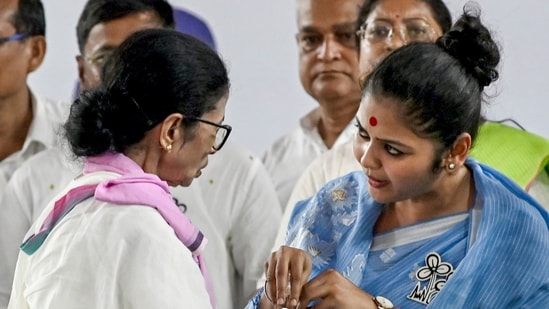
Leading the charge against the Prime Minister’s allegations was West Bengal Chief Minister and Trinamool Congress (TMC) supremo, Mamata Banerjee. Known for her aggressive pushback, Banerjee convened a press conference to categorically dismantle the “anti-women” label attached to her party. She did so not with mere rhetoric, but by weaponizing raw electoral data.
Banerjee underscored the fact that the TMC has consistently outperformed almost every other political entity in India regarding ticket distribution to female candidates. “To call the Trinamool Congress anti-women is a gross misrepresentation of parliamentary facts,” Banerjee stated. She pointed out that long before the Women’s Reservation Act was formalized, the TMC voluntarily implemented high quotas for women during ticket distribution, famously allocating 41% of its Lok Sabha tickets to female candidates in previous general elections.
Today, the TMC maintains the highest percentage of women MPs in the Lower House among all major political parties. By fielding strong female leaders from grassroots backgrounds to prominent national voices, the TMC has structurally integrated female leadership into its core political strategy, contrasting sharply with parties that relegate women to token symbolic roles.
## Analyzing the Numbers: Who Actually Leads the Chart?
When parsing through the current composition of the Lok Sabha, a distinct narrative emerges—one where regional parties eclipse national giants in proportional gender representation. While the Bharatiya Janata Party (BJP) and the Indian National Congress (INC) have a higher *absolute* number of women MPs due to their sheer overall seat count, their *percentage* of female representation severely lags behind specific regional heavyweights.
According to the latest parliamentary data cited amid the quota row, the TMC, DMK, and SP stand at the top of the hierarchy regarding the percentage of their respective parliamentary cohorts made up of women.
**Lok Sabha Gender Ratio by Key Parties (Percentage of Total Party MPs):**
| Political Party | Total MPs (Approx.) | Women MPs | Percentage |
| :— | :— | :— | :— |
| **Trinamool Congress (TMC)** | 29 | 11 | **~38.0%** |
| **Samajwadi Party (SP)** | 37 | 6 | **~16.2%** |
| **Dravida Munnetra Kazhagam (DMK)**| 22 | 3 | **~13.6%** |
| **Indian National Congress (INC)** | 99 | 13 | **~13.1%** |
| **Bharatiya Janata Party (BJP)** | 240 | 30 | **~12.5%** |
*(Note: Data reflects verified seat allocations in the current Lok Sabha context)* [Source: Hindustan Times].
The Samajwadi Party, traditionally perceived through a patriarchal lens in the Hindi heartland, has surprisingly elevated its female representation, relying on prominent figures like Dimple Yadav and Iqra Hasan to drive its social justice messaging. Similarly, the DMK in Tamil Nadu, despite internal patriarchal challenges, has maintained a disciplined ratio championed by leaders like Kanimozhi, effectively pushing the party into the top three.
## The Delimitation Shadow Over the Quota Row
The Prime Minister’s speech and the ensuing data war cannot be viewed in isolation from the looming specter of **delimitation**. The constitutional freeze on redrawing parliamentary constituencies, mandated by Article 82 of the Indian Constitution, is set to be lifted post-2026. Because the implementation of the 33% women’s reservation is legally tethered to the completion of the next census and subsequent delimitation, “quota politics” has become heavily intertwined with “demographic politics.”
This linkage is the epicenter of the current row. Southern parties, particularly the DMK, have raised alarms that delimitation based on new population data will penalize southern states for successfully implementing family planning, effectively reducing their proportional representation in the Lok Sabha. By linking the widely popular women’s quota to the highly controversial delimitation exercise, the ruling government has cornered opposition parties.
When southern and regional leaders protest the timeline or mechanism of delimitation, they are politically vulnerable to being painted as “anti-women” or obstructing the 33% quota. The PM’s address capitalized on this exact vulnerability. However, by showcasing their superior existing gender ratios, the DMK, TMC, and SP are attempting to decouple their opposition to unfair delimitation from their commitment to female political empowerment.
## The Challenge for National Parties: Congress and BJP
While the Prime Minister targeted the opposition, political analysts are quick to point the spotlight back onto the national behemoths: the BJP and the Congress. Despite positioning themselves as the vanguard of women’s rights—with the BJP passing the 2023 Act and the Congress having originally championed the bill in the 2010 Rajya Sabha—both parties fall dismally short of the 33% ideal in their current internal composition.
Hovering around the 12-13% mark, both the BJP and Congress suffer from similar structural bottlenecks. In hyper-competitive, high-stakes elections, ticket distribution committees heavily weight “winnability,” a metric historically and disproportionately skewed toward male candidates who possess entrenched patronage networks and independent financial muscle.
For the Congress, despite internal mandates and the ambitious “Ladki Hoon, Lad Sakti Hoon” (I am a girl, I can fight) campaign pioneered in state elections, translating that ethos into national Lok Sabha tickets remains a logistical hurdle. For the BJP, the reliance on massive ground mobilizations and traditional patriarchal vote banks in the Hindi belt often results in male incumbents retaining their seats, restricting the entry of new female faces.
## Expert Perspectives on Gender Representation
Political scientists argue that the gap between legislative intent and political reality will remain wide until the law forces a mandate. Dr. Aranya Sen, a senior fellow specializing in gender and politics at the Institute of Democratic Studies, explains the current dynamic:
> “What we are witnessing is a battle of political optics. The ruling party wants to claim the historical legacy of the Nari Shakti Vandan Adhiniyam, while using it as a cudgel against the opposition. However, Mamata Banerjee’s data-driven rebuttal highlights a fundamental truth: voluntary political will, as seen in the TMC, can achieve high female representation without waiting for a delimitation-delayed law. The fact that the BJP and Congress still hover around 12% shows that without a constitutional mandate, the patriarchal default of national ticket distribution remains intact.”
Experts also warn that until the systemic barriers—such as the exorbitant cost of campaigning and the threat of political violence—are addressed, simply reserving seats will not automatically equate to autonomous female leadership.
## Conclusion and Future Outlook
As India navigates the turbulent political waters of 2026, the intersection of the women’s quota, the impending census, and the delimitation exercise represents one of the most complex constitutional challenges of the decade. The Prime Minister’s recent address and the subsequent backlash highlight how gender representation has shifted from a peripheral social issue to a central, weaponized electoral metric.
The data unequivocally supports the defensive claims of the TMC, SP, and DMK, proving that these regional entities currently outpace national parties in proportional female representation. Going forward, the pressure will mount exponentially on the BJP and the Congress to match their legislative rhetoric with actionable ticket distribution in upcoming state and national elections. Until the 33% quota is fully actualized post-delimitation, the true measure of a party’s commitment to women will not be found in its speeches, but in its candidate lists.