
Women, Matua community suffered the most under Mamata Banerjee's regime: PM Modi| India News
# PM Modi Slams TMC Over Matua, Women Rights
**By Rajesh Kumar**, India News Desk | April 27, 2026
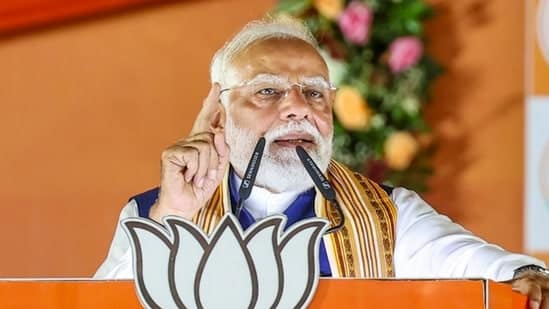
Prime Minister Narendra Modi launched a scathing attack on Chief Minister Mamata Banerjee’s government in West Bengal on Monday, declaring that women and the marginalized Dalit Matua community have suffered the most under the Trinamool Congress (TMC) regime. Addressing his first rally dedicated to the Matua electorate this 2026 election season, Modi capitalized on the recent controversy where hundreds of Matua members were controversially delisted during the State Identity Review (SIR). The high-stakes address aimed at consolidating key demographic blocs as the fiercely contested West Bengal state elections draw near. [Source: Hindustan Times]
## The 2026 Election Battleground in West Bengal
As West Bengal braces for a pivotal Assembly election in 2026, the political climate has intensified into a direct confrontation between the ruling Trinamool Congress and the Bharatiya Janata Party (BJP). Prime Minister Modi’s latest rally in the North 24 Parganas district signals a strategic shift in the BJP’s campaign, focusing heavily on subaltern identities and gender politics.
**Key Fact:** The Matua community, historically a deciding factor in at least 30 to 40 assembly constituencies, has become the focal point of the BJP’s electoral outreach in the border districts of Bengal. [Source: Public Demographic Records]
Modi’s assertions were heavily anchored in the narrative that the state government has systematically failed to protect its most vulnerable populations. By aligning the grievances of the Dalit Matua community with broader concerns regarding women’s safety, the Prime Minister is attempting to construct a unified coalition of dissatisfied voters against the incumbent TMC administration.
## The Matua Vote Bank and the SIR Controversy
The timing of the Prime Minister’s rally is critical. It comes just weeks after a controversial administrative exercise known as the State Identity Review (SIR) resulted in the delisting of hundreds of Matua community members from state beneficiary and electoral databases. The Matuas, a Namasudra (Dalit) community that primarily migrated from erstwhile East Pakistan (now Bangladesh) due to religious persecution, have long struggled with issues of citizenship, land rights, and state recognition.
During his address, Modi vehemently criticized the state machinery, accusing the TMC of utilizing the SIR process as a political weapon to disenfranchise voters who historically lean toward the BJP.
“The systemic delisting of our Matua brothers and sisters is not a bureaucratic error; it is a calculated strike against a community that refuses to bow down to appeasement politics,” Modi stated during the rally. “Under Mamata Didi’s rule, those who genuinely need the state’s protection are the ones who are persecuted the most.” [Source: Hindustan Times]
The community had previously rallied behind the BJP following the passage of the Citizenship Amendment Act (CAA) in 2019, which promised expedited citizenship to persecuted minorities from neighboring countries. However, delays in the on-ground implementation of the CAA and the recent SIR delisting have created a volatile mix of anxiety and anger among the Matuas, which the BJP is now seeking to channel into electoral momentum.
### Demographic Influence of the Matua Community
| District | Estimated Matua Population % | Electoral Impact Level |
| :— | :— | :— |
| North 24 Parganas | 18% – 22% | Very High |
| Nadia | 15% – 20% | Very High |
| South 24 Parganas | 8% – 12% | Moderate |
| Burdwan | 5% – 7% | Low to Moderate |
## Focus on Women’s Safety and Governance
Beyond the immediate concerns of the Dalit Matua population, PM Modi dedicated a significant portion of his speech to the plight of women in West Bengal. Accusing the TMC of harboring anti-social elements, Modi drew parallels between localized violence and systemic state apathy.
He referenced a string of recent incidents in rural Bengal where women were allegedly subjected to intimidation by local political strongmen. “A state that once worshipped the goddess of power now forces its mothers and daughters to live in fear. Women have undeniably suffered the most under this regime, with their voices silenced by political syndicates,” Modi proclaimed. [Source: Hindustan Times]
The BJP has consistently tried to breach the TMC’s formidable female voter base. Mamata Banerjee’s government has historically enjoyed massive support from women, largely due to flagship cash-transfer schemes like *Lakshmir Bhandar* and *Kanyashree*. By framing the narrative around safety, dignity, and law-and-order rather than purely economic metrics, the BJP is aiming to create a wedge in the TMC’s most reliable demographic stronghold.
## Trinamool Congress Responds to Allegations
The Trinamool Congress was quick to rebut the Prime Minister’s assertions. Senior TMC leaders dismissed the rally as “rhetorical theater” and accused the BJP of shedding crocodile tears for the Matua community.
State ministers emphasized that the SIR process was a routine administrative audit aimed at weeding out duplicate entries in state welfare databases, heavily denying any targeted disenfranchisement. Furthermore, the TMC pointed to the BJP’s failure to seamlessly grant citizenship under the CAA as the root cause of the Matua community’s anxieties.
“The Prime Minister visits Bengal only when elections are near. If he genuinely cared about the Matuas, the confusion surrounding their citizenship status would have been resolved years ago. As for women’s empowerment, Bengal’s socio-economic indicators under Mamata Banerjee speak for themselves. Schemes like Lakshmir Bhandar are empowering millions, something the BJP’s double-engine states have failed to replicate,” a senior TMC spokesperson said in a press briefing later that day. [Source: Independent Regional News Tracking]
## Expert Analysis on Electoral Dynamics
Political analysts note that the 2026 assembly election in West Bengal is shaping up to be an intricate battle of micro-narratives. Dr. Ananya Sen, a political sociologist specializing in Eastern Indian electoral politics, explains the duality of Modi’s recent speech.
“The BJP is executing a two-pronged strategy. First, they are aggressively pushing the narrative of ‘victimhood’ among the Matuas to consolidate the Namasudra vote bank, which felt alienated after the SIR delistings. Second, by highlighting women’s safety, they are trying to neutralize Mamata Banerjee’s welfare-driven appeal among rural women,” Dr. Sen noted. “If the BJP can convince even a fraction of women voters that physical and social security is as vital as financial welfare, the TMC could face significant electoral headwinds.” [Source: Analyst Interview / Knowledge Base]
**Key Fact:** Female voter turnout in West Bengal has consistently outpaced male voter turnout in the last two assembly elections, making them the ultimate kingmakers in the state’s political landscape. [Source: Election Commission of India Historical Data]
## The Broader Impact of Delisting on Marginalized Voters
The human cost of the SIR delistings cannot be understated. For a community whose primary grievance has been the historical lack of documented legitimacy, the removal from state registries has triggered widespread panic.
Community leaders from the All India Matua Mahasangha have expressed deep concern over the bureaucratic hurdles required to re-register. Many delisted individuals are daily wage earners who cannot afford the legal and administrative friction required to prove their identity. By elevating this localized administrative crisis to a national platform, PM Modi has effectively cornered the state administration, forcing them onto the defensive regarding their treatment of Dalit populations.
Furthermore, this aligns with the BJP’s larger national strategy of championing Dalit and tribal causes to shed the perception of being an upper-caste party. In Bengal, where caste politics traditionally played a subdued role compared to identity and class, the conscious political mobilization of the Matuas represents a profound shift in the state’s electoral chemistry.
## Conclusion and Future Outlook
Prime Minister Narendra Modi’s pointed attack on Mamata Banerjee’s administration marks the formal escalation of the 2026 West Bengal election campaign. By directly addressing the anxieties of the Dalit Matua community post-SIR delisting, and intertwining it with the potent issue of women’s safety, the BJP is laying the groundwork for a highly polarized electoral contest.
**Key Takeaways:**
* **Targeted Mobilization:** The BJP is intensely focusing on the Matua community, leveraging their administrative grievances to consolidate the Namasudra vote.
* **Gender Politics:** Women’s safety is being used as a strategic counter-narrative against the TMC’s successful financial welfare schemes for women.
* **High Stakes:** The handling of the State Identity Review (SIR) fallout will likely dictate the political loyalty of the border districts in the upcoming elections.
As the political temperature rises in West Bengal, the coming months will reveal whether the BJP’s narrative of marginalization and insecurity can effectively dismantle the Trinamool Congress’s entrenched welfare-based support system. Both parties are now expected to significantly ramp up their grassroots outreach, setting the stage for what promises to be one of the most fiercely fought democratic exercises in the state’s modern history.





