
Centre targets Northeast insurgency with 2029 deadline, first focus on Manipur| India News
# Centre Targets 2029 to End NE Insurgency
**By Special Correspondent, National Security Desk** | **April 27, 2026**
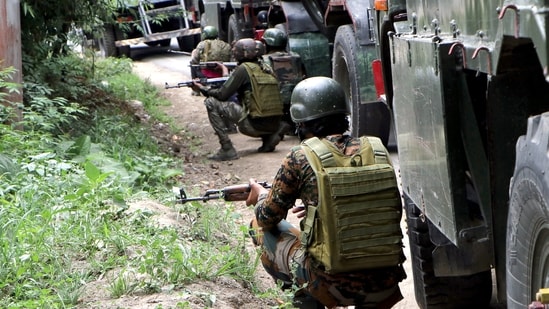
The Union government has established a definitive 2029 deadline to entirely eradicate insurgency across Northeast India, identifying the complex security environment of Manipur as the critical first phase of this operation. To facilitate this ambitious mandate, the Ministry of Home Affairs is preparing a massive strategic realignment of Central Armed Police Forces (CAPF). According to official sources, this sweeping troop movement will commence immediately following the conclusion of the West Bengal assembly elections and the annual Amarnath Yatra later this year. This aggressive timeline represents a final push to secure lasting peace and economic integration in the region. [Source: Hindustan Times]
## The 2029 Strategic Blueprint: A Final Push for Peace
For decades, the northeastern states of India have been synonymous with complex, overlapping armed insurgencies driven by ethnic divides, territorial demands, and historical grievances. However, the paradigm has shifted dramatically over the past decade. The Ministry of Home Affairs (MHA) has now formulated a comprehensive roadmap to formally declare the region “insurgency-free” by 2029, coinciding with the culmination of the current parliamentary term.
This objective relies on a two-pronged approach: intense kinetic pressure on holdout militant factions and generous political rehabilitation programs for groups willing to lay down their arms. The 2029 deadline is not merely a political slogan; it is an operational directive that has been disseminated to top security echelons, including the Intelligence Bureau, the Indian Army’s Eastern Command, and various paramilitary directorates.
The strategy pivots away from indefinite containment. Historically, security forces maintained a status quo of “acceptable violence levels” through prolonged ceasefires. The new mandate demands a transition from Suspensions of Operations (SoO) to permanent disbandment of armed cadres, complete surrender of weaponry, and the mainstreaming of former combatants into the democratic process. [Source: Public MHA Policy Frameworks]
## Manipur: The Crucial First Litmus Test
The decision to prioritize Manipur highlights the pragmatic approach of the MHA. Ever since severe ethnic violence erupted in May 2023 between the valley-majority Meitei community and the hill-dwelling Kuki-Zo tribes, Manipur has remained a highly volatile theatre. The fallout from those clashes resulted in deep societal polarization and, most alarmingly, the proliferation of sophisticated weaponry looted from state armories into the hands of civilian militias and dormant insurgent groups.
Targeting Manipur first is a strategic necessity. A stable Northeast is impossible without a secure Manipur, which serves as a vital geographic and political lynchpin in the region. The primary goals for the CAPF in Manipur will include:
* **Comprehensive Disarmament:** Launching intelligence-driven cordon and search operations to recover thousands of unreturned firearms.
* **Buffer Zone Enforcement:** Solidifying the security grids between the hill districts and the Imphal valley to prevent inter-community skirmishes.
* **Dismantling Extortion Networks:** Severing the financial lifelines of insurgent factions that rely on illegal taxation and highway blockades.
“Manipur represents the most complex security puzzle in the country today,” notes Dr. Avinash K. Sharma, a New Delhi-based security analyst specializing in Northeast geopolitics. “The state requires a calibrated mix of overwhelming security presence to deter violence, coupled with sensitive political outreach. If the Centre can stabilize Manipur and enforce the rule of law by 2027, the 2029 deadline for the broader Northeast becomes highly achievable.”
## CAPF Realignment: Timing and Tactical Deployment
The logistical backbone of the 2029 master plan relies heavily on the redeployment of the Central Armed Police Forces, notably the Central Reserve Police Force (CRPF), the Border Security Force (BSF), and the Indo-Tibetan Border Police (ITBP).
Currently, a massive quantum of paramilitary resources is committed elsewhere. The ongoing West Bengal assembly elections are notoriously resource-intensive, requiring hundreds of CAPF companies to ensure free, fair, and violence-free polling across multiple phases. Concurrently, preparations are underway for the Amarnath Yatra in Jammu & Kashmir, a high-threat pilgrimage route that necessitates a multi-tier security grid comprising thousands of specially trained mountain-warfare troops. [Source: Hindustan Times]
Once these two major national commitments conclude by late August 2026, the MHA will trigger a massive logistical operation. Special trains and heavy-lift military transport aircraft will rapidly reposition dozens of CAPF battalions into the Northeast sector. This infusion of fresh troops will allow the security apparatus to saturate vulnerable areas, gradually replacing or augmenting the Assam Rifles in specific internal security roles, and freeing up regular Indian Army units to focus strictly on external border defense.
## Border Fencing and the Transnational Challenge
A critical sub-plot to the Northeast insurgency is the region’s shared 1,643-kilometer porous border with Myanmar. For decades, insurgent groups from Assam, Nagaland, and Manipur utilized the dense jungles of Myanmar’s Sagaing Region and Chin State as safe havens, staging hit-and-run attacks into Indian territory before retreating across the international boundary.
The situation has been exacerbated by the ongoing civil war in Myanmar between the military junta and various Ethnic Armed Organizations (EAOs). Recognizing that domestic peace is intrinsically linked to border integrity, the Indian government made the historic decision in early 2024 to suspend the Free Movement Regime (FMR)—which previously allowed tribes on either side to cross up to 16 kilometers without a visa—and initiated a massive project to fence the entire Indo-Myanmar border.
The newly deployed CAPF battalions will play a pivotal role in this endeavor. BSF and Assam Rifles units will be tasked with securing the construction zones for the border fence, interdicting the smuggling of narcotics and small arms, and carefully managing the humanitarian fallout of refugees fleeing the conflict in Myanmar. Denying insurgents their cross-border sanctuaries is widely viewed as the death knell for the remaining armed outfits.
## A Decade of Accords: Building on Past Successes
The Centre’s confidence in the 2029 deadline does not exist in a vacuum; it is built on a foundation of significant diplomatic and security victories achieved over the last ten years. Since 2014, violence levels in the Northeast have plummeted by over 70%, and civilian casualties have dropped to historic lows.
This pacification was achieved through a series of landmark peace agreements, including:
* **The Bodo Peace Accord (2020):** Ending decades of violence in lower Assam.
* **The Karbi Anglong Accord (2021):** Mainstreaming multiple armed factions in central Assam.
* **The historic ULFA Peace Pact (2023):** Bringing the pro-talks faction of the United Liberation Front of Asom into the democratic fold.
Over 9,000 insurgents have surrendered and entered government rehabilitation programs in the past decade. The 2029 mandate is essentially a mop-up operation aimed at the few remaining recalcitrant groups. These include the ULFA-Independent faction operating from Myanmar, splinter groups of the National Socialist Council of Nagaland (NSCN), and various valley-based insurgent groups (VBIGs) in Manipur.
By systematically closing off their operational space, choking their funding, and offering lucrative rehabilitation packages, the MHA aims to force these final holdouts to the negotiating table.
## The Economic Imperative: Act East Policy
Security analysts frequently note that insurgency is both a cause and a symptom of economic stagnation. The 2029 deadline is not purely a militaristic endeavor; it is fundamentally tied to India’s “Act East” policy. New Delhi views the Northeast not merely as a peripheral frontier, but as the primary gateway to the booming economies of Southeast Asia.
Multi-billion-dollar infrastructure initiatives, such as the Kaladan Multi-Modal Transit Transport Project and the India-Myanmar-Thailand Trilateral Highway, have faced chronic delays due to security threats and extortion by armed groups. Complete eradication of insurgency is a prerequisite for unlocking the region’s vast economic potential, encouraging private sector investment, and generating employment for the local youth—which, in turn, is the best antidote to militant recruitment.
Furthermore, a stable Northeast allows the government to continue scaling back the Armed Forces (Special Powers) Act, or AFSPA. Over the last few years, the “disturbed area” notifications under AFSPA have been entirely or partially removed from large swathes of Assam, Meghalaya, Arunachal Pradesh, and Nagaland. The 2029 blueprint envisions a Northeast entirely free of AFSPA, symbolizing the triumph of civil administration over armed conflict.
## Conclusion: The Road Ahead
The central government’s 2029 target to completely neutralize insurgency in Northeast India marks a definitive shift in domestic security policy. By setting a hard deadline, the MHA is enforcing accountability across its intelligence, military, and paramilitary architectures.
The immediate future hinges entirely on the successful deployment of CAPF forces post-August 2026 and the subsequent stabilization of Manipur. The challenges are monumental—ranging from delicate ethnic sensitivities and transnational crime to challenging jungle terrain. However, with the successful implementation of border fencing, the dismantling of cross-border sanctuaries, and a continued focus on economic integration, the dream of a peaceful, prosperous, and insurgency-free Northeast by the end of the decade appears more achievable than ever before in modern Indian history.





