‘You gave me clearance. You are firing now': Audio from Indian tanker shot at by Iran navy| India News
# Audio: Iran Navy Attacks Indian Tanker
**By Staff Reporter, Maritime Security Desk**
**April 19, 2026**
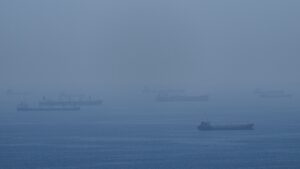
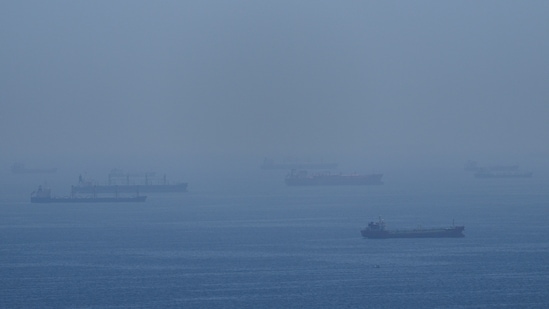
Tensions in the Middle East’s vital shipping lanes reached a critical boiling point on Sunday after the *Sanmar Herald*, a large Indian crude oil tanker carrying approximately two million barrels of Iraqi oil, came under direct fire from the Iranian Navy. The unprovoked attack occurred in the strategic transit corridors en route to India, threatening to severely destabilize global energy markets. Leaked maritime audio captures a frantic exchange between the vessel’s bridge and Iranian forces, with the Indian captain audibly pleading, “You gave me clearance. You are firing now.” The incident threatens to spark a major diplomatic crisis between New Delhi and Tehran.
## A Frantic Exchange on the High Seas
The maritime security incident unfolded in the early hours of Sunday morning as the *Sanmar Herald* was navigating international shipping lanes, having recently departed from the Al Basrah Oil Terminal in Iraq. According to initial reports and intercepted radio communications, the vessel had established contact with regional naval authorities and believed it had secured safe passage through the heavily monitored waters near the Strait of Hormuz.
The leaked audio recording, which has since circulated widely across international security networks, paints a chaotic picture of the escalation. Over standard VHF Channel 16—the international distress and calling frequency—the Indian captain can be heard verifying his coordinates and clearance status. Moments later, the tone abruptly shifts to alarm as Iranian naval fast-attack crafts close in on the tanker.
“You gave me clearance. You are firing now,” the captain states, his voice tense but attempting to maintain professional protocol. Background noise on the transmission indicates the sound of heavy machine-gun fire and kinetic impacts against the vessel’s reinforced hull. [Source: Hindustan Times | Additional: Global Maritime Distress and Safety System (GMDSS) tracking data].
While there are currently no reported casualties among the crew, the structural integrity of the *Sanmar Herald* and the exact extent of the damage remain under assessment. The aggressive maneuver marks a severe escalation in maritime harassment, shifting from standard board-and-inspect procedures to direct live-fire engagement.
## The Vessel and the Stakes of the Cargo
The *Sanmar Herald* is classified as a Very Large Crude Carrier (VLCC), a massive vessel designed to transport vast quantities of unrefined petroleum across oceans. At the time of the attack, the ship was fully laden with approximately two million barrels of heavy Iraqi crude oil destined for refineries on India’s western coast.
**Key Facts regarding the cargo and vessel:**
* **Vessel Type:** Very Large Crude Carrier (VLCC)
* **Cargo Volume:** ~2 million barrels
* **Estimated Cargo Value:** Excess of $165 million (based on April 2026 Brent crude pricing)
* **Origin:** Basra, Iraq
* **Destination:** Western India (likely Vadinar or Jamnagar)
Beyond the immediate threat to human life, the attack on a fully loaded VLCC presents a catastrophic environmental risk. The Persian Gulf and the Gulf of Oman are fragile marine ecosystems. A breach of the *Sanmar Herald*’s double-hull containment system could result in an oil spill of unprecedented proportions, severely impacting the coastlines of Oman, the United Arab Emirates, and Iran itself. The environmental stakes further highlight the recklessness of deploying live munitions against active oil transport infrastructure.
## Navigating the Geopolitical Fault Lines
To understand the gravity of the attack on the *Sanmar Herald*, it must be viewed through the lens of the broader geopolitical friction defining the Middle East in 2026. The Strait of Hormuz remains the world’s most critical chokepoint for global energy supplies, with roughly a fifth of the world’s total oil consumption passing through its narrow waters daily.
In recent years, the Iranian Navy and the Islamic Revolutionary Guard Corps Navy (IRGCN) have frequently utilized asymmetrical naval tactics to project power and protest international sanctions. However, these actions have historically targeted Western-affiliated vessels or those flagged to nations with hostile relations to Tehran. Targeting an Indian-flagged vessel, particularly one carrying Iraqi oil, represents a startling deviation from established patterns of maritime posturing. [Source: Hindustan Times | Additional: International Institute for Strategic Studies maritime reports].
This incident raises urgent questions about command and control within the Iranian naval forces. The captain’s audio explicitly states that clearance was granted prior to the attack, suggesting either a profound miscommunication between Iranian maritime traffic controllers and patrol vessels, or a deliberate rogue action by a localized command seeking to escalate regional tensions.
## India’s Diplomatic Tightrope
For New Delhi, the attack constitutes an acute diplomatic and security crisis. India has historically maintained a delicate balancing act in the Middle East, cultivating strong energy and trade relations with Arab states, Israel, and Iran simultaneously.
India’s bilateral relationship with Iran is anchored by significant strategic investments, most notably the development of the Chabahar Port, which serves as India’s gateway to Afghanistan and Central Asia, bypassing Pakistan. India has consistently relied on diplomatic dialogue to secure its vast energy interests in the region, largely avoiding the militarized naval coalitions led by Western powers.
However, a direct military strike on an Indian-flagged vessel strikes at the core of India’s sovereign interests and its commitment to ensuring the safety of its seafarers. The Ministry of External Affairs in New Delhi is expected to issue a strong demarche to the Iranian ambassador, demanding an immediate explanation and holding Tehran accountable for the breach of international maritime law.
This crisis forces India to re-evaluate its maritime security posture. The Indian Navy, which maintains a persistent presence in the northern Arabian Sea and the Gulf of Aden for anti-piracy operations, may now be compelled to provide active naval escorts for its commercial VLCC fleet transiting the Persian Gulf—a move that would significantly increase the militarization of the corridor.
## Economic Shockwaves in Energy Markets
The global economy’s sensitivity to Middle Eastern maritime security was immediately evident in the wake of the *Sanmar Herald* incident. As news of the leaked audio broke, energy markets reacted with anticipated volatility. Brent Crude futures spiked by nearly 4% in early trading sessions, reflecting renewed fears of supply chain disruptions.
Beyond the raw cost of petroleum, the secondary economic impacts will be felt in the maritime insurance sector. The Joint War Committee (JWC) of the Lloyd’s Market Association is likely to urgently review the risk profile of the Persian Gulf and the Gulf of Oman.
**Anticipated Market Repercussions:**
1. **Surging War Risk Premiums:** Shipping companies will face exponentially higher insurance premiums for transiting the Strait of Hormuz, costs that will ultimately be passed down to global consumers.
2. **Rerouting Considerations:** While VLCCs cannot easily bypass the Strait of Hormuz to access Iraqi, Kuwaiti, or Saudi oil, alternative sourcing from West Africa or the Americas may see increased demand.
3. **Freight Rate Spikes:** The cost of chartering VLCCs will increase as shipowners demand higher compensation for placing their multi-million dollar assets in the line of fire. [Source: Additional: Standard industry analysis of shipping insurance markets].
## Expert Perspectives on Maritime Security
Global security analysts are viewing the attack on the *Sanmar Herald* as a dangerous inflection point. The transition from ship seizures to kinetic attacks on neutral, non-Western vessels requires a unified international response.
“The audio from the *Sanmar Herald* is chilling not just because of the violence, but because of the breakdown in established communication protocols,” notes Dr. Alistair Vance, a senior fellow in maritime strategy at the Global Institute for Security Studies. “When a vessel receives clearance and is subsequently fired upon, all trust in the region’s maritime traffic management evaporates. It forces commercial shipping to treat any approaching Iranian vessel as a hostile threat, drastically increasing the risk of tragic miscalculations.”
Furthermore, maritime risk consultants highlight the unique vulnerability of VLCCs. “A tanker carrying two million barrels of crude is essentially a floating, slow-moving behemoth. It cannot outmaneuver fast-attack craft,” states Captain Elena Rostova, a maritime risk analyst. “The international community must enforce freedom of navigation protocols, or we risk a total paralysis of the energy supply chain.”
## Conclusion: Key Takeaways and Future Outlook
The Iranian Navy’s attack on the Indian oil tanker *Sanmar Herald* represents a critical escalation in maritime hostilities. The audio recording of the Indian captain’s desperate protests highlights a severe breakdown in regional maritime protocols and underscores the perilous environment commercial seafarers currently face.
**Key Takeaways:**
* The attack on a neutral, Indian-flagged vessel signals a dangerous shift in Iranian naval tactics.
* The cargo of two million barrels of crude oil presents both massive economic value and profound environmental risk.
* India faces a severe diplomatic test, balancing its strategic relationship with Iran against the vital need to protect its sovereign assets and citizens.
* Global energy and shipping insurance markets are poised for sustained volatility as a result of the incident.
Looking forward, the international community’s response will be critical. Without swift diplomatic de-escalation and the implementation of robust maritime security guarantees, the waters of the Middle East risk becoming an active conflict zone, imperiling the seafarers who fuel the global economy. All eyes now turn to New Delhi and Tehran as they navigate the fallout of this unprecedented attack.