
Samrat Choudhary chosen to become new Bihar chief minister| India News
# Samrat Choudhary Named New Bihar CM
By Special Correspondent, The India Political Desk, April 14, 2026
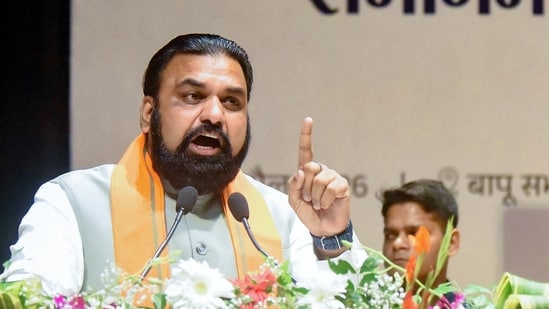
**Patna:** In a seismic shift that fundamentally alters the political landscape of northern India, Bharatiya Janata Party (BJP) leader Samrat Choudhary has been announced as the new Chief Minister of Bihar. The announcement on Tuesday afternoon came mere hours after Nitish Kumar officially submitted his resignation to the Governor, bringing an abrupt and historic close to a two-decade-long political innings that defined modern Bihar. Choudhary, who previously served as Deputy Chief Minister, will now lead the National Democratic Alliance (NDA) government, marking the first time the BJP has secured the top executive seat in the state. [Source: Hindustan Times | Additional: Public records and political analysis].
## The End of an Era: Nitish Kumar Bows Out
For nearly twenty years, the name Nitish Kumar was synonymous with Bihar’s governance. First taking the oath in 2000 for a brief seven-day stint, and then securing a massive mandate in 2005 that ousted the Rashtriya Janata Dal (RJD) from power, Kumar was widely celebrated as “Sushasan Babu” (the man of good governance). His resignation on April 14, 2026, signifies the definitive end of an era characterized by sweeping infrastructural reforms, female empowerment initiatives, and an ever-shifting web of political alliances.
Kumar’s departure was not entirely unexpected, given his declining health and the increasing dominance of the BJP within the state’s NDA framework. Over the past two years, following his return to the NDA fold in early 2024, the power dynamic in Bihar had steadily shifted. The Janata Dal (United), once the senior partner in the coalition, had increasingly found itself reliant on the BJP’s formidable electoral machinery and central leadership.
“Nitish Kumar’s legacy will be debated for decades. He inherited a state plagued by lawlessness and a crumbling economy, and he managed to restore the authority of the state. However, his frequent ideological pivots in the twilight of his career diminished his aura,” notes Dr. Sanjay Kumar, a Patna-based political scientist. “His resignation today is a pragmatic acknowledgment of the changing times and the BJP’s overarching ascendancy in the Hindi heartland.”
The transition was orchestrated with clinical precision. After a closed-door meeting at the Chief Minister’s residence, Kumar proceeded to the Raj Bhavan to hand in his resignation. Within two hours, the NDA legislative party convened and unanimously elected Samrat Choudhary as their new leader, paving the way for his ascension to the Chief Minister’s office.
## Enter Samrat Choudhary: A Strategic Ascent
The elevation of Samrat Choudhary represents a masterstroke of political engineering by the Bharatiya Janata Party’s central leadership. Choudhary’s rise within the BJP ranks has been meteoric. Appointed as the President of the Bihar BJP in 2023 and subsequently elevated to Deputy Chief Minister in January 2024, he has been positioned as the aggressive, unapologetic face of the saffron party in a state heavily defined by complex caste matrices.
Born into a prominent political family—his father, Shakuni Choudhary, was a founding member of the Samata Party and a veteran socialist leader—Samrat brings a unique blend of socialist roots and Hindutva alignment. His selection is a clear signal that the BJP is ready to shed its historical role as a secondary player in Bihar and take direct control of the state’s destiny.
Choudhary is known for his combative political style. Notably, he once wore a saffron turban, vowing not to take it off until Nitish Kumar was ousted from the Chief Minister’s chair. While political compulsions forced a reconciliation in 2024, Choudhary’s eventual ascension to the very seat he targeted underscores his political tenacity and the BJP’s long-term strategy of cultivating fierce, grassroots-level leadership. [Source: Hindustan Times | Additional: Historical political archives].
## The Caste Calculus: Solidifying the Luv-Kush Equation
In Bihar, politics and caste are inextricably linked, and Choudhary’s appointment is deeply rooted in demographic strategy. As a prominent leader of the Kushwaha (Koeri) community, Choudhary’s elevation is designed to solidify the BJP’s grip on the “Luv-Kush” equation.
Traditionally, the Luv-Kush alliance—comprising the Kurmi (Nitish Kumar’s caste) and Kushwaha communities—has been the bedrock of the JD(U)’s electoral success. By passing the baton to a Kushwaha leader, the NDA aims to ensure that this crucial non-Yadav Other Backward Class (OBC) vote bank remains intact and firmly aligned with the BJP, even in the absence of Nitish Kumar.
This demographic maneuvering is essential for countering the principal opposition, the RJD, led by Tejashwi Yadav. The RJD has historically relied on the formidable Muslim-Yadav (M-Y) axis, recently attempting to expand its base to marginalized communities. By placing an OBC leader at the helm, the BJP effectively neutralizes the opposition’s narrative that the saffron party is inherently upper-caste-centric.
“The BJP has recognized that to rule Bihar outright, it needs a native face that resonates with the backward classes,” explains senior journalist Radhika Sharma. “Samrat Choudhary ticks all the boxes. He is combative, belongs to a crucial OBC demographic, and has the absolute backing of the central leadership in New Delhi.”
## Immediate Political Fallout and JD(U)’s Uncertain Future
While the transition appeared smooth on the surface, the ripple effects within the NDA, particularly within the JD(U), are profound. Nitish Kumar was the glue that held his party together. His exit from active governance raises existential questions for the JD(U). Without its paramount leader, the party faces the immediate threat of fragmentation, with various factions likely to gravitate towards either the BJP or the RJD.
Sources suggest that the BJP has promised significant cabinet portfolios to JD(U) loyalists to prevent an immediate exodus, but the power dynamic has irrevocably shifted. The BJP is no longer riding pillion; it is firmly in the driver’s seat.
For the opposition Mahagathbandhan (Grand Alliance), Nitish Kumar’s resignation presents both an opportunity and a formidable challenge. Tejashwi Yadav, the Leader of the Opposition, was quick to react to the developments. While wishing Nitish Kumar good health in his retirement, Yadav sharply criticized the BJP, calling Choudhary’s appointment a “backdoor capture” of Bihar’s mandate. The opposition is expected to recalibrate its strategy, focusing heavily on youth employment and the perceived sidelining of regional priorities by a national party.
## Key Challenges Awaiting the New Administration
Samrat Choudhary steps into the Chief Minister’s office facing a litany of structural and economic challenges. While Nitish Kumar’s tenure brought roads and electricity to rural Bihar, the state still lags significantly in industrialization, per capita income, and employment generation.
**1. The Unemployment Crisis:**
Bihar continues to grapple with massive youth unemployment. The out-migration of labor and brain drain to states like Maharashtra, Gujarat, and the southern tech hubs remains a pressing issue. Choudhary will need to move beyond caste arithmetic and deliver tangible economic results. The BJP has repeatedly promised to bring large-scale industries and IT parks to the state; the onus is now entirely on them to deliver.
**2. Law and Order:**
Though the dark days of the 1990s are largely behind Bihar, recent years have seen a slight uptick in organized crime and sand mafia operations. As a leader who has often criticized previous administrations for being soft on crime, Choudhary’s administration will be under immediate scrutiny to enforce strict law and order.
**3. Center-State Relations:**
With the BJP holding power both in Patna and New Delhi, the long-standing demand for Bihar’s “Special Category Status” or a specialized financial package will once again take center stage. The people of Bihar will expect enhanced central assistance. If the new government fails to secure substantial federal funding for infrastructure and education, the opposition will swiftly capitalize on the failure.
## The Road Ahead for Bihar
The swearing-in ceremony for Samrat Choudhary is scheduled for later this week at Patna’s Gandhi Maidan, a venue that has witnessed the rise and fall of numerous political titans over the decades. The event is expected to be a massive show of strength for the BJP, with top national leaders, including the Prime Minister and Home Minister, likely to be in attendance.
Political analysts will be closely watching the composition of Choudhary’s new cabinet. The allocation of key ministries—such as Home, Finance, and Education—will indicate how the BJP plans to balance its internal factions, appease its JD(U) allies, and address the state’s administrative needs.
Furthermore, Choudhary’s approach to governance will be tested immediately. Unlike Nitish Kumar, who possessed a calm, bureaucratic demeanor, Choudhary’s style is inherently populist and combative. How this translates from the role of an opposition leader and deputy into the state’s ultimate executive authority will determine the trajectory of Bihar over the next half-decade.
## Conclusion: A New Chapter in Bihar Politics
The resignation of Nitish Kumar and the sudden, yet calculated, elevation of Samrat Choudhary mark a watershed moment in the political history of Bihar. A 20-year chapter of cautious coalition politics, characterized by Nitish Kumar’s delicate balancing acts, has been closed.
In its place begins an era of direct BJP governance in one of India’s most politically crucial states. Samrat Choudhary’s mandate is clear: consolidate the party’s gains, neutralize the RJD’s demographic pull, and kickstart a stalled economic engine. The transition has been swift, but the true test of governance begins now. The coming months will reveal whether this leadership change brings the promised rapid development to Bihar, or if the state’s deep-rooted socio-economic complexities will prove too steep a mountain to climb for its newest Chief Minister.





