
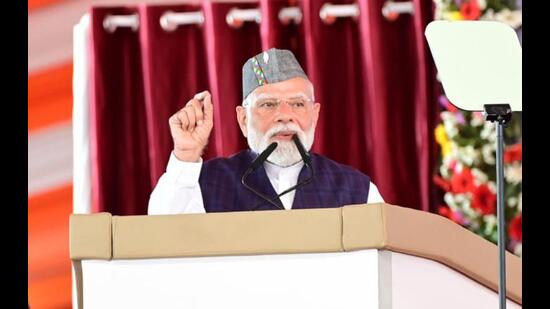
Modi inaugurates Delhi-Dehradun economic corridor, speaks about balanced development| India News
# Modi Opens Rapid Delhi-Dehradun Expressway
By Siddharth Verma, National Infrastructure Desk, April 14, 2026
Prime Minister Narendra Modi inaugurated the highly anticipated 213-kilometer Delhi-Dehradun Economic Corridor on Tuesday, marking a monumental leap in India’s regional infrastructure network. Speaking at the launch event in Dehradun on April 14, 2026, the Prime Minister emphasized the government’s unwavering commitment to balanced regional development. The state-of-the-art, access-controlled expressway will drastically slash travel time between the national capital and Uttarakhand’s capital from over six hours to roughly two and a half hours. This engineering marvel is expected to catalyze tremendous economic growth, drastically boost tourism, and seamlessly connect the agrarian belts of Western Uttar Pradesh with the hilly terrains of Uttarakhand. [Source: Hindustan Times]
## Transforming Commutes: The 2.5-Hour Revolution
For decades, the journey between New Delhi and Dehradun has been notorious for severe traffic bottlenecks, particularly near the Delhi-Uttar Pradesh border, Meerut, and the winding roads approaching the Shivalik hills. The newly inaugurated **Delhi-Dehradun Economic Corridor**, built at an estimated cost of over ₹13,000 crore, resolves these historic logistical nightmares.
Starting from Akshardham in eastern Delhi, the expressway bypasses congested urban centers, running through the districts of Baghpat, Shamli, and Saharanpur in Uttar Pradesh before entering Uttarakhand. By reducing the distance from 235 kilometers to **213 kilometers** and allowing for high-speed, uninterrupted transit, the corridor cuts the grueling six-to-seven-hour journey down to a mere 150 minutes.
The corridor is fully equipped with advanced traffic management systems (ATMS), GPS-based tolling, and comprehensive wayside amenities. Furthermore, the first phase of the project serves a dual purpose by significantly decongesting East Delhi, offering an elevated route that separates local city traffic from inter-state highway commuters. [Source: Hindustan Times | Additional: Ministry of Road Transport and Highways (MoRTH) Public Records]
## Championing Balanced Regional Development
During his inaugural address, Prime Minister Modi focused heavily on the concept of “balanced development,” a core tenet of the administration’s broader economic philosophy. Historically, infrastructure development in India has heavily favored metropolitan hubs, leaving tier-2 and tier-3 cities struggling with connectivity issues that stifle economic potential.
“True national progress cannot be achieved if our development is confined to metropolitan islands,” the Prime Minister stated during his address to a massive gathering at the Dehradun Pavilion. “The Delhi-Dehradun Economic Corridor is not just a highway of asphalt and concrete; it is a bridge of opportunity. It brings the markets of the capital to the farmers of Uttar Pradesh and the artisans of Uttarakhand, ensuring that the fruits of a growing economy reach every household.”
The expressway directly aligns with the **PM Gati Shakti National Master Plan**, an initiative aimed at breaking down departmental silos to create integrated, multi-modal logistics networks. By linking rural and semi-urban districts of Western UP directly to major consumption centers, the corridor promises to revitalize local economies that have long been geographically isolated from rapid industrialization.
## Balancing Ecology and Economy: Asia’s Largest Wildlife Corridor
One of the most globally lauded features of the Delhi-Dehradun Economic Corridor is its integration of ecological preservation with modern infrastructure. The final stretch of the expressway passes through the ecologically sensitive **Rajaji National Park**. To mitigate human-animal conflict and prevent habitat fragmentation, the National Highways Authority of India (NHAI) has constructed a **12-kilometer elevated wildlife corridor**—the largest of its kind in Asia.
This elevated stretch allows untethered movement for elephants, leopards, and other wildlife native to the Shivalik landscape beneath the highway, while vehicular traffic flows smoothly above. The corridor is equipped with sound-absorbing barriers and glare-reducing fencing to ensure that nocturnal animals are not disturbed by high-speed transit.
Dr. Ramesh Chandran, a leading wildlife biologist at the Institute of Ecology, praised the initiative. “For decades, highway expansion meant a death sentence for local wildlife corridors. The Rajaji elevated section represents a paradigm shift in Indian civil engineering. By prioritizing underpasses and elevated spans, we are proving that rapid economic development does not have to come at the cost of our biodiversity,” Dr. Chandran noted. [Source: Independent Environmental Analysis | Additional: NHAI Ecological Guidelines]
## Economic Multipliers for Uttar Pradesh and Uttarakhand
The economic implications of the corridor are expected to be profound, triggering a multiplier effect across multiple sectors. Western Uttar Pradesh, a region rich in agriculture and traditional manufacturing, stands to gain immensely from expedited freight movement.
**Key Economic Impacts Include:**
* **Saharanpur’s Woodcraft Industry:** The district of Saharanpur is globally renowned for its intricate wood carving industry. Faster access to international export hubs in Delhi and the NCR will significantly reduce logistical overheads for local artisans.
* **Agricultural Logistics:** Farmers in Baghpat and Shamli will now have rapid access to the massive agricultural markets (mandis) of Delhi. The reduced travel time ensures that perishable goods, such as dairy, fruits, and vegetables, reach urban consumers with minimal spoilage, thereby increasing profit margins for the agricultural sector.
* **Industrial Corridors:** State governments have already begun acquiring land near the highway’s interchanges to establish special economic zones (SEZs) and warehousing hubs, transforming the route into a bustling logistics artery.
## The Tourism Boom: Revitalizing the “Devbhoomi” Economy
Uttarakhand, affectionately known as *Devbhoomi* (Land of the Gods), is heavily reliant on tourism, which accounts for a substantial portion of its gross state domestic product (GSDP). The new expressway fundamentally alters the tourism landscape of the region.
Previously, a weekend trip from Delhi to Mussoorie, Rishikesh, or Haridwar required a full day dedicated solely to travel. With the new 2.5-hour commute, Dehradun and its surrounding hill stations are now viable day-trip or quick-weekend destinations for the roughly 30 million residents of the National Capital Region (NCR).
“The psychological barrier of the six-hour drive has been shattered today,” said Meera Bisht, Secretary of the Uttarakhand Tourism Promotion Board. “We are projecting a 40% increase in short-stay tourist footfall over the next twelve months. To accommodate this, the state is heavily incentivizing sustainable homestays and eco-resorts on the outskirts of Dehradun and Tehri.” [Source: Industry Projections | Additional: State Tourism Board Reports]
Furthermore, the expressway features dedicated spur routes seamlessly connecting to religious hubs like Haridwar, making spiritual pilgrimages significantly safer and more convenient for millions of devotees.
## Real Estate and Urban Expansion
The massive reduction in travel time is already reshaping real estate dynamics along the corridor. Dehradun is experiencing a surge in demand for second homes, retirement communities, and commercial real estate. Concurrently, the towns of Western UP along the highway are seeing an influx of investments in warehousing and cold-chain logistics facilities.
Real estate analysts point out that property values within a 10-kilometer radius of the expressway’s entry and exit ramps have appreciated by over 25% in the final year of the project’s construction alone. This boom brings both opportunities and challenges; while it drives immediate capital into local economies, urban planners are warning local municipal bodies to strictly enforce zoning laws to prevent chaotic urban sprawl.
## A Blueprint for Future Infrastructure
The completion of the Delhi-Dehradun Economic Corridor is a testament to India’s accelerating infrastructure capabilities. It exemplifies a modern approach to road building where speed, economic utility, and environmental stewardship are not viewed as mutually exclusive.
**Key Takeaways:**
* **Time Efficiency:** Redefines Northern Indian logistics by reducing travel times by over 60%.
* **Ecological Benchmark:** Sets a global standard for highway construction through protected biospheres via the 12-km elevated wildlife corridor.
* **Economic Integration:** Fulfills the mandate of balanced development by integrating marginalized agrarian districts with major metropolitan economies.
As commercial traffic begins to flow freely across the pristine tarmac of the Delhi-Dehradun expressway, it serves as a robust blueprint for future projects. With massive infrastructural undertakings continuing to bridge the gap between rural Bharat and urban India, the economic corridor stands as a physical manifestation of a rapidly evolving, highly connected national economy poised for its next phase of historic growth.





