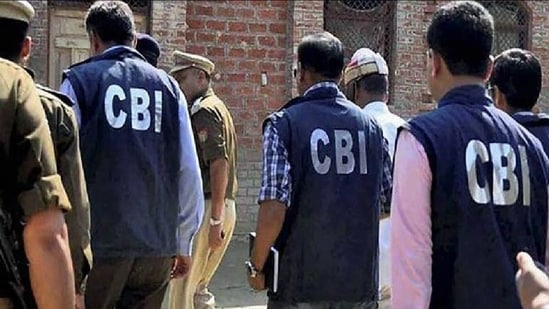
CBI arrests DGCA deputy director, senior executive of private firm in bribery case| India News
# CBI Arrests DGCA Exec in Bribery Case
**By Vikram Sharma, Senior Aviation Correspondent, April 19, 2026**
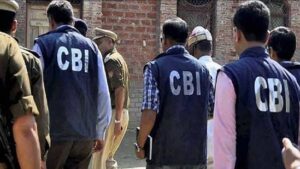
In a decisive crackdown on institutional graft, the Central Bureau of Investigation (CBI) apprehended a Deputy Director of the Directorate General of Civil Aviation (DGCA) and a senior corporate executive in New Delhi on Sunday. The arrests followed a highly coordinated surveillance operation that culminated in the individuals being caught red-handed exchanging a ₹2.5 lakh cash bribe. Bharat Mathur, identified as a Senior Vice President of a prominent private conglomerate, was arrested for allegedly facilitating the illicit payment. The funds were reportedly exchanged to expedite pending aviation regulatory clearances. This high-profile intervention on April 19, 2026, highlights federal authorities’ zero-tolerance approach toward corruption within India’s apex aviation regulatory body. [Source: Hindustan Times].
## The Anatomy of the CBI Sting Operation
The operation that led to the unearthing of this bribery nexus was not an overnight endeavor. According to reliable federal sources, the CBI had been monitoring the communications and movements of specific individuals within the aviation regulatory framework following anonymous whistleblower complaints. The trap was meticulously laid after the agency registered a First Information Report (FIR) under the relevant sections of the Prevention of Corruption Act.
Under the standard operating procedures of India’s premier investigative agency, an independent verification of the bribery demand was conducted. Once the demand for ₹2.5 lakh was confirmed, the CBI organized a trap involving independent witnesses. The currency notes utilized in the transaction were chemically treated, a standard forensic procedure that binds the phenolphthalein powder to the hands of the recipient, turning a chemical wash pink and providing undeniable physical evidence in court.
Following the successful sting operation, the CBI immediately initiated search and seizure operations across multiple locations in the National Capital Region (NCR). These searches included the official workspace of the DGCA Deputy Director at the agency’s headquarters in Safdarjung, as well as the residential premises of both the public official and Bharat Mathur. Investigators are reportedly examining digital devices, hard drives, and physical files to determine if this ₹2.5 lakh transaction was an isolated incident or part of a deeper, systemic extortion racket. [Source: Original RSS | Additional: Public records on CBI procedural operations].
## Regulatory Bottlenecks and “Speed Money”
To understand the motivations behind a senior corporate executive risking severe legal repercussions for a relatively modest sum of ₹2.5 lakh, one must examine the bureaucratic landscape of the DGCA. As India’s civil aviation sector continues its meteoric rise in 2026, the regulatory body is tasked with an overwhelming volume of approvals.
These clearances range from the certification of new commercial aircraft and the issuance of Non-Scheduled Operator’s Permits (NSOP) for private corporate jets, to the increasingly complex approvals required for commercial drone operations and emerging eVTOL (electric vertical takeoff and landing) technologies.
Despite the implementation of the eGCA (e-Governance of Civil Aviation) digital portal aimed at minimizing human interface and bringing transparency to the approval process, critical technical clearances still require manual oversight and physical signatures from director-level officials. In corporate environments where time directly equates to vast sums of money, the delayed deployment of a multi-million-dollar corporate jet or a stalled drone logistics project can result in massive financial hemorrhaging.
In this context, the ₹2.5 lakh bribe is widely viewed by industry insiders not as a massive payoff, but as “speed money”—a facilitation payment designed to move a file from the bottom of a stack to the top. However, under Indian law, there is no distinction between speed money and outright bribery; both constitute severe criminal offenses.
## Corporate Governance Under the Scanner
The arrest of Bharat Mathur, a Senior Vice President, sends shockwaves through India’s corporate corridors. While the CBI has temporarily withheld the name of the major corporate group pending further investigation, the involvement of a C-suite equivalent executive raises critical questions regarding corporate governance and internal compliance mechanisms.
In recent years, the Securities and Exchange Board of India (SEBI) and the Ministry of Corporate Affairs have mandated stringent anti-bribery and corruption (ABC) frameworks for large conglomerates. The fact that a Senior VP was directly handling cash to bribe a government official suggests a catastrophic failure of these internal compliance firewalls.
“When a senior executive is implicated in a direct cash bribe, it strips away the veil of corporate deniability,” explains Arindam Chatterjee, a New Delhi-based corporate compliance attorney. “This is not a rogue junior liaison officer making a mistake. A Senior Vice President acting in this capacity indicates that facilitation payments might be an implicitly approved operational expense within the company’s culture. Under the amended Prevention of Corruption Act, the corporate entity itself can now be held criminally liable unless it can prove it had adequate procedures in place to prevent such conduct.” [Source: Independent Legal Analysis].
## Expert Perspectives on Aviation Integrity
The integrity of the DGCA is not merely a matter of bureaucratic procedure; it is a fundamental pillar of national and international aviation safety. When regulatory officials are compromised, the cascading effects can be disastrous.
Dr. Manish Tewari, an independent aviation safety consultant and former member of the Civil Aviation Safety Advisory Council (CASAC), notes the severe implications of such compromises. “The DGCA acts as the absolute gatekeeper for civil aviation safety in India,” Dr. Tewari states. “Whether a file pertains to the airworthiness of a corporate jet or the operational clearance of a new aviation startup, bypassing standard operating procedures for financial gain compromises the entire regulatory framework. Today it is an administrative clearance; tomorrow it could be a blind eye turned toward a critical safety violation.”
Furthermore, international aviation watchdogs, such as the International Civil Aviation Organization (ICAO) and the United States Federal Aviation Administration (FAA), closely monitor the operational integrity of the DGCA. Historically, India has faced downgrades in its aviation safety rankings due to regulatory deficiencies. While India’s ranking has significantly improved in the mid-2020s, incidents of high-level corruption risk damaging the hard-earned global credibility of the Indian aviation sector.
## Legal Ramifications and the Road Ahead
The legal path forward for both the DGCA Deputy Director and Bharat Mathur is fraught with severe penal consequences. The Prevention of Corruption (Amendment) Act, 2018, explicitly tightened the noose around both the bribe-taker and the bribe-giver.
Under Section 7 of the Act, any public servant who accepts or attempts to obtain an undue advantage is liable for imprisonment for a term which shall not be less than three years, but which may extend to seven years, along with a fine. Equally significant is Section 8, which stipulates that any person who gives or promises to give an undue advantage to induce a public servant to perform their public duty improperly can be punished with up to seven years of imprisonment.
For the CBI, the immediate next step involves custodial interrogation. The agency will likely seek police remand from a special CBI court to question both accused individuals comprehensively. Investigators will aim to uncover the specific files that were being processed in exchange for the ₹2.5 lakh and ascertain if other officials within the DGCA were beneficiaries of a broader syndicate.
## Impact on the Aviation Industry Ecosystem
The broader Indian aviation sector, which is currently enjoying a period of unprecedented expansion in 2026, is watching this development with bated breath. The industry relies heavily on a predictable, transparent, and swift regulatory environment.
Industry lobby groups and chambers of commerce have long advocated for the complete digitalization of the DGCA to remove discretionary powers from mid-level bureaucrats. While systems like eGCA have digitized the submission of applications, the final approval authority often remains vested in human hands, creating bottlenecks. This arrest highlights the urgent need for algorithmic, time-bound approval mechanisms where files cannot be artificially delayed to extort facilitation payments.
Additionally, this incident serves as a stern warning to other corporate entities operating in the aviation, defense, and infrastructure sectors. The willingness of federal agencies to employ physical sting operations against high-ranking corporate executives signals a shift away from merely targeting the public servant, ensuring that the supply side of corruption is equally penalized.
## Conclusion: Key Takeaways and Future Outlook
The arrest of a DGCA Deputy Director and corporate Senior Vice President Bharat Mathur by the CBI over a ₹2.5 lakh bribe is a watershed moment for Indian aviation regulation. It underscores several critical takeaways:
* **Zero Tolerance in Action:** Federal agencies are actively utilizing intelligence and sting operations to root out corruption at the highest levels of regulatory bodies. [Source: Hindustan Times].
* **Corporate Accountability:** The arrest of a Senior VP highlights that the private sector is under intense scrutiny. The supply side of bribery is being targeted just as aggressively as the public servants accepting the funds.
* **Regulatory Vulnerability:** Despite massive strides in e-governance, manual bottlenecks within the DGCA continue to foster environments where “speed money” is utilized by desperate corporate entities seeking fast-tracked approvals.
* **Reputational Risk:** Both the unnamed corporate conglomerate and the DGCA face significant reputational damage, emphasizing the need for robust internal audits and transparent administrative processes.
Looking to the future, this incident is expected to catalyze further reforms within the Ministry of Civil Aviation. Industry experts anticipate a renewed push toward completely automated, blockchain-backed regulatory clearance systems that entirely eliminate human discretion in standard approvals. For the immediate future, however, the aviation sector remains on high alert as the CBI delves deeper into the seized digital devices, potentially unraveling a wider network of illicit facilitation within India’s soaring aviation market.