Who is Dinesh Trivedi? BJP leader, former minister named next envoy to Bangladesh| India News
# Trivedi Appointed India Envoy To Bangladesh
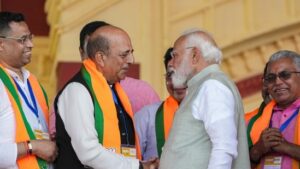
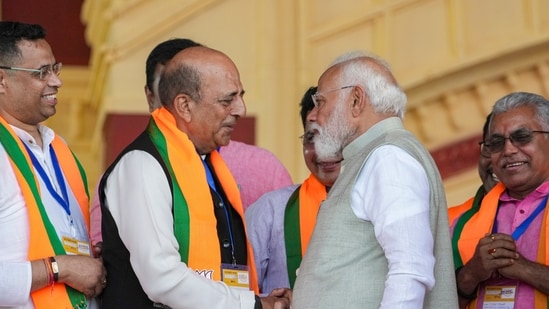
On April 19, 2026, the Indian government made a landmark diplomatic move by appointing veteran Bharatiya Janata Party (BJP) leader and former Union Minister **Dinesh Trivedi** as the next High Commissioner to Bangladesh. Set to replace career diplomat Pranay Verma in Dhaka, Trivedi becomes the first political appointee to helm a crucial neighborhood diplomatic mission in recent memory. This unexpected but highly strategic appointment signals a fundamental shift in New Delhi’s approach to bilateral relations, aiming to leverage Trivedi’s political acumen, linguistic fluency, and extensive administrative experience to navigate the increasingly complex political realities of a post-transition Bangladesh. [Source: Hindustan Times].
## A Rare Political Appointment in the Neighborhood
Historically, India has relied on the seasoned bureaucrats of the Indian Foreign Service (IFS) to manage its diplomatic outposts, particularly in its immediate neighborhood. The South Block tradition dictates that career diplomats, trained in the nuances of international law and statecraft, handle the sensitive corridors of Dhaka, Islamabad, Colombo, and Kathmandu. By tapping Dinesh Trivedi for the Dhaka mission, the Ministry of External Affairs (MEA) is breaking away from a long-established precedent.
Pranay Verma, whom Trivedi will succeed, is a distinguished career diplomat who steered the Indian mission through the turbulent waters of Bangladesh’s pivotal political transitions over the last few years. However, as the geopolitical landscape in South Asia continues to evolve rapidly, the Prime Minister’s Office (PMO) appears to have recognized the necessity of a different kind of diplomatic tool: direct political engagement.
Political appointments to ambassadorial posts are not entirely unprecedented for India—figures like Naresh Chandra and Meera Shankar have served in Washington—but they are exceptionally rare in the immediate neighborhood. This move underscores the high stakes New Delhi attaches to its relationship with Dhaka in 2026. A political appointee often carries the explicit mandate and direct backing of the highest echelons of the home government, bypassing traditional bureaucratic red tape to facilitate faster, more decisive communication.
## The Making of a Veteran Politician
To understand the strategic logic behind this appointment, one must look at Dinesh Trivedi’s multifaceted career. Born in 1950, Trivedi is not a conventional grassroots politician. Armed with an MBA from the University of Texas at Austin, he spent years in the corporate sector before entering the political arena. Over the decades, his political journey has seen him traverse through the Congress, the Janata Dal, the Trinamool Congress (TMC), and finally, the BJP, which he joined in 2021.
Trivedi is perhaps best known for his brief but impactful tenure as the Union Minister of Railways in 2011-2012 during the UPA-II government. He famously proposed a modest hike in passenger fares to modernize the railway infrastructure and ensure fiscal prudence. The move cost him his ministerial portfolio due to intense opposition from his then-party boss, Mamata Banerjee, but it earned him widespread respect across the political spectrum as a pragmatic, reform-minded administrator willing to prioritize national interest over populist politics.
His corporate background, coupled with his extensive experience in both the Rajya Sabha and the Lok Sabha, has equipped him with a unique blend of administrative efficiency and political negotiation skills. Furthermore, his shift to the BJP in 2021 demonstrated his adaptability and alignment with the current ruling dispensation’s broader national vision. [Additional: Public Biographical Records].
## Navigating the Post-2024 Dhaka Landscape
Trivedi is stepping into Dhaka at a critical juncture. The geopolitical realities of Bangladesh have shifted dramatically since the watershed political events of August 2024. The transition of power required New Delhi to rapidly recalibrate its foreign policy, moving away from a single-party dependency to building broader, multi-partisan relationships within Bangladesh’s new political framework.
In 2026, the challenges are manifold. India must continuously work to maintain robust security cooperation, ensure the protection of minority rights, and manage border skirmishes that occasionally inflame public sentiment on both sides. Moreover, there is a constant need to counter the growing economic and strategic footprint of other regional powers, notably China, in the Bay of Bengal region.
“The transition from a career diplomat to a seasoned politician reflects New Delhi’s recognition that bureaucratic channels alone are insufficient for the current climate in Dhaka,” notes Dr. Arindam Sen, a Senior Fellow at the Institute for South Asian Strategic Studies. “A career diplomat is bound by protocol. A politician like Trivedi can reach out across party lines, engage with civil society informally, and defuse tensions using political intuition rather than just diplomatic notes.” [Additional: Geopolitical Expert Analysis].
## The Strategic Logic: A Direct Line to New Delhi
One of the most significant advantages of a political appointee is the perception—and reality—of a direct line to the Prime Minister and the External Affairs Minister. When Dinesh Trivedi speaks in Dhaka, the Bangladeshi leadership will understand that his words carry the immediate, unfiltered backing of New Delhi’s political leadership.
This direct channel is vital for rapid decision-making. In moments of crisis, such as sudden border tensions or urgent trade blockades, the ability of the High Commissioner to pick up the phone and speak directly to cabinet ministers in India without going through the traditional MEA hierarchy can prevent minor incidents from escalating into diplomatic standoffs.
Furthermore, Trivedi’s affable nature and corporate-honed negotiation skills make him an ideal candidate to engage with Bangladesh’s diverse political factions. New Delhi’s current objective is to assure Dhaka that India’s friendship is with the people and the State of Bangladesh, irrespective of which political coalition holds power. Trivedi, who has navigated complex coalition politics within India for decades, is well-suited to deliver this nuanced message.
## The West Bengal Factor and Linguistic Diplomacy
Another undeniable factor in Trivedi’s appointment is his deep connection to West Bengal. Bilateral relations between India and Bangladesh are inextricably linked to the socio-political climate of West Bengal. Issues such as the sharing of the Teesta River waters, cross-border smuggling, migration, and the management of a highly porous 4,096-kilometer border require active cooperation between New Delhi, Kolkata, and Dhaka.
Trivedi is fluent in Bengali, Hindi, Gujarati, and English. His linguistic proficiency is a massive soft-power asset. Cultural diplomacy plays an outsized role in Indo-Bangla relations. A High Commissioner who can converse fluently in Bengali, understand the cultural nuances of the region, and participate in local intellectual and cultural discourse can build immense goodwill among the Bangladeshi populace.
Moreover, having spent the bulk of his political career in West Bengal, Trivedi understands the domestic compulsions of the state’s leadership. While the Teesta water-sharing agreement remains a complex issue largely dependent on state-center consensus in India, Trivedi’s intimate knowledge of the stakeholders involved could help New Delhi draft more acceptable frameworks for future negotiations.
## Trade, Connectivity, and Economic Imperatives
Beyond politics and border management, the India-Bangladesh relationship is anchored in economics. Bangladesh remains India’s largest trading partner in South Asia, and India is the second-largest trading partner for Bangladesh. As both nations look forward to the latter half of the 2020s, economic integration is at the top of the agenda.
Trivedi’s background in aviation, corporate management, and particularly his stint as Railways Minister, aligns perfectly with India’s connectivity goals in the region. Key economic priorities for his tenure will likely include:
* **Advancing the CEPA:** Pushing forward the Comprehensive Economic Partnership Agreement (CEPA) to reduce trade gaps and integrate supply chains.
* **Railway Connectivity:** Expanding cross-border rail links. Trivedi’s prior experience at the helm of Indian Railways will be invaluable in fast-tracking projects like the Akhaura-Agartala rail link and optimizing freight corridors.
* **Energy Sector Cooperation:** Enhancing the cross-border electricity grid and managing the export of power from Indian plants to Bangladesh.
* **Transit and Trade Corridors:** Facilitating smoother transit rights for Indian goods through Bangladeshi territory to India’s landlocked northeastern states, a crucial component of India’s “Act East” policy.
“Trivedi brings a technocratic approach wrapped in political packaging,” explains a senior MEA official who wished to remain anonymous. “He understands balance sheets as well as he understands ballot boxes. That is exactly what is needed to push stalled infrastructure and trade agreements over the finish line.” [Additional: Economic Diplomatic Analysis].
## Conclusion: A New Blueprint for Neighborhood Diplomacy
The appointment of Dinesh Trivedi as India’s High Commissioner to Bangladesh marks a bold, out-of-the-box strategy by New Delhi. By replacing a career diplomat with a seasoned political heavyweight, India is signaling that its relationship with Bangladesh transcends routine foreign policy; it is a vital domestic and strategic imperative.
As Trivedi prepares to take charge in Dhaka, his mandate will be clear: rebuild political trust across all spectrums of Bangladeshi society, accelerate economic integration, and ensure that the border remains a zone of peace and commerce rather than conflict. If successful, this appointment could serve as a new blueprint for how India manages its most critical neighborhood relationships in an era of unpredictable geopolitical shifts.
***
**By Special Correspondent, Strategic Affairs Desk**
**April 19, 2026**