‘Jhalmuri break’: PM Modi makes surprise halt for street food amid Bengal election campaign| India News
# PM Modi’s Jhalmuri Halt Sparks Bengal Buzz
**By Special Political Correspondent, The National Desk, April 20, 2026**
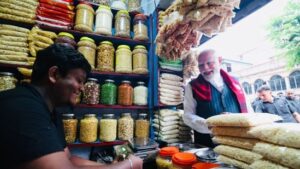
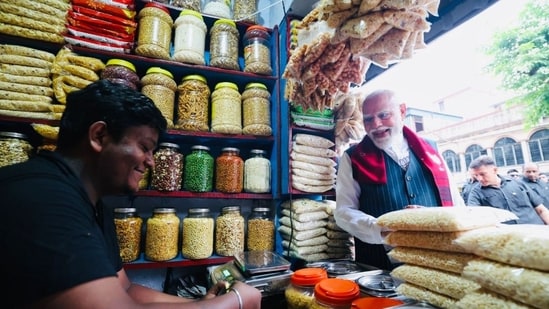
**Prime Minister Narendra Modi** brought his high-stakes West Bengal election campaign to an unexpected halt on Sunday, April 19, 2026, to enjoy a traditional **‘jhalmuri’ break** at a local street-side stall. Amidst the intense heat of the campaign trail, the Prime Minister’s convoy made a surprise detour, allowing him to interact with locals and savor the iconic Bengali street food. This unscripted moment of culinary diplomacy quickly went viral, serving as a powerful visual in the **Bharatiya Janata Party’s (BJP)** ongoing effort to deepen its cultural connection with Bengali voters ahead of the crucial state assembly polls.
## The Unscripted Moment on the Campaign Trail
The political landscape of West Bengal is known for its high decibel levels, massive rallies, and razor-sharp rhetoric. However, on Sunday evening, the atmosphere shifted from partisan intensity to grassroots camaraderie. Following a mammoth rally in the state’s southern belt, the Prime Minister’s Special Protection Group (SPG) unexpectedly secured a small perimeter around a roadside vendor.
Bypassing his highly regimented schedule, PM Modi approached the vendor and requested a serving of *jhalmuri*. Witnesses reported that the Prime Minister engaged in lighthearted conversation with the vendor, asking about his daily sales and the local ingredients used in the popular snack. After receiving his serving wrapped in traditional newspaper, PM Modi was seen enjoying the spicy puffed rice mix while waving to the gathering crowds. He subsequently paid the vendor using a digital UPI transaction, subtly reinforcing the central government’s “Digital India” narrative even during a casual campaign break.
[Source: Hindustan Times | Additional Context: Ground Reports from West Bengal Campaign Trail 2026]
## The Cultural Significance of Jhalmuri
To understand the political weight of this gesture, one must understand the cultural resonance of the snack itself. **Jhalmuri**, literally translating to “spicy puffed rice,” is arguably the most ubiquitous and beloved street food in West Bengal. It is a humble yet complex mixture of puffed rice (*muri*), roasted peanuts, chopped onions, boiled potatoes, tomatoes, fresh green chilies, coriander, and a proprietary blend of Indian spices (*bhaja moshla*).
The defining ingredient, however, is a generous drizzle of pungent, raw mustard oil, which gives the snack its signature sharp, tangy kick. Sold on almost every street corner, train station, and public park in the state, jhalmuri transcends socio-economic boundaries. It is the great equalizer of Bengali society, consumed by office commuters, college students, and daily wage laborers alike.
By stopping to partake in this specific culinary tradition, PM Modi engaged in a highly effective form of soft-power signaling. It was an acknowledgment of Bengali culture at its most localized, everyday level—far removed from the elite corridors of power or the formal stages of political rallies.
## Optics and Political Messaging in 2026
The timing and nature of the ‘jhalmuri break’ are deeply intertwined with the BJP’s overarching electoral strategy for the **2026 West Bengal Assembly Elections**. For years, the ruling Trinamool Congress (TMC), led by Chief Minister Mamata Banerjee, has utilized a potent regionalist narrative to counter the BJP. The TMC has frequently labeled the BJP as a party of *“bohiragoto”* (outsiders) who do not inherently understand the nuances, language, or soul of Bengal.
In response, the BJP has spent the last several years meticulously attempting to shed this label. From invoking Bengali icons like Rabindranath Tagore, Netaji Subhas Chandra Bose, and Swami Vivekananda, to emphasizing the Bengali language in political discourse, the saffron party is working overtime to project indigenous authenticity.
The jhalmuri break fits perfectly into this paradigm. It is a visual counter-narrative to the “outsider” tag. A Prime Minister visibly relishing the quintessential food of the Bengali working class sends a message of assimilation and respect. It tells the electorate, implicitly, that the national leadership embraces the local ethos.
[Source: Hindustan Times | Additional: Regional Political Analysis Archives]
## Expert Analysis: Food as a Political Tool
Political sociologists have long noted the effectiveness of culinary diplomacy in humanizing political figures. Dr. Arindam Sen, a Kolkata-based political analyst and sociologist, explains the phenomenon in the context of Indian elections.
“Food is an intensely emotional subject in India, and perhaps nowhere more so than in Bengal,” Dr. Sen notes. “When a leader of PM Modi’s stature steps down from the fortified podium to eat what the common man eats, it breaks the hierarchical barrier between the ruler and the ruled. It is optical gold. We have seen this historically with ‘Chai Pe Charcha’ (conversations over tea) or when political figures enjoy Litti Chokha in Bihar. The jhalmuri halt is a calculated, yet highly effective, micro-campaign strategy designed for social media virality and local newspaper front pages.”
Furthermore, the imagery resonates deeply on social media platforms, where snippets of the event have already garnered millions of views. The contrast between the heavy security apparatus of a global leader and the modest setting of a street vendor creates a compelling narrative of approachability.
## The Broader 2026 West Bengal Election Landscape
This viral moment arrives during one of the most fiercely contested electoral battles in recent Indian history. The **2026 state elections** represent a critical juncture for both the incumbent TMC, seeking to maintain its iron grip on the state, and the BJP, looking to finally breach the fortress after coming up short in the 2021 assembly polls despite massive gains.
The political climate in 2026 is defined by complex variables. The BJP is aggressively campaigning on a platform of anti-incumbency, economic development, industrialization, and promises of better governance, highlighting alleged corruption scandals within the state administration. Conversely, the TMC relies on its extensive network of popular welfare schemes—such as *Lakshmir Bhandar* (financial assistance for women) and *Swasthya Sathi* (health insurance)—combined with a fierce defense of Bengali regional identity.
In such a polarized environment, swing voters and the urban middle class often look for signs of genuine connection. While macro-level manifesto promises dominate the airwaves, micro-level interactions—like stopping for puffed rice—often have an outsized impact on a candidate’s “likability” and relatability metrics. The BJP’s state unit has actively amplified the event, circulating images of the Prime Minister with the vendor across WhatsApp groups spanning rural and urban Bengal.
[Source: Historical Electoral Data & Hindustan Times Political Desk]
## Impact on Local Vendors and Street Food Culture
Beyond the immediate political ramifications, such high-profile interactions invariably shine a spotlight on India’s vast informal economy. Street food vendors form the backbone of the urban culinary ecosystem in India, yet they often face challenges related to licensing, urban displacement, and economic instability.
The vendor who served the Prime Minister became an overnight local celebrity, reporting a massive surge in customers eager to taste the exact same jhalmuri mix enjoyed by PM Modi. This phenomenon highlights a secondary benefit of such political stunts: localized economic boosts.
Furthermore, the transaction completed via a digital payment gateway served as a real-time endorsement of India’s robust unified payments infrastructure. It showcased how digital financial inclusion has permeated down to the smallest micro-entrepreneurs in the country, aligning perfectly with the national government’s long-term economic narrative.
## Conclusion: A Bite-Sized Campaign Masterstroke?
As the West Bengal election campaign heads into its final, grueling phases, both major political fronts are leaving nothing to chance. While fiery speeches, massive rallies, and rigorous door-to-door campaigning will ultimately determine the arithmetic of the assembly, the chemistry of the election is often dictated by spontaneous human moments.
**Key Takeaways:**
* **Strategic Optics:** PM Modi’s unexpected jhalmuri break is a masterclass in political optics, directly targeting the cultural heartstrings of Bengali voters.
* **Countering Narratives:** The move serves as a subtle yet powerful tool to dismantle the opposition’s narrative of the BJP being an “outsider” party disconnected from local traditions.
* **Digital India Integration:** Utilizing UPI to pay a local street vendor seamlessly integrates the government’s digital economy success story into local campaigning.
Whether a serving of spicy puffed rice and mustard oil can translate into tangible electoral gains remains to be seen when the ballots are counted. However, PM Modi’s ‘jhalmuri break’ has undeniably succeeded in its primary objective: dominating the news cycle, humanizing the campaign, and proving that sometimes, the most potent political messaging is served in a simple cone of newspaper.