
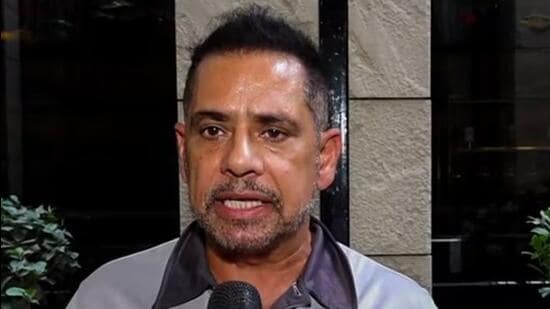
Delhi court summons Robert Vadra in Haryana land deal case| India News
# Delhi Court Summons Vadra in Land Deal Case
**By Rohan Desai, Senior Legal Correspondent**
**Published:** April 15, 2026
On April 15, 2026, a Delhi court officially summoned businessman Robert Vadra in connection with an ongoing money laundering investigation linked to an alleged fraudulent land deal in Haryana. The court’s directive follows a comprehensive charge sheet filed by the Enforcement Directorate (ED) in July 2025, which formally accused Vadra and his close associates of violating the Prevention of Money Laundering Act (PMLA). The high-profile case, rooted in dubious real estate transactions and alleged illicit financial routing, mandates Vadra’s personal appearance before the judicial magistrate. This development marks a pivotal escalation in a protracted legal battle that carries immense political and corporate ramifications across India [Source: Hindustan Times].
## Judicial Cognizance and Procedural Escalation
The issuance of the summons by the Special Judge for PMLA cases comes after months of meticulous scrutiny of the ED’s voluminous prosecution complaint (the agency’s equivalent of a charge sheet). By taking formal cognizance of the charge sheet filed in July of last year, the court has signaled that it found sufficient *prima facie* evidence to proceed with a trial.
According to the court registry, the summons requires Robert Vadra—the son-in-law of former Congress President Sonia Gandhi—and co-accused corporate entities to present themselves before the bench in the coming weeks. The judicial order meticulously outlines the sections of the PMLA under which the accused have been charged, specifically focusing on Section 3 (offense of money laundering) and Section 4 (punishment for money laundering).
Legal experts note that the transition from the filing of a charge sheet to the issuance of a summons is a critical juncture. It shifts the burden from an investigative phase to a formal judicial inquiry, requiring the accused to secure bail and actively defend against the charges in an open court. [Source: Hindustan Times | Additional: Indian Code of Criminal Procedure].
## Tracing the Roots of the Haryana Land Controversy
To understand the gravity of the current summons, it is essential to examine the historical genesis of the Haryana land deal. The controversy fundamentally centers on a series of real estate transactions executed in the mid-to-late 2000s in Sector 83 of Gurugram (formerly Gurgaon), Haryana.
The investigative agencies allege that a company linked to Vadra, Skylight Hospitality, purchased a prime parcel of land measuring roughly 3.5 acres for a relatively modest sum. Shortly after the acquisition, the company successfully obtained a highly coveted Change of Land Use (CLU) license from the then-state government, allowing the agricultural land to be developed for commercial purposes.
Following the approval of the CLU, the land’s valuation skyrocketed. Skylight Hospitality subsequently sold the parcel to real estate behemoth DLF at a massive premium, reportedly reaping enormous profits. The primary allegation leveled by investigative bodies, including the Central Bureau of Investigation (CBI) and later the Enforcement Directorate, is that the CLU was granted bypassing established bureaucratic protocols, facilitated by undue political influence. [Source: Public Records & Historical Case Files].
## Decoding the Enforcement Directorate’s Charge Sheet
While the CBI previously probed the procedural irregularities of the land deal, the Enforcement Directorate’s mandate is strictly financial. The agency’s July 2025 charge sheet is a complex mapping of alleged illicit money trails.
Under the PMLA, the ED must establish that a scheduled offense (the generation of black money) occurred and that those funds were subsequently “layered” and “integrated” into the legitimate economy. The agency alleges that the massive windfall from the Haryana land deal constitutes “proceeds of crime.”
**Key allegations in the ED’s prosecution complaint include:**
* **Round-tripping of Funds:** The use of labyrinthine corporate structures and shell companies to mask the true origin and destination of the profits.
* **Asset Creation:** Utilizing the alleged proceeds of crime to acquire movable and immovable assets, both domestically and potentially abroad.
* **Fictitious Invoicing:** The creation of sham financial documents to justify the massive influx of capital into connected corporate entities.
The ED maintains that Robert Vadra was the ultimate beneficial owner (UBO) of the entities orchestrating these transactions, effectively maneuvering the financial levers from behind the scenes.
## The Legal Defense: Bona Fide Commerce or Covert Machinations?
Robert Vadra and his legal team have consistently and vehemently denied all allegations, framing the ongoing probes as a calculated “political witch-hunt” engineered to tarnish the reputation of the Gandhi family.
The defense’s primary argument rests on the assertion that all business conducted by Skylight Hospitality and associated entities were bona fide commercial transactions. Vadra’s counsel has repeatedly highlighted that:
1. All land purchases were executed through transparent banking channels.
2. The Change of Land Use (CLU) fees were paid in full to the state exchequer.
3. All profits derived from the subsequent sale were thoroughly documented, and all applicable income taxes and capital gains taxes were remitted to the government.
“The Enforcement Directorate faces a remarkably stringent burden of proof under the Prevention of Money Laundering Act,” states Dr. Vikramaditya Singh, a senior advocate specializing in financial crimes. “To secure a conviction, the agency cannot rely merely on the existence of high-profit margins. They must demonstrably prove the generation of ‘proceeds of crime’ through a distinct criminal conspiracy. If the defense can prove that every rupee was accounted for and taxed, the ED’s case of money laundering faces a formidable hurdle.” [Source: Independent Legal Analysis].
## Political Ramifications in the 2026 Landscape
Given Robert Vadra’s proximity to the apex leadership of the Indian National Congress, the April 2026 court summons has predictably ignited a fierce political firestorm.
Representatives of the ruling Bharatiya Janata Party (BJP) have seized upon the court’s summons as judicial vindication of their long-standing claims of deep-rooted corruption within the previous regime. The BJP maintains that the court’s willingness to take cognizance of the ED’s charge sheet proves that the investigative agencies are functioning independently and strictly on the merits of the evidence.
Conversely, the Congress party has launched a scathing counter-offensive. Party spokespersons argue that the resurrection and acceleration of this decade-old case is a classic example of the “weaponization of central investigative agencies.” They point to the chronology of the case—stretching back years but culminating in a charge sheet in July 2025 and a summons in April 2026—as evidence of strategic timing aimed at shaping public perception rather than achieving genuine legal justice.
Dr. Meenakshi Sharma, a political analyst at the Center for Indian Democratic Studies, observes: “The optics of this summons are undeniably polarized. For the ruling dispensation, it reinforces an anti-corruption narrative. For the opposition, it serves as exhibit A in their argument regarding democratic backsliding and institutional capture. The real test, however, lies not in the court of public opinion, but in the stringent evidentiary standards of the courtroom.”
## The Stringency of the PMLA and Future Outlook
The legal road ahead for Robert Vadra is fraught with the unique complexities of the Prevention of Money Laundering Act. Unlike standard criminal statutes, the PMLA features stringent bail conditions under Section 45. To grant bail, a judge must be satisfied that there are reasonable grounds for believing the accused is not guilty of the offense and is not likely to commit any offense while on bail—often referred to as the “twin conditions.”
Although Vadra has previously secured anticipatory bail during the investigative phases, the formal commencement of the trial introduces new legal vulnerabilities. His legal team is expected to immediately file comprehensive bail applications and potentially submit discharge petitions, arguing that the ED’s charge sheet lacks the substantive evidence required to proceed to a full trial.
Furthermore, this case serves as a crucial barometer for corporate India regarding the intersection of real estate, bureaucratic approvals, and politically exposed persons (PEPs). The intense scrutiny on the granting of CLU licenses has already initiated a chilling effect on administrative approvals, fundamentally altering how real estate developers interact with state governments.
## Conclusion
The Delhi court’s decision to summon Robert Vadra based on the Enforcement Directorate’s July 2025 charge sheet represents a defining moment in one of India’s most scrutinized politico-corporate investigations. While the Enforcement Directorate believes it has successfully mapped a complex web of money laundering stemming from the Haryana land deals, the defense remains steadfast in categorizing the transactions as legal, transparent, and heavily politicized.
As the court date approaches, all eyes will be on the judicial magistrate’s chambers. The proceedings will not only determine the legal fate of a highly visible public figure but will also test the robustness of the ED’s investigative framework under the stringent parameters of the PMLA. Whether this results in a landmark conviction or an exoneration that damages the credibility of central agencies remains to be seen in the months ahead.





