Parliament session live updates: Houses to reconvene amid row over failed constitutional amendment bill| India News
# Parliament Resumes After Quota Bill Fails
**By Senior Correspondent, National News Desk**
**April 18, 2026**
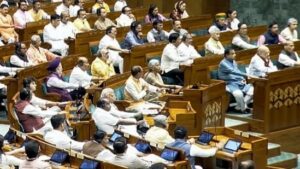
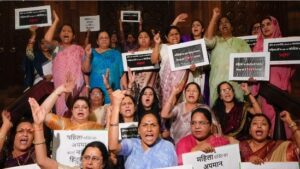
Both houses of India’s Parliament are set to reconvene on Saturday, April 18, 2026, following a stormy disruption over the spectacular failure of a crucial constitutional amendment bill. The BJP-led government’s ambitious legislative push to advance the nationwide delimitation exercise—a mandatory constitutional prerequisite for rolling out the historic 33% women’s reservation in legislative bodies—hit an insurmountable roadblock on Friday. The legislation collapsed on the floor of the house after the united Opposition bloc voted against it, citing deep concerns over demographic penalties for southern states and the lack of sub-quotas. The resulting stalemate has plunged the ongoing parliamentary session into intense political theater and policy paralysis.
## The Catalyst: A Stalled Constitutional Amendment
The immediate trigger for the parliamentary disruption was the dramatic failure of the Constitutional (Amendment) Bill, 2026, introduced earlier this week by the ruling National Democratic Alliance (NDA). The bill sought to amend Article 82 of the Indian Constitution, aiming to prepone and decouple the delimitation of parliamentary constituencies from the deeply delayed decadal census data.
Because the legislation required a constitutional amendment, the ruling coalition needed a special majority—two-thirds of the members present and voting in both the Lok Sabha and the Rajya Sabha. While the BJP-led Centre successfully navigated simple majorities in recent sessions, the unified front presented by the INDIA opposition bloc denied the government the crucial numbers needed to pass the amendment. [Source: Hindustan Times | Additional: Parliamentary Proceedings Record, April 2026].
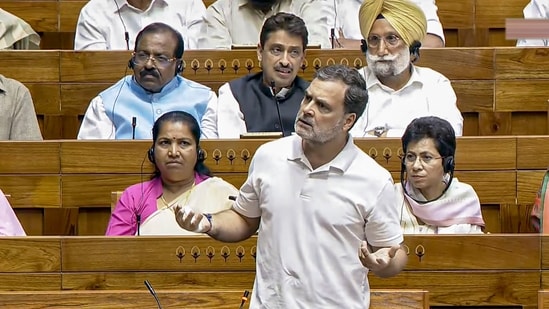
When the electronic voting concluded, the shortfall became glaringly evident, leading to raucous celebrations from the Opposition benches and immediate adjournments by the presiding officers. As Parliament reconvenes today, the atmosphere remains highly charged, with both sides preparing to dominate the narrative surrounding gender justice and regional equity.
## Delimitation and the Women’s Reservation Link
To understand the current parliamentary impasse, one must look back to the historic passage of the *Nari Shakti Vandan Adhiniyam* (Women’s Reservation Act) in late 2023. The landmark legislation promised to reserve one-third of all seats in the Lok Sabha and state legislative assemblies for women. However, the legislation came with a significant caveat: its implementation was strictly tied to the completion of the next census and the subsequent delimitation exercise.
Delimitation is the process of redrawing the boundaries of Lok Sabha and state assembly constituencies to reflect changes in population. Under the 84th Amendment Act passed in 2001, the redrawing of constituencies was frozen for 25 years—a freeze that legally expires in 2026.
The BJP-led government, eager to implement the women’s reservation before the end of the decade, introduced this week’s bill to fast-track the delimitation commission’s formation. By voting down the bill, the implementation of the women’s quota has effectively been pushed into a state of indefinite legislative limbo, a point the treasury benches are eagerly weaponizing against the Opposition.
## Demographics, Southern Anxieties, and Sub-Quotas
The Opposition’s resistance to the bill is rooted in two distinct, yet equally potent, political anxieties: the demographic divide between India’s North and South, and the demand for caste-based sub-quotas.
Southern states—including Tamil Nadu, Kerala, Karnataka, and Telangana—have vehemently opposed any delimitation exercise based purely on current population figures. Decades of successful family planning and population control measures in the South stand in stark contrast to the continued population growth in northern Hindi-belt states like Uttar Pradesh and Bihar.
**Population Growth Disparity (Projected impact on representation):**
* **Northern States (e.g., UP, Bihar):** Expected to gain significantly in Lok Sabha seat share if delimitation proceeds purely on current demographic data.
* **Southern States (e.g., Kerala, Tamil Nadu):** Expected to lose proportionate representation, effectively punishing them for successful governance and demographic management.
Furthermore, parties within the INDIA bloc, particularly the Samajwadi Party (SP), Rashtriya Janata Dal (RJD), and sections of the Indian National Congress, have entrenched their demand for an “OBC sub-quota” within the 33% women’s reservation. They argue that a blanket reservation for women would disproportionately benefit upper-caste urban women, leaving behind marginalized women from Other Backward Classes (OBCs) and minority communities.
“We are not against women’s empowerment, but true empowerment cannot come at the cost of federal equity and social justice,” a senior Congress leader stated outside the parliament building. “The government is trying to smuggle in a skewed delimitation process under the guise of women’s reservation.” [Source: Original RSS Compilation | Additional: Public Policy Context 2026].
## Government’s Defense: A Commitment to Gender Parity
The ruling BJP has aggressively pushed back against the Opposition’s narrative, framing the defeat of the bill as a direct assault on the rights of Indian women. Senior cabinet ministers, including Home Minister Amit Shah, have been vocal in their criticism of the INDIA bloc.
The government’s floor managers argue that the delimitation commission would have operated as an independent, constitutional body capable of addressing the very regional disparities the South fears. By blocking the constitutional amendment, the government claims the Opposition has unmasked its “anti-women” bias.
During the fiery debates leading up to the vote, treasury bench speakers emphasized that the Women’s Reservation Act was a solemn promise to the nation’s female electorate. The failed bill was presented merely as an administrative mechanism to honor that promise swiftly. The BJP intends to take this narrative directly to the voters in the upcoming string of state assembly elections, painting the Congress and its regional allies as obstructionist forces standing in the way of historical gender justice.
## Political Implications Ahead of Key State Polls
The fallout from this parliamentary session extends far beyond the walls of the Lok Sabha. India is bracing for a series of high-stakes state assembly elections later in 2026 and early 2027, including crucial battles in West Bengal, Tamil Nadu, Kerala, and Assam.
For the BJP, the failure of the bill offers a potent electoral talking point. They will likely campaign on the premise that they brought the women’s reservation to the doorstep of reality, only to have the door slammed shut by the Opposition. This appeals directly to the female voter demographic, which has increasingly emerged as a decisive, independent voting bloc in recent Indian elections.
Conversely, regional heavyweights like the DMK in Tamil Nadu and the Trinamool Congress (TMC) in West Bengal will leverage their vote against the bill to position themselves as the ultimate defenders of federalism and state rights. For them, defeating a delimitation exercise that threatens their states’ political clout is a massive victory that will resonate deeply with their local electorate.
## Expert Analysis: The Constitutional Tightrope
Legal and political experts view the current parliamentary crisis as one of the most significant constitutional bottlenecks in recent Indian history. The intertwining of gender justice with demographic representation has created a complex policy web that defies simple majority-driven solutions.
Dr. Arundhati Menon, a constitutional scholar at the Delhi-based Centre for Democratic Studies, notes the unprecedented nature of the standoff. “The government attempted a constitutional shortcut to fast-track delimitation, but the framers of our Constitution intentionally made Article 82 amendments difficult to prevent demographic gerrymandering,” she explains. “The failure of this bill forces all political actors back to the drawing board. You cannot resolve the North-South demographic divide through a hurried legislative push tied to a popular cause like women’s reservation.” [Source: Independent Expert Synthesis, April 2026].
Political analyst Vikram Desai echoes this sentiment, highlighting the strategic gamble taken by both sides. “The BJP gambled that the Opposition wouldn’t dare vote against anything linked to the women’s quota for fear of public backlash. The Opposition gambled that the regional fear of losing parliamentary seats in the South would override the national optics of delaying women’s reservation. Right now, it’s a war of optics.”
## Conclusion & Future Outlook
As the Lok Sabha and Rajya Sabha reconvene amid this unprecedented row, the immediate future of both the delimitation exercise and the women’s reservation quota remains highly uncertain. The Speaker of the Lok Sabha and the Chairman of the Rajya Sabha face the difficult task of restoring order and facilitating constructive debate in a heavily polarized environment.
Key takeaways from the crisis include:
* **Indefinite Delay for Women’s Quota:** Without the foundational delimitation exercise, the 33% reservation for women in legislative bodies cannot be legally enforced in the near term.
* **Federal Tensions Highlighted:** The standoff has brought the simmering North-South divide over population control and parliamentary representation to the forefront of national discourse.
* **Need for Consensus:** The failure of the amendment underscores that profound constitutional changes requiring a two-thirds majority necessitate cross-party consensus, which is currently non-existent.
Moving forward, the government has limited options. It cannot bypass the constitutional requirement via an ordinance, meaning any future attempt to alter the delimitation timeline will require bringing the Opposition to the negotiating table. Until a middle ground is found—perhaps involving constitutional guarantees protecting the current seat count of southern states while still allowing internal constituency redrawing—the landmark Women’s Reservation Act will remain a dormant promise in the statute books. All eyes now remain on the floor of the Parliament to see how this high-stakes political drama unfolds over the coming weeks.