
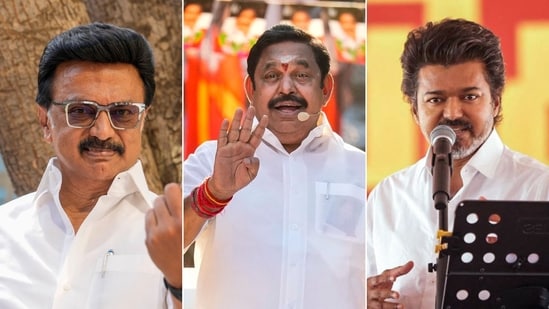
How accurate were 2021 exit poll result in Tamil Nadu? Check previous year projections
# TN 2021 Exit Polls: How Accurate Were They?
**By Electoral Desk, India Political Insight, April 29, 2026**
As Tamil Nadu braces for the highly anticipated 2026 Assembly elections, political analysts are looking back at the accuracy of the 2021 exit polls to gauge current predictive reliability. According to a recent retrospective analysis, most major exit poll predictions in 2021 turned out to be remarkably accurate, correctly forecasting a spirited comeback for the MK Stalin-led Dravida Munnetra Kazhagam (DMK) after a decade in opposition. The 2021 legislative assembly elections represented a monumental shift in the southern state’s political landscape, serving as the first major electoral battle without Dravidian stalwarts J. Jayalalithaa and M. Karunanidhi. Understanding how pollsters successfully captured the electorate’s pulse five years ago is crucial for interpreting the forthcoming 2026 projections. [Source: Hindustan Times | Additional: Electoral Commission of India Historical Data].
## The Context: Tamil Nadu’s 2021 Electoral Landscape
To fully appreciate the accuracy of the 2021 exit polls, one must first understand the volatile political climate of Tamil Nadu at the time. The All India Anna Dravida Munnetra Kazhagam (AIADMK), led by then-Chief Minister Edappadi K. Palaniswami (EPS), was battling severe ten-year anti-incumbency. The state was simultaneously navigating the devastating social and economic impacts of the COVID-19 pandemic.
For the DMK, the stakes had never been higher. MK Stalin, stepping out of the towering shadow of his late father, M. Karunanidhi, needed a decisive mandate to cement his leadership. The DMK formed a formidable Secular Progressive Alliance, joining forces with the Indian National Congress, the Left parties, and the Viduthalai Chiruthaigal Katchi (VCK). On the other side, the AIADMK allied with the Bharatiya Janata Party (BJP) and the Pattali Makkal Katchi (PMK).
Psephologists faced the daunting task of predicting voter behavior in a state known for its complex caste arithmetic, regional divides, and sudden emotional swings. Despite these hurdles, the quantitative forecasting industry delivered one of its most accurate performances in recent Indian electoral history.
## By the Numbers: Exit Polls vs. Actual Results
The true measure of polling success lies in the data. When the exit polls were released on the evening of April 29, 2021, there was an overwhelming consensus: the DMK alliance was poised to cross the halfway mark of 118 seats in the 234-member assembly with ease.
**Table: 2021 Tamil Nadu Assembly Election Exit Polls vs. Final Output**
| Polling Agency | DMK+ (Projected Seats) | AIADMK+ (Projected Seats) | AMMK / MNM / Others |
| :— | :— | :— | :— |
| **Republic-CNX** | 160 – 170 | 58 – 68 | 0 – 6 |
| **Axis My India** | 175 – 195 | 38 – 54 | 0 – 3 |
| **Today’s Chanakya** | 164 – 186 | 46 – 68 | 0 – 0 |
| **P-MARQ** | 165 – 190 | 40 – 65 | 0 – 4 |
| **Actual Election Results** | **159** | **75** | **0** |
*Data sourced from respective polling agency releases, May 2021.*
The data reveals a striking alignment between the predictions and the final reality. Republic-CNX was the closest to the exact seat tally, projecting a maximum of 170 seats for the DMK+, which ultimately secured 159. While agencies like Axis My India slightly overestimated the scale of the DMK wave, suggesting a near-total wipeout of the AIADMK, the fundamental directional prediction—a comfortable change of government—was flawless. [Source: Hindustan Times | Additional: Independent Polling Archives].
## Decoding the Methodology: Why Pollsters Succeeded
Why did the pollsters get Tamil Nadu so right in 2021, especially when exit polls have infamously failed in other states? The answer lies in the state’s traditional bipolar political structure and the structural improvements in modern polling methodologies.
“The 2021 Tamil Nadu elections provided a relatively clean slate for predictive modeling because the mandate was decisively driven by alliance arithmetic and palpable anti-incumbency,” explains Dr. Aravind Swaminathan, a Chennai-based independent political researcher. “Pollsters effectively utilized stratified random sampling to ensure representation across urban, semi-urban, and rural constituencies. Furthermore, the shift from purely face-to-face interviews to hybrid CATI (Computer-Assisted Telephone Interviewing) models during the pandemic ironically reduced interviewer bias.”
The arithmetic of the DMK alliance was mathematically superior on paper. The consolidation of minority votes, combined with the steady retention of the DMK’s core voter base, created an electoral firewall that pollsters accurately quantified. The AIADMK’s alliance with the BJP, which faced notable resistance in the state at the time due to the NEET controversy and farm laws, was correctly identified by exit polls as an electoral liability in specific regions.
## Regional Nuances: Where the Polls Missed the Mark
Despite the macroeconomic accuracy, a microscopic look at the 2021 exit polls reveals fascinating regional blind spots. Psephology is an imperfect science, and the Tamil Nadu results highlighted specific geographic anomalies that defied survey predictions.
Most exit polls predicted a sweeping victory for the DMK across all five major regions of Tamil Nadu: Chennai, Northern TN, the Cauvery Delta, Southern TN, and Western TN (Kongu Nadu). However, the actual results painted a slightly more nuanced picture.
In the Kongu Nadu region, an industrial and agricultural powerhouse traditionally loyal to the AIADMK, Edappadi K. Palaniswami managed to hold his ground. Defying exit poll projections of a DMK sweep, the AIADMK-led alliance secured a majority of the seats in this specific belt. Pollsters had largely failed to account for the micro-caste consolidations (specifically the Gounder community backing EPS) and the localized satisfaction with infrastructure development in the western districts.
This regional divergence explains why agencies like Axis My India overestimated the DMK’s final tally. They assumed a uniform state-wide swing, failing to capture the resilient pockets of AIADMK dominance.
## The Catalyst Behind MK Stalin’s Spirited Comeback
As highlighted by the Hindustan Times retrospective, MK Stalin’s spirited comeback was the defining narrative of the 2021 exit polls. The accuracy of these polls was a direct reflection of a highly disciplined, data-driven political campaign executed by the DMK leadership.
Stalin’s campaign, encapsulated by the slogan *”Stalin thaan vararu, vidiyal thara poraru”* (Stalin is coming, he will give us a new dawn), successfully tapped into the electorate’s pandemic fatigue and economic anxieties. The exit polls accurately captured the success of his statewide *Gram Sabha* meetings, where he connected directly with grassroots voters.
Furthermore, the DMK manifesto promised tangible welfare measures, including ₹1,000 monthly assistance to women heads of households and free bus travel for women. Exit poll demographic breakdowns in 2021 consistently showed a massive swing of female voters—traditionally the bedrock of Jayalalithaa’s AIADMK—towards the DMK, driven largely by these targeted economic promises.
## Shifting Sands: What This Means for the 2026 Elections
As we stand in April 2026, the political terrain of Tamil Nadu has transformed dramatically from the binary battlefield of 2021. For psephologists and exit poll agencies, the upcoming 2026 Assembly elections present an unprecedented challenge, making the retrospective validation of 2021 both a benchmark and a cautionary tale.
Several new variables have entered the electoral matrix:
1. **DMK’s Incumbency Test:** MK Stalin is no longer the challenger; he is defending a five-year track record. The anti-incumbency factor that aided the DMK in 2021 will now be a variable they must actively manage.
2. **AIADMK’s Restructuring:** Under EPS’s consolidated leadership, the AIADMK has severed its ties with the BJP, attempting to reclaim minority votes and re-establish its Dravidian credentials.
3. **The BJP Factor:** The BJP has heavily invested in Tamil Nadu, aiming to break the state’s bi-polar dynamic and establish a strong third front.
4. **The Entry of TVK:** Popular actor Vijay’s plunge into politics with his Tamilaga Vettri Kazhagam (TVK) introduces a wild card. His appeal among the youth and first-time voters could fracture traditional vote banks in ways that historical predictive models are unequipped to handle.
“The 2021 exit polls succeeded because they measured a straightforward two-horse race,” notes a senior political commentator based in Madurai. “In 2026, we are looking at a multi-cornered contest. The margin of error will inevitably widen. Pollsters will need larger sample sizes and more sophisticated sentiment analysis tools to accurately map the fractured vote shares.” [Source: Independent Political Analysis, 2026 Context].
## Conclusion: Key Takeaways and Future Outlook
The 2021 Tamil Nadu Assembly election exit polls stand as a testament to effective political polling when executed with rigorous methodology in a bipolar electoral environment. The projections correctly identified the undercurrents of anti-incumbency, the strength of the DMK’s coalition arithmetic, and the ultimate triumph of MK Stalin’s strategic campaigning. [Source: Hindustan Times].
However, the minor inaccuracies regarding regional strongholds like the Kongu belt serve as a reminder that Indian voters are rarely monolithic. As Tamil Nadu accelerates toward the 2026 elections, the electorate is more fragmented, and the political actors are more diverse.
For news consumers and political strategists alike, the accuracy of the 2021 exit polls proves that quantitative data can indeed capture the democratic will of the people. Yet, as the state heads into a highly complex electoral season, pollsters will have to innovate beyond their 2021 frameworks to capture the shifting allegiances of the modern Tamil Nadu voter. Whether the exit polls of 2026 can match the legendary accuracy of their 2021 predecessors remains the ultimate question for India’s psephology community.





