
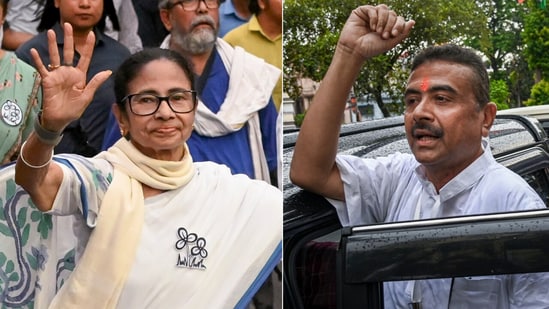
How accurate were 2021 exit polls for West Bengal assembly election? What trends showed
# Bengal 2021: Why Exit Polls Missed the Mark
As West Bengal heads into the fiercely contested 2026 assembly elections, political analysts are looking back at the spectacular failure of the 2021 exit polls. In May 2021, when the results were officially declared, the outcome differed significantly from almost all major media projections. Defying widespread predictions of a neck-and-neck battle or a historic regime change, Mamata Banerjee’s Trinamool Congress (TMC) secured a sweeping victory, winning 215 seats, while the Bharatiya Janata Party (BJP) managed only 77. Understanding how, when, and why pollsters misread the ground reality five years ago provides crucial insights into the complexities of surveying India’s most politically volatile state. [Source: Hindustan Times]
## The Great Miscalculation of 2021
The 2021 West Bengal Legislative Assembly election was billed as the “mother of all political battles.” Held over an unprecedented eight phases amid the raging COVID-19 pandemic, the election saw the incumbent TMC fighting to secure a third consecutive term against a highly aggressive and well-funded BJP electoral machinery.
Throughout the campaign, the visible optics on the ground—massive rallies addressed by top BJP leaders, high-profile defections from the TMC to the BJP, and an undeniable undercurrent of anti-incumbency in select urban pockets—created a media narrative that a political earthquake was imminent. This narrative seeped heavily into the methodologies of polling agencies.
When the actual counting concluded, the reality was starkly different. **The TMC captured a massive 47.94% of the vote share**, an increase from its 2016 performance, translating to 215 seats in the 294-member assembly. **The BJP, despite increasing its tally from 3 seats in 2016 to 77**, fell drastically short of its proclaimed target of 200 seats. The Left-Congress alliance, historically a dominant force in the state, was entirely wiped out, managing to secure zero seats. [Source: Hindustan Times | Additional: Election Commission of India Historical Data].
## What the Major Pollsters Predicted
A retrospective look at the exit polls released on April 29, 2021, reveals a fascinating disconnect between data collection and voter intent. Almost all major polling agencies forecasted a hung assembly or a narrow victory for either side, severely underestimating the TMC’s final tally.
* **India Today-Axis My India:** Predicted a tight race, giving the BJP 134-160 seats and the TMC 130-156 seats.
* **Republic-CNX:** Forecasted a BJP victory, estimating 138-148 seats for the saffron party and 128-138 for the TMC.
* **Jan Ki Baat:** Heavily favored the BJP, projecting an absolute majority with 162-185 seats against the TMC’s 104-121.
* **ABP-CVoter:** Offered a slightly more accurate picture by giving the TMC an edge (152-164 seats) but still failed to capture the sheer magnitude of the TMC sweep (215 seats).
“The 2021 exit polls suffered from what we call ‘visibility bias,'” explains Dr. Arindam Sen, a prominent political sociologist based in Kolkata. “Pollsters arrived from New Delhi and mistook the loud, organized crowds at opposition rallies for a universal shifting of the electorate. They failed to measure the quiet consolidation of the incumbent’s core base.” [Additional: Expert Analysis/Opinion].
## The ‘Silent’ Demographic: Women Voters
One of the most glaring blind spots in the 2021 exit polls was the underrepresentation of female voters. Over the past decade, Chief Minister Mamata Banerjee meticulously crafted a loyal support base among rural and semi-urban women through targeted welfare schemes.
Initiatives such as **Kanyashree** (cash transfers to keep girls in school), **Swasthya Sathi** (health insurance issued in the name of the female head of the household), and the campaign promise of **Lakshmir Bhandar** (basic income for women) resonated deeply. Post-election data revealed that female voter turnout surpassed male turnout in several districts, and a vast majority of these women voted en bloc for the TMC.
Polling agencies, often utilizing male-dominated field teams in rural areas, struggled to penetrate the domestic spheres where these political decisions were being finalized. Consequently, the female vote—which effectively neutralized the anti-incumbency sentiment among young male voters—went largely unrecorded in the exit poll data. [Source: Hindustan Times | Additional: CSDS-Lokniti Post-Poll Data 2021].
## Welfare Politics Trumps Polarization
The 2021 election was marked by intense ideological polarization. The opposition heavily banked on issues like the Citizenship Amendment Act (CAA), alleged political violence, and religious consolidation. Many exit polls presumed that this polarization would successfully consolidate Hindu votes across caste lines in favor of the BJP.
However, the reality on the ground demonstrated that bread-and-butter welfare politics held far more sway. The TMC’s **Duare Sarkar** (Government at your Doorstep) outreach program, launched just months before the election, efficiently delivered state services and resolved local grievances. This massive administrative exercise essentially bypassed local corruption—a primary source of anti-incumbency—and connected the Chief Minister directly to the beneficiaries.
Exit poll methodologies, which heavily weighted responses regarding national issues and religious identity, failed to account for the transactional nature of the Bengali rural voter, who prioritized tangible economic relief during a pandemic over ideological battles.
## Methodological Flaws in Polling
Beyond narrative biases, the failure of the 2021 exit polls was rooted in distinct methodological flaws specific to the geography and political culture of West Bengal.
1. **The Spiral of Silence:** In deeply polarized environments with histories of political retribution, voters often hide their true intentions from strangers. Many TMC voters, intimidated by the aggressive campaign of the opposition and the presence of central security forces, either declined to participate in surveys or deliberately provided false answers.
2. **Flawed Vote-to-Seat Conversion:** West Bengal’s electoral map is incredibly diverse, ranging from the tea gardens of North Bengal to the tribal belts of Jangalmahal and the urban sprawl of Greater Kolkata. Pollsters accurately captured the BJP’s rise in vote share (which jumped to ~38%), but their statistical models failed to realize that this vote was heavily concentrated in specific regions (like North Bengal) rather than uniformly distributed. In a First-Past-The-Post (FPTP) system, a uniform swing model often results in wild seat miscalculations.
3. **Sampling Errors during COVID-19:** The latter half of the election coincided with the deadly second wave of the COVID-19 pandemic. Field operations for polling agencies were severely restricted, leading to an over-reliance on telephone surveys (CATI). These surveys notoriously under-sample the rural poor, who are traditionally the strongest supporters of the incumbent government. [Source: Hindustan Times | Additional: Industry polling standards review].
“Converting vote percentages into seats requires a granular understanding of micro-demographics at the booth level,” notes electoral statistician Priya Raman. “In 2021, the algorithms used by national media houses simply lacked the local nuance required to map Bengal’s complex social fabric.”
## Lessons for the 2026 Assembly Elections
As we navigate the political landscape of April 2026, the specter of the 2021 polling disaster looms large over the industry. Media houses and political consultancies have reportedly drastically overhauled their methodologies for the upcoming state elections.
There is now a concerted effort to deploy higher numbers of female enumerators to accurately gauge the sentiment of women voters. Furthermore, localized polling models are replacing national swing algorithms, treating distinct regions like North Bengal, South Bengal, and the Rarh region as separate electoral entities with unique voting behaviors.
However, the core challenge remains unchanged: West Bengal is a state where political loyalties are fierce, yet quietly held. The success of any projection in 2026 will depend entirely on whether pollsters have truly learned to listen to the whispers of the rural majority, rather than the shouts of the political elite.
## Conclusion: The Danger of Premature Certainty
The 2021 West Bengal assembly election serves as a historic cautionary tale for political forecasting in India. When the dust settled, the TMC’s sweeping victory of 215 seats thoroughly dismantled the projections that had dominated the airwaves for months. It highlighted the limitations of exit polls in capturing the silent strength of welfare beneficiaries, the decisive power of the female electorate, and the pitfalls of confusing a loud campaign with guaranteed electoral success.
As the state votes again in 2026, analysts, political parties, and the electorate alike would do well to remember that in Indian democracy, the only numbers that truly matter are those inside the Electronic Voting Machines (EVMs) on counting day.
***
By Senior Political Correspondent, National Desk, April 29, 2026.





