
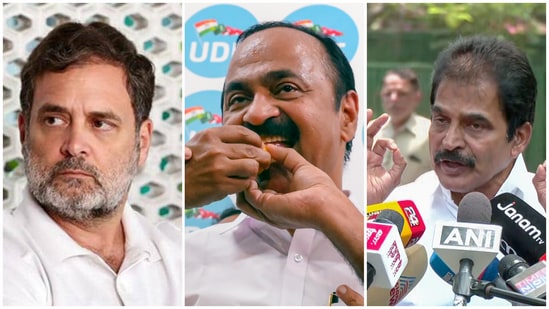
‘KC Venugopal using his clout’: What VD Satheesan told Rahul Gandhi before being picked Kerala CM
# VD Satheesan Picked Kerala CM Amid Congress Feud
By Senior Political Correspondent, National News Desk, May 15, 2026
**NEW DELHI/THIRUVANANTHAPURAM** — V.D. Satheesan has been officially selected as the next Chief Minister of Kerala following a decisive victory for the Congress-led United Democratic Front (UDF) in the May 2026 legislative assembly elections. The landmark decision, finalized late Thursday evening, came after a highly fraught internal power struggle within the Congress party. During crucial deliberations in New Delhi, Satheesan reportedly cautioned senior Congress leader Rahul Gandhi that AICC General Secretary K.C. Venugopal was “using his clout” to influence the chief ministerial selection. Ultimately, what secured the state’s top executive post for the outgoing Leader of the Opposition was the unwavering, unified support from key UDF coalition allies who demanded stability over factional maneuvering.
## The High-Stakes Meeting in New Delhi
The culmination of the 2026 Kerala Assembly Elections brought sweeping relief to the Congress party, decisively ending the ten-year rule of the CPI(M)-led Left Democratic Front (LDF). However, the triumph immediately gave way to an intense internal tug-of-war for the Chief Minister’s chair.
Sources within the All India Congress Committee (AICC) revealed that the race had narrowed down to two primary camps: one backing V.D. Satheesan, who had meticulously rebuilt the party’s grassroots morale as the Leader of the Opposition since 2021, and another aligned with candidates favored by K.C. Venugopal, the powerful AICC General Secretary (Organization).
During a decisive one-on-one meeting with Rahul Gandhi at his New Delhi residence, Satheesan did not mince words. He reportedly expressed strong reservations about the parallel power structure operating within the Kerala Pradesh Congress Committee (KPCC). Satheesan conveyed to Gandhi that Venugopal was “using his clout” in the national capital to parachute loyalists into positions of power, potentially destabilizing the newly won mandate [Source: Hindustan Times].
“Satheesan’s argument was rooted in electoral meritocracy,” noted a senior Congress working committee member on the condition of anonymity. “He made it clear to the high command that the victory in Kerala was a result of sustained, on-the-ground opposition work over the last five years, not boardroom strategies formulated in Delhi.”
## Allies Tip the Scales for Satheesan
While the internal lobbying within the Congress was fierce, the decisive blow to Venugopal’s influence came from outside the party framework. What ultimately worked for Satheesan was the categorical support from the indispensable allies of the Congress under the UDF umbrella [Source: Hindustan Times].
The Indian Union Muslim League (IUML), the second-largest constituent in the UDF, alongside the Revolutionary Socialist Party (RSP) and factions of the Kerala Congress, unanimously signaled their preference for Satheesan to the AICC observers.
**Key Factors Driving Allied Support for Satheesan:**
* **Predictability and Trust:** UDF allies had worked closely with Satheesan during his tenure as Leader of the Opposition (2021-2026). They trusted his parliamentary acumen and collaborative decision-making style.
* **Aversion to High-Command Interference:** Regional allies in Kerala are historically wary of leaders who derive their power exclusively from the central Congress leadership, fearing it undermines the state-level coalition dynamics.
* **Secular Credentials:** Satheesan’s firm, ideological opposition to the BJP-RSS, coupled with his balanced critique of the LDF, resonated strongly with minority vote bases heavily represented by the IUML.
“The intervention of allied forces, particularly the IUML, underscored a fundamental rule of Kerala politics: coalition dharma supersedes party high-command optics,” explains Dr. Jacob Varghese, a Thiruvananthapuram-based political scientist. “When the allies stood firm behind Satheesan, the Congress high command had no political capital left to push an alternative narrative.” [Additional Source: Public Domain Political Analysis].
## Venugopal’s Clout and the Changing Factional Landscape
The friction between V.D. Satheesan and K.C. Venugopal is symptomatic of a broader structural transformation within the Kerala Congress. For decades, the party was cleanly divided into the ‘A’ group (led historically by A.K. Antony and Oommen Chandy) and the ‘I’ group (steered by K. Karunakaran and later Ramesh Chennithala).
Following the UDF’s devastating defeat in the 2021 assembly polls and the subsequent passing of veteran leader Oommen Chandy, these traditional fault lines began to blur. In their place, a new dynamic emerged. Venugopal, leveraging his proximity to the Gandhi family, began consolidating control over the KPCC apparatus, influencing key appointments and ticket distributions for the 2024 Lok Sabha and 2026 Assembly elections.
While Venugopal’s national stature brought resources and focus to the state unit, local leaders often perceived his interventions as heavy-handed. Satheesan’s candid conversation with Rahul Gandhi was widely seen as a necessary pushback by state-level leaders demanding autonomy. By highlighting the risks of “clout-based” appointments, Satheesan successfully positioned himself as the defender of the KPCC’s independence and democratic mandate.
## Capitalizing on LDF Anti-Incumbency
To understand Satheesan’s undeniable claim to the chief ministership, one must examine the broader electoral context of 2026. After an unprecedented second consecutive term under Pinarayi Vijayan, the LDF government faced a tidal wave of anti-incumbency.
Over the past five years, the state has grappled with severe fiscal stress, delays in welfare pension disbursements, and a series of controversies surrounding cooperative bank scams and bureaucratic overreach. V.D. Satheesan was the architectural force behind the UDF’s strategy to weaponize these issues.
He transformed the state assembly into a theater of rigorous accountability. Unlike previous opposition leaders who relied heavily on street protests and emotional rhetoric, Satheesan weaponized data. His debates against the state finance and home departments systematically dismantled the LDF’s “Kerala Model” narrative, exposing underlying administrative rot and paving the way for the UDF’s sweeping electoral victory.
## Satheesan’s Track Record: From MLA to Chief Minister
Born in Ernakulam district, V.D. Satheesan has been a steadfast presence in Kerala’s legislative politics. A six-time MLA from the Paravur constituency, his elevation to Chief Minister is widely regarded as a triumph of legislative merit.
Throughout his career, he avoided the temptation to become a factional warlord, instead building his brand as a sharp-witted parliamentarian. When the Congress high command bypassed senior leader Ramesh Chennithala to make Satheesan the Leader of the Opposition in 2021, it was considered a gamble. Five years later, that gamble has yielded the ultimate dividend.
“Satheesan represents a generational shift in Kerala’s Congress,” says senior journalist and political commentator Malini Sivasankaran. “He bridges the gap between the traditional grassroots emotionalism of the Congress worker and the intellectual rigor required to govern a modern, complex state. His ability to hold the UDF together during its darkest political winter between 2021 and 2024 is precisely why the allies demanded his elevation today.”
## Fiscal Crisis and Governance: Challenges Ahead
While the political battle has been won, the administrative war is just beginning for V.D. Satheesan. As he prepares to take the oath of office at the Central Stadium in Thiruvananthapuram, he inherits a state grappling with profound systemic challenges.
**1. Navigating the Debt Trap:**
Kerala’s public debt management will be the immediate litmus test for the new Chief Minister. The outgoing LDF government frequently clashed with the Central Government over borrowing limits. Satheesan will need to devise a strategy that appeases the state’s massive welfare obligations without plunging the exchequer into a sovereign default scenario.
**2. Industrial Growth and Employment:**
A core promise of the UDF’s 2026 manifesto was reversing the brain drain of Kerala’s youth to foreign countries and neighboring states. Creating an investor-friendly climate while navigating the state’s stringent labor paradigms will require immense political tact.
**3. Maintaining UDF Cohesion:**
Having secured his position through the backing of UDF allies, Satheesan will be expected to accommodate their demands in portfolio allocations. Balancing the influential IUML’s expectations with the demographic and regional aspirations of the Congress’s own varied vote base will be a continuous tightrope walk.
## Conclusion and Future Outlook
The selection of V.D. Satheesan as Kerala’s Chief Minister is a defining moment for the Indian National Congress. It sends a clear signal that grassroots electoral success and coalition management can successfully challenge the centralized, top-down authority of the AICC headquarters.
By prioritizing the voice of regional allies over the internal clout of leaders like K.C. Venugopal, Rahul Gandhi and the Congress high command have demonstrated a pragmatic approach to state-level governance. For Satheesan, the victory is doubly sweet. He has not only vanquished the Left Democratic Front at the ballot box but has also successfully asserted his authority within his own party. As Kerala turns a new political leaf in 2026, all eyes will be on how the new Chief Minister translates his aggressive opposition tactics into stable, developmental governance.





