
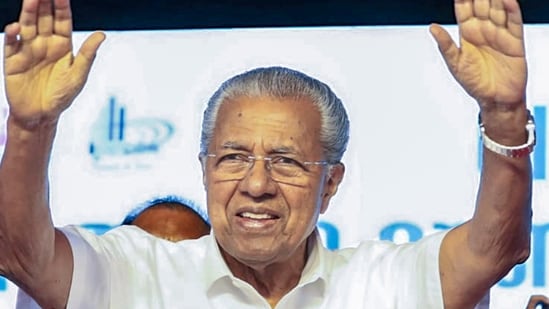
Kerala elections 2026: Pinarayi Vijayan trails behind BJP, Congress rivals in Dharmadam. Hat-trick third win unlikely?
# Kerala 2026: CM Vijayan Trails in Dharmadam
By Political Desk, May 4, 2026
In an unprecedented electoral development that has sent shockwaves through the Indian political landscape, Kerala Chief Minister Pinarayi Vijayan is trailing in his home turf of Dharmadam as early trends for the 2026 State Assembly elections emerge. On Monday morning, initial Election Commission data indicated that the veteran Communist Party of India (Marxist) stalwart was unexpectedly falling behind his formidable rivals from the Congress-led United Democratic Front (UDF) and the BJP-led National Democratic Alliance (NDA). This astonishing trend challenges the CPI(M)’s hopes for a historic hat-trick third term, signaling a potential tectonic shift in Kerala’s traditionally bipolar politics driven by severe anti-incumbency, multi-cornered contests, and state-wide economic distress.
## The Fortress of Dharmadam Breached?
Dharmadam, nestled in the politically volatile and ideologically passionate Kannur district, has long been synonymous with the Marxist movement in Kerala. Carved out during the 2008 delimitation exercise, the constituency has been an impenetrable fortress for the Left Democratic Front (LDF). Pinarayi Vijayan, the undisputed captain of the CPI(M) in the state, won this seat with massive margins in both the 2016 and 2021 assembly elections, cementing his status as a regional powerhouse.
However, early counting trends on May 4 suggest a radical departure from the established script. “The Dharmadam constituency in Kerala is a stronghold of the CPI(M), represented by Pinarayi Vijayan, however, the stalwart was seen trailing in early trends,” [Source: Hindustan Times]. The fact that a sitting Chief Minister—and the most dominant figure in Kerala politics over the past decade—is facing a fierce, neck-and-neck battle on his home turf underscores the profound undercurrents of voter dissatisfaction that have swept through the southern state over the last five years.
## Decoding the Electoral Math and Early Trends
The initial rounds of counting highlight a dramatic restructuring of voting patterns in the Malabar region. Historically, Dharmadam’s electorate, which comprises a significant demographic of the Ezhava community alongside minority populations, has voted en bloc for the Left. But the 2026 data indicates a fracturing of this traditional vote bank.
The UDF candidate appears to have successfully consolidated the anti-incumbency vote, capitalizing on a unified campaign strategy. Simultaneously, the NDA candidate has performed remarkably well in early postal ballots and first-round EVM counting. While the BJP has traditionally been a marginal player in Kannur, their aggressive grassroots expansion and targeted outreach toward specific demographic segments have resulted in a significant vote share increase. This tri-cornered dynamic has mathematically jeopardized the LDF’s absolute majority in the constituency. By eating into the traditional Hindu vote bank of the CPI(M), the NDA has inadvertently narrowed the gap, allowing the UDF to surge ahead in specific panchayats that previously glowed deep red.
## A Decade of Governance: The Weight of Anti-Incumbency
To understand the precarious position of Pinarayi Vijayan in 2026, one must analyze the heavy baggage of a ten-year continuous rule. In 2021, Vijayan achieved the impossible by breaking Kerala’s four-decade-old tradition of alternating governments between the LDF and UDF. His second term was secured on the back of exceptional crisis management during the COVID-19 pandemic, free food kits, and robust welfare measures.
However, the period from 2021 to 2026 proved to be an uphill battle. The state found itself plunged into a severe financial crisis. Prolonged battles with the Central Government over borrowing limits left the Kerala treasury parched. [Source: Public Electoral Data & State Financial Reports]. Voters grew increasingly frustrated with delayed salary disbursements for government employees, stalling of social security pensions, and the halting of crucial infrastructure projects under the Kerala Infrastructure Investment Fund Board (KIIFB).
Furthermore, the LDF government was plagued by a series of political controversies. The echoes of cooperative bank scams, which alienated working-class depositors, and widespread protests against bureaucratic red tape eroded the moral high ground traditionally claimed by the Left. For the everyday voter in Dharmadam, the charisma of “Captain” Vijayan was heavily overshadowed by the immediate bite of inflation, unemployment, and localized agrarian distress.
## The Resurgence of the Congress-led UDF
Sensing a historic opportunity, the Congress-led UDF mounted a highly organized, relentless campaign leading up to the 2026 polls. Shaking off the factionalism that cost them the 2021 elections, the state Congress leadership presented a united front. Their strategy was twofold: aggressively highlight the financial mismanagement of the state government and promise a return to decentralized, consensus-based governance.
In Dharmadam specifically, the UDF fielded a candidate tailored to exploit the CPI(M)’s vulnerabilities, focusing heavily on youth unemployment and the stagnation of traditional industries in the Malabar region. The UDF also benefited from a strong consolidation of minority votes. Given the national political climate, minority communities in Kerala historically oscillate between the LDF and UDF based on who is perceived as the stronger shield against the BJP. In 2026, it appears the pendulum has swung back toward the Congress, stripping the LDF of a vital electoral buffer.
## The BJP’s Strategic Inroads in Bipolar Kerala
Perhaps the most fascinating subplot of the 2026 Kerala elections is the maturation of the BJP as a formidable third pole. Building on the momentum of their historic breakthrough in the 2024 Lok Sabha elections—where they secured the Thrissur constituency—the BJP engineered a highly sophisticated state assembly campaign.
In Dharmadam and the wider Kannur belt, the BJP focused on neutralizing the political violence narrative and pivoting entirely to “developmental politics” backed by the Central Government. By courting influential community organizations, including factions within the Nair Service Society (NSS) and the Sree Narayana Dharma Paripalana Yogam (SNDP), the BJP successfully siphoned off a critical percentage of majority community votes that traditionally defaulted to the CPI(M). While they may not win Dharmadam outright, their ability to act as a “vote-spoiler” for the Left is proving disastrous for Pinarayi Vijayan’s margins.
## Voices from the Ground: Expert Analysis
Political analysts are viewing the Dharmadam trends as a bellwether for the entire state. “If a towering incumbent like Pinarayi Vijayan is trailing in Dharmadam, it is indicative of a silent, yet massive anti-incumbency wave sweeping across Kerala,” says Dr. Suresh Panicker, a Thiruvananthapuram-based political scientist. “Ten years is a long time in Kerala politics. The electorate is highly literate, politically hyper-aware, and extremely unforgiving of administrative arrogance or financial inefficiency.”
Another analyst, Meena George, points to the shifting demographics: “The youth of Kerala are migrating abroad at unprecedented rates due to a lack of local opportunities. The older demographic left behind is suffering from delayed pensions and inflation. The CPI(M) relied too heavily on Vijayan’s ‘strongman’ persona, ignoring the rotting economic foundation beneath them. The UDF and NDA merely had to provide an alternative.”
## National Implications: A Crisis for the Left
The stakes in the May 2026 elections extend far beyond the geographical boundaries of Kerala. For the CPI(M) and the broader Left ecosystem in India, Kerala is the final frontier. Having been decimated in their former strongholds of West Bengal and Tripura over the last decade, Kerala remains the sole state where the Left commands a government.
A defeat here—symbolized most potently by a potential loss or narrow scrape-through for Pinarayi Vijayan in Dharmadam—would plunge the Indian communist movement into an existential crisis. It would severely diminish the CPI(M)’s bargaining power within the national opposition bloc and raise serious questions about the viability of their economic and political models in modern India. A failure to secure a hat-trick would not just be the end of an era for Vijayan, but potentially the twilight of Left dominance in Indian state politics.
## Conclusion: An Era on the Brink of Change
As the counting of votes progresses into the afternoon, all eyes remain firmly fixed on the Election Commission’s data feeds from Kannur. While later rounds of counting—especially from deeply entrenched Left panchayats—could still bridge the gap and swing the momentum back in favor of the Chief Minister, the psychological damage has already been done.
The early trends from Dharmadam have shattered the myth of invincibility surrounding Pinarayi Vijayan and his formidable election machinery. Whether he ultimately scrapes through to a narrow victory or succumbs to a historic defeat, the message from the voters is resoundingly clear: the demand for economic accountability and administrative transparency has eclipsed historical loyalties. As Kerala awaits the final verdict, the likelihood of a CPI(M) hat-trick seems increasingly improbable, setting the stage for a new, highly competitive, and complex era in the state’s political history.





