
Mamata Banerjee’s ‘bhelpuri’ counter to PM Modi’s ‘jhalmuri’ and a vow to ‘conquer’ Delhi| India News
# Mamata’s ‘Bhelpuri’ Vow to Conquer Delhi
**By Rajdeep Sen, India Policy Desk | April 24, 2026**
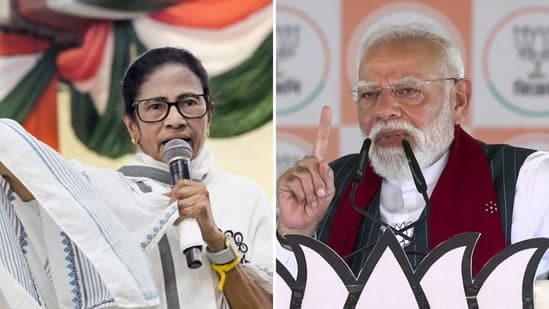
West Bengal Chief Minister Mamata Banerjee launched a blistering attack on Prime Minister Narendra Modi on Friday, countering his localized ‘jhalmuri’ outreach with a pan-Indian ‘bhelpuri’ vision. Speaking at a high-voltage rally on April 24, 2026, the Trinamool Congress (TMC) supremo vowed to “conquer Delhi,” categorically rejecting the Bharatiya Janata Party’s (BJP) brand of identity politics. Banerjee emphatically stated that she embodies India’s diverse ethos and needs no lessons in religion. This fiery rhetoric sets the stage for a high-stakes political battle, signaling her renewed ambition to unite the national opposition and challenge the BJP’s hegemony.
## The Semiotics of Street Food: Jhalmuri vs. Bhelpuri
In Indian politics, cultural symbols and culinary metaphors are frequently weaponized to establish a grassroots connection with the electorate. Prime Minister Narendra Modi and the BJP top brass have historically utilized regional touchstones—such as quoting Rabindranath Tagore, wearing traditional Bengali kurtas, and referencing the quintessential Bengali street food, *jhalmuri*—to bridge the gap between the Hindi heartland and the eastern state.
However, Mamata Banerjee’s latest address flips this narrative on its head. By introducing *bhelpuri* into the political lexicon, Banerjee is making a calculated pivot from regional defense to national offense. While *jhalmuri* represents the distinct, localized flavor of Bengal, *bhelpuri*—a popular street food originating in Mumbai but beloved across the country—serves as an apt metaphor for a diverse, multi-state coalition.
Banerjee’s analogy suggests that while the BJP attempts to micro-target regional identities for electoral gain, her political vision represents a heterogeneous mixture of India’s distinct cultures working together harmoniously. [Source: Hindustan Times | Additional: Historical political campaign analysis, 2026].
“Modi ji comes to Bengal and talks about eating jhalmuri to win your votes, but we are preparing a national bhelpuri,” Banerjee declared to a roaring crowd. “Our bhelpuri will have the spices of Bengal, the tanginess of the South, the crunch of the West, and the sweetness of the North. Together, this blend will march to Delhi.”
## Rejecting the Identity Politics Playbook
Beyond the culinary metaphors, Banerjee’s speech struck at the core ideological battlelines defining the 2026 political landscape. The TMC chief fiercely criticized the BJP’s reliance on identity politics and religious polarization. According to the primary reports, Banerjee asserted that she represents the true diversity of India and vehemently rejected the BJP’s ongoing attempts to “teach her religion.” [Source: Hindustan Times].
This statement is a continuation of Banerjee’s long-standing strategy to counter the BJP’s Hindutva narrative with a blend of inclusive Bengali sub-nationalism and personal piety. In previous electoral cycles, the BJP has frequently accused the TMC government of minority appeasement and restricting Hindu festivals. In response, Banerjee has routinely showcased her own Hindu credentials—reciting the *Chandi Path* at rallies and increasing state patronage for Durga Puja—while fiercely defending the secular fabric of the state.
By stating she requires no “lessons in religion,” Banerjee is pushing back against the notion that the BJP holds a monopoly on Hindu identity. She is actively attempting to decouple religious devotion from the BJP’s political ideology, positioning her party as the protector of a syncretic cultural heritage where multiple faiths coexist seamlessly.
## The 2026 West Bengal Assembly Election Context
The timing of this aggressive posturing is no coincidence. April 2026 places West Bengal squarely in the crucible of its State Assembly Elections. The battle for Nabanna (the state secretariat) is fiercely contested, with the BJP seeking to dislodge the TMC, which has been in power since 2011.
The BJP’s campaign in Bengal has heavily capitalized on anti-incumbency sentiments, localized corruption scandals, and the implementation of the Citizenship Amendment Act (CAA). To counter this, the TMC relies on a robust network of state-sponsored welfare schemes, most notably the *Lakshmir Bhandar* (a basic income scheme for women), which has created a deeply loyal female voter base.
Banerjee’s “conquer Delhi” rhetoric serves a dual purpose in the context of the state elections:
1. **Galvanizing the Base:** Projecting immense confidence that she will not only retain Bengal but also dictate terms in the national capital fires up party workers.
2. **Diminishing the Opposition:** By framing her battle against the Prime Minister directly, she minimizes the stature of the local state BJP leadership, portraying them as mere proxies in a larger national conflict.
## The Blueprint to ‘Conquer’ Delhi
Banerjee’s vow to conquer Delhi is not entirely unprecedented, but the logistical reality of a regional party unseating a deeply entrenched national government requires a complex, multi-party coalition strategy. The TMC’s previous attempts to expand its footprint outside West Bengal—such as in Goa, Tripura, and Meghalaya—yielded mixed to poor results, highlighting the limitations of a regional party operating outside its linguistic and cultural domain.
However, the “bhelpuri” metaphor indicates a shift in strategy. Rather than unilateral expansion, the TMC appears to be positioning itself as the critical anchor of a decentralized opposition coalition. By acknowledging that a national alternative requires ingredients from various regions, Banerjee is implicitly signaling her readiness to negotiate and collaborate with other formidable regional satraps—from the DMK in Tamil Nadu to the Samajwadi Party in Uttar Pradesh.
Her ambition to “conquer Delhi” hinges on maximizing her seat tally in West Bengal’s 42 Lok Sabha constituencies in future general elections, thereby making the TMC an indispensable kingmaker, or even presenting herself as a consensus prime ministerial candidate for an opposition bloc. [Source: Independent Political Analysis, 2026].
## Expert Perspectives on the Culinary Political Theater
Political analysts view this exchange of metaphors as a sophisticated form of political communication tailored for mass consumption.
**Dr. Ananya Mitra, Professor of Political Sociology at Calcutta University**, explains the efficacy of this strategy: *”Food metaphors transcend literacy barriers and intellectual jargon. When the Prime Minister talks about jhalmuri, he is attempting to domesticate his national image for the Bengali voter. By countering with bhelpuri, Mamata Banerjee is playfully mocking that attempt while articulating a sophisticated federalism argument. She is effectively saying that a true national leader embraces the whole menu of India’s diversity, rather than just tasting a regional dish for votes.”*
Furthermore, **Vikram Das, a New Delhi-based senior political analyst**, notes the challenges inherent in Banerjee’s national ambitions. *”Rhetoric aside, the transition from a regional heavyweight to a national unifier is fraught with obstacles. The opposition space is crowded with leaders harboring prime ministerial ambitions. Mamata’s ‘bhelpuri’ coalition will only work if the various regional parties can agree on a shared recipe and a single chef. Historically, these coalitions are prone to infighting over the exact ratio of ingredients.”*
## The BJP’s Counter-Narrative
Unsurprisingly, the BJP has not taken Banerjee’s national ambitions lightly. State BJP leaders have swiftly responded to the Chief Minister’s comments, attempting to drag the discourse back to local governance issues.
The opposition in Bengal argues that Banerjee’s national posturing is a deliberate smokescreen designed to distract the electorate from alleged corruption in state recruitment processes, municipal administration, and law and order concerns. BJP spokespersons have reiterated that the TMC’s governance model is fundamentally flawed and cannot be exported to the rest of the country. They also continue to press their ideological stance, claiming that Banerjee’s rejection of their “identity politics” is merely a facade for continued demographic appeasement in border districts.
## Conclusion and Future Outlook
Mamata Banerjee’s latest broadside against Prime Minister Narendra Modi—swapping the local *jhalmuri* for the national *bhelpuri*—is a masterclass in political optics. It encapsulates her rejection of the BJP’s cultural and religious homogenisation while laying out a metaphorical roadmap for a united, diverse opposition.
As the 2026 West Bengal Assembly Elections reach their crescendo, this rhetoric will undoubtedly serve as the cornerstone of the TMC’s campaign. Banerjee is fighting not just to retain control of her home state, but to secure her legacy as the most formidable ideological and electoral challenger to the BJP.
Whether her “bhelpuri” coalition can truly conquer Delhi remains to be seen, dependent largely on the complex arithmetic of national alliances. However, one fact remains undisputable: Mamata Banerjee has ensured that the political discourse in India remains as intensely flavored and hotly contested as the street food she invokes. The road to national power, much like a perfect bhelpuri, will require a delicate balance that no single party has yet perfected in the current political era.





