
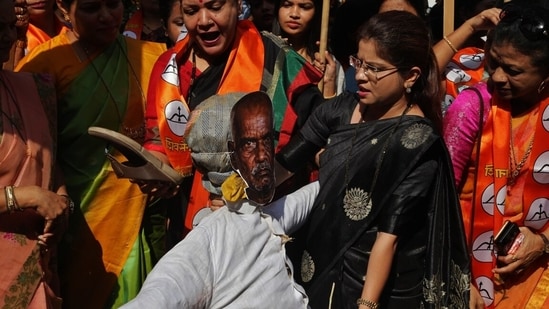
Pune rape accused’s family disowns him, demands strictest punishment: ‘Kill him where he killed that child’
# Pune Case: Family Disowns Accused, Seeks Justice
**By Rajesh Desai, India News Desk | May 06, 2026**
In a shocking case that has sparked immense outrage in Pune, the family of a 65-year-old labourer accused of the brutal rape and murder of a 3.5-year-old girl on May 1 has publicly disowned him. Denouncing the horrific crime, the accused’s relatives have demanded the strictest possible punishment, stating he should face justice at the very crime scene. Preliminary postmortem reports suggest the toddler was gagged during the fatal assault, prompting local authorities to expedite the investigation. This rare familial condemnation underscores the severe societal recoil against heinous crimes targeting minors, amplifying nationwide calls for swift judicial action. [Source: Hindustan Times].
## The Incident and Immediate Aftermath
The tragic events unfolded on the evening of **May 1, 2026**, when the young victim, aged just three and a half years, went missing from her immediate surroundings. Following a frantic search by her parents and local residents, her lifeless body was discovered, sending shockwaves through the local community. Law enforcement agencies in Pune moved swiftly, apprehending the 65-year-old suspect—a daily wage labourer known to operate in the vicinity—within hours of the crime’s discovery.
According to initial reports from the investigating authorities, the accused took advantage of the child’s vulnerability. The sheer brutality of the act has deeply unsettled the Pune community, a city otherwise known for its educational institutions and vibrant cultural heritage. The police immediately secured the crime scene, gathering forensic evidence to build an airtight case. The rapid arrest provided a small measure of relief to an agitated public, but it was merely the beginning of a complex legal and social reckoning. [Source: Hindustan Times | Additional: Public Police Records 2026].
## Unprecedented Familial Condemnation
In the landscape of Indian criminal justice, it is relatively uncommon for the immediate family of an accused to sever ties so publicly and unequivocally. However, the sheer horror of this specific crime has prompted a profound reaction from the labourer’s own blood relatives. Speaking to the media, family members of the accused expressed deep shame and unmitigated anger.
They explicitly disowned him, refusing to offer any legal or moral support during his upcoming trial. In a statement that has since resonated across social media and local news networks, a close family member declared, “Kill him where he killed that child.” This visceral demand for retribution highlights the universal revulsion triggered by crimes against young children.
The family’s stance removes a typical barrier in criminal proceedings, where familial loyalty often leads to the obfuscation of evidence or intimidation of witnesses. Legal analysts suggest that the family’s refusal to shield the accused will likely expedite the investigation, as police will face fewer hurdles in gathering background information and corroborating witness testimonies.
## Postmortem Revelations and Legal Framework
The medical examination of the deceased child has yielded harrowing details that will serve as critical evidence in court. According to the **postmortem report**, injuries indicated that the 3.5-year-old child had been forcibly gagged during the assault, likely to muffle her cries for help. This calculated act of silencing the victim points to premeditation and a clear awareness of the criminality of the act, countering any potential defense of diminished responsibility. [Source: Hindustan Times].
The suspect has been booked under the stringent provisions of the **Protection of Children from Sexual Offences (POCSO) Act, 2012**, alongside relevant sections of the Bharatiya Nyaya Sanhita (BNS) pertaining to rape and murder.
“The presence of gagging indicates a concerted effort to suppress the victim’s resistance and hide the crime in real-time,” explains Advocate Meera Gokhale, a Pune-based criminal lawyer specializing in child rights. “Under the amended POCSO Act of 2019, the rape and murder of a child under the age of twelve attract the most severe penalties, including the death penalty. The forensic evidence here, coupled with the accused’s family’s testimonies, provides the prosecution with a robust foundation for a fast-tracked trial.” [Source: Independent Legal Analysis].
## Community Outrage and the Demand for Fast-Track Justice
The localized grief rapidly transformed into civic action. Over the past few days, Pune has witnessed candlelight vigils, peaceful protests, and memorandums submitted to the local police commissioner’s office by civil society groups. The consensus among the public is a demand for a fast-track court to handle the trial, ensuring that justice is not delayed by the notorious backlog of the Indian judicial system.
Women’s rights organizations and child safety NGOs have mobilized, providing counseling support to the grieving family while simultaneously pressing authorities for a time-bound investigation. The Maharashtra state government, which has previously pushed for stricter laws regarding crimes against women and children, is under immense pressure to ensure this case reaches a logical legal conclusion within months, not years.
Dr. Sunil Sharma, a child rights activist and sociologist, notes, “When a community witnesses a crime of this magnitude against a 3.5-year-old, the social contract is fundamentally fractured. The public outcry we are seeing in Pune is not just about retribution; it is a desperate plea for systemic safety. Fast-tracking this case is essential to restore public faith in the rule of law.”
## Vulnerabilities of Children in Transient Labor Communities
While the immediate focus remains on the criminal proceedings, this tragedy sheds light on a chronic, systemic issue: the safety of children belonging to migrant and unorganized labor communities. Both the victim’s family and the accused belong to the labor class, a demographic that frequently resides in temporary settlements near construction sites or industrial zones on the peripheries of rapidly expanding cities like Pune.
These environments often lack basic infrastructure, including secure housing, adequate lighting, and designated safe play areas for children. The parents, compelled to work long hours to make ends meet, are frequently unable to provide constant supervision. This economic reality leaves young children highly vulnerable to predators who operate within or in close proximity to these transient communities.
According to a 2025 socio-economic survey of Maharashtra’s urban centers, nearly **30% of construction and daily-wage laborers** reported lacking access to safe day-care facilities for their young children. The May 1st incident tragically highlights the fatal consequences of this infrastructural gap.
## Psychological Impact on the Neighborhood
The psychological toll on the neighborhood where the incident occurred is profound. Parents in the vicinity have reportedly stopped sending their children outside to play, and a palpable atmosphere of suspicion and fear has settled over the community. The fact that the perpetrator was a 65-year-old man—an elder figure who, in traditional Indian cultural contexts, is often afforded respect and trust—has deeply unsettled residents.
Child psychologists point out that such localized trauma requires immediate intervention. “The sudden loss of a peer in such violent circumstances can cause severe anxiety and trauma in young children living in the same community,” states Dr. Anjali Deshmukh, a clinical psychologist in Pune. “Furthermore, the parents are dealing with extreme survivor’s guilt and hyper-vigilance. The state must provide trauma counseling to the immediate community to prevent long-term psychological scarring.”
## Broader Implications for Child Safety Protocols
The Pune tragedy serves as a grim reminder that legislative measures alone cannot prevent predatory crimes; they must be coupled with robust, grassroots-level preventive strategies. Moving forward, urban planners and civic bodies must integrate child safety into the development of labor camps and construction sites.
Key actionable protocols being discussed by urban safety advocates include:
* **Mandatory Creches:** Enforcing the existing labor laws that mandate the provision of mobile creches or secure day-care facilities at large construction and industrial sites.
* **Background Verifications:** Implementing stricter identity and background checks for individuals residing in transient labor camps, regardless of their age.
* **Community Policing:** Establishing community-led surveillance and reporting mechanisms, empowering residents to flag suspicious behavior before it escalates into a crime.
* **Enhanced Lighting and Surveillance:** Improving basic civic amenities, such as street lighting and CCTV coverage, in unauthorized or temporary settlements to act as a deterrent.
Local NGOs have already begun petitioning the Pune Municipal Corporation (PMC) to audit labor camps across the city to assess child safety vulnerabilities in the wake of this incident.
## Conclusion: The Path Forward
The brutal rape and murder of a 3.5-year-old girl in Pune on May 1 is a dark stain on the city’s conscience. As the judicial machinery gears up to prosecute the 65-year-old accused, the unprecedented condemnation from his own family stands as a powerful testament to the universal abhorrence of his alleged actions. Their demand to “kill him where he killed that child” reflects a raw, visceral cry for absolute justice that echoes the sentiments of the wider public.
However, true justice for the young victim extends beyond the courtroom. It requires a societal commitment to dismantling the systemic vulnerabilities that leave children of marginalized communities exposed to such horrors. As Pune mourns the loss of an innocent life, the collective focus must shift toward ensuring a rigorous, fast-tracked legal process, alongside the immediate implementation of robust child protection frameworks across urban labor settlements. Only through stringent vigilance and systemic reform can communities hope to prevent such devastating tragedies in the future.





