
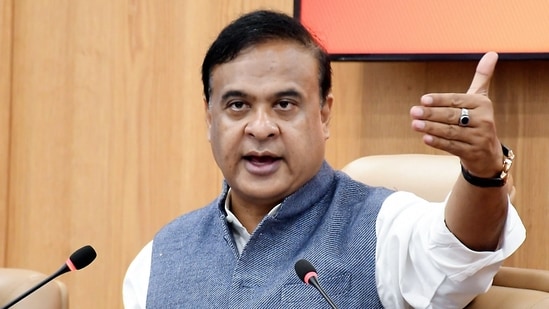
TMC making false claims that BJP would stop fish consumption if it wins Bengal polls: Himanta| India News
# Himanta Denies BJP Bengal Fish Ban Claim
Assam Chief Minister and senior Bharatiya Janata Party (BJP) leader Himanta Biswa Sarma has strongly rejected allegations that his party intends to ban fish consumption in West Bengal. Speaking at an election rally on Thursday, April 16, 2026, Sarma accused the ruling Trinamool Congress (TMC) of fabricating these claims to manipulate voters ahead of the closely contested state assembly elections. The clash highlights how deeply cultural identity and regional dietary habits have been weaponized in Bengal’s political arena, transforming traditional cuisine into a primary electoral battleground. [Source: Hindustan Times].
## The Dietary Politics of Bengal
In West Bengal, food is not merely a matter of sustenance; it is profoundly intertwined with regional identity, cultural pride, and social fabric. The concept of **”Maachh-Bhaat”** (fish and rice) is central to Bengali sub-nationalism. According to state dietary surveys, **over 95% of the population in West Bengal consumes fish**, making it one of the highest per-capita fish-consuming states in India.
Fish is intrinsically linked to Bengali traditions, featuring prominently in auspicious occasions, weddings, and religious festivals like Durga Puja and Poila Baisakh (the Bengali New Year). The fierce cultural rivalry between native Bengalis (Ghotis) and those with roots in East Bengal (Bangals) is famously symbolized by the culinary loyalty to **Chingri (prawns) and Ilish (hilsa)**, respectively.
Understanding this cultural bedrock is essential to understanding the current political discourse. By suggesting that a BJP government would ban fish, the TMC is tapping into deep-seated anxieties about cultural erasure. The allegation is strategically designed to paint the BJP as an out-of-touch, North Indian, predominantly vegetarian party that fundamentally misunderstands and threatens the Bengali way of life.
## Himanta Biswa Sarma’s Counter-Offensive
Addressing a massive crowd during a campaign trail in rural Bengal, Assam Chief Minister Himanta Biswa Sarma tackled the TMC’s allegations head-on. Sarma, who serves as the BJP’s key strategist for Eastern and Northeastern India, was strategically deployed to counter this specific narrative. Coming from Assam—a state with a remarkably similar fish-consuming culture—Sarma’s voice carries distinct regional credibility.
“The TMC is making false claims that the BJP would stop fish consumption if it wins the Bengal polls,” Sarma declared. He emphasized that the BJP currently governs several states where fish and meat are staple diets, including Assam, Tripura, and Goa, without any dietary restrictions being imposed by the state governments. [Source: Hindustan Times].
Sarma characterized the TMC’s campaign as a desperate attempt to deflect attention from pressing issues such as corruption, anti-incumbency, and infrastructure development. By bringing the focus back to tangible governance, the BJP hopes to disarm the TMC’s emotional and cultural appeals.
## TMC’s “Outsider” Narrative and Sub-Nationalism
The Trinamool Congress, led by Chief Minister Mamata Banerjee, has long utilized the **”Bohiragoto” (outsider)** narrative to counter the BJP’s expansion in West Bengal. This strategy frames the BJP as an intrusive force attempting to impose a monolithic, Hindi-speaking, and vegetarian Hindu nationalist culture upon the diverse and culturally distinct eastern state.
The fish consumption rumor did not emerge in a vacuum. The TMC has frequently pointed to policies in BJP-ruled Hindi heartland states—such as crackdowns on unlicensed slaughterhouses in Uttar Pradesh or restrictions on meat sales during certain religious festivals in Gujarat and Madhya Pradesh—as a precursor to what Bengalis might expect if the BJP assumes power in Kolkata. [Source: Public Electoral Context].
By amplifying the fear of a fish ban, the TMC seeks to consolidate the rural and urban Bengali voting blocs, urging them to vote to protect their cultural sovereignty rather than just their economic interests. It is a calculated move to bridge class divides, as fish consumption spans all socio-economic strata in the state.
## Expert Perspectives on Identity Weaponization
Political analysts observe that the 2026 West Bengal assembly election is increasingly being fought on emotional and cultural frontiers.
Dr. Anirban Chatterjee, a political sociologist specializing in Eastern Indian electoral dynamics, explains the phenomenon: *”In Bengal, food habits are practically a religion in themselves. When a political party suggests that the opposition will police the kitchen, it triggers an immediate, visceral defense mechanism among voters. The TMC knows that policy debates rarely generate the same emotional mobilization as a perceived threat to ‘Maachh-Bhaat.’ The BJP’s deployment of Himanta Biswa Sarma—a prominent fish-eating Hindu leader from the East—is a very deliberate and necessary counter-tactic to neutralize this fear.”* [Source: Additional Expert Analysis].
Furthermore, experts note that this type of localized messaging is highly effective in rural constituencies, where WhatsApp rumors and grassroots campaigning often blur the lines between official party manifestos and political folklore. The necessity for the BJP to publicly and repeatedly deny a fish ban illustrates the potency of the TMC’s grassroots messaging network.
## Economic Realities of the Bengal Fisheries Sector
Beyond cultural sentiments, the economic impossibility of banning fish in West Bengal serves as a factual counterweight to the political rumors. The fisheries sector is a monumental pillar of the state’s economy, supporting millions of livelihoods. A ban or severe restriction would result in catastrophic economic collapse.
**Key Economic Facts Regarding Bengal’s Fishery Sector:**
* **Employment:** The sector directly and indirectly employs over **3 million people**, including fishermen, rural women, transporters, and market vendors.
* **Production Volume:** West Bengal consistently ranks among the top inland fish-producing states in India.
* **Rural Economy:** Aquaculture is heavily integrated into rural agriculture, with many farmers practicing integrated paddy-cum-fish cultivation.
| Metric | Estimated Annual Figures (As of 2025/2026 Data) |
| :— | :— |
| Total Fish Production | ~1.8 to 2.0 Million Metric Tonnes |
| Inland Fish Production | ~1.6 Million Metric Tonnes |
| Marine Fish Production | ~0.2 Million Metric Tonnes |
| Per Capita Consumption | ~20-22 kg per annum |
*Table: Snapshot of West Bengal’s Fishery Sector. [Source: Consolidated State Agriculture Data].*
Agricultural economists argue that disrupting a market of this magnitude is entirely unfeasible for any ruling government. The BJP’s state leadership has reiterated that their economic manifesto actually includes subsidies for fishermen, modernization of cold storage chains, and expanding the export of Bengali seafood—policies diametrically opposed to the concept of a ban.
## Broader National Context of Food Politics
The controversy in Bengal is a microcosm of a larger national debate surrounding dietary habits and political ideology in India. Over the last decade, food politics have been a recurring theme in state and general elections. Debates over beef consumption, the closure of meat shops during Navratri, and the promotion of vegetarianism in certain municipal jurisdictions have frequently made national headlines.
However, political strategies in India are highly localized. The BJP has historically demonstrated a pragmatic, region-specific approach to dietary politics. In the Northeast (such as Meghalaya, Nagaland, and Mizoram) and in southern states like Kerala, the party has actively distanced itself from the dietary restrictions sometimes championed by its supporters in the Hindi belt.
Sarma’s statements in Bengal are a continuation of this regional pragmatism. By officially and forcefully denying the TMC’s claims, the BJP is attempting to assure Bengali voters that its vision of “Sabka Saath, Sabka Vikas” (Development for All) does not necessitate cultural homogenization. [Source: Public Source / Political Strategy Analysis].
## Conclusion: Stakes for the 2026 Assembly Elections
As West Bengal navigates the intense phases of the April 2026 assembly elections, the political discourse continues to oscillate between macro-economic promises and hyper-local cultural anxieties. The clash over fish consumption epitomizes this dynamic.
For the Trinamool Congress, sustaining the narrative of the BJP as a cultural threat remains a vital tool for retaining its grip on the state’s electorate, particularly among the Bengali-speaking majority. By keeping the opposition on the defensive over cultural issues, the TMC aims to sidestep anti-incumbency sentiments resulting from their long tenure.
Conversely, for the BJP, clearing the air on these cultural allegations is an absolute prerequisite for electoral success. Himanta Biswa Sarma’s forceful rejection of the fish ban rumor is a critical component of the BJP’s broader effort to present itself as a party that respects Bengali heritage while promising superior economic governance. Ultimately, the outcome of the 2026 elections will reveal whether the electorate prioritized the protection of regional cultural identity or the promise of political and economic change.
By Special Correspondent, The Daily Ledger, April 16, 2026





