
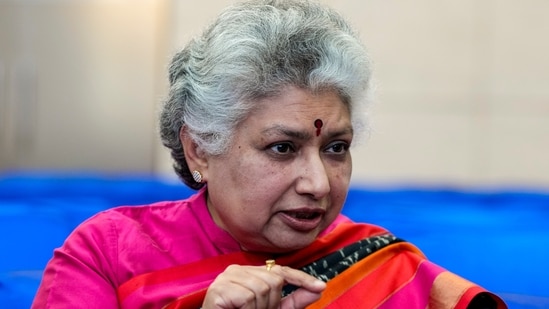
‘Why did she go and live with him’: SC questions 18-year-old widow's decision on live-in relationship
# SC Questions 18-Year-Old Widow’s Choice
By Staff Reporter, Legal News Desk, April 27, 2026
The Supreme Court of India on Monday heard a highly debated case involving an 18-year-old widow who entered into a live-in relationship allegedly based on a deceitful promise of marriage. During the proceedings, the apex court bench scrutinized the circumstances surrounding the cohabitation, pointedly asking, “Why did she go and live with him?” The victim’s counsel argued that the accused exploited her severe vulnerability, stating, “He met her when she was merely an 18-year-old young widow. He promised to marry her.” This judicial inquiry has once again ignited a complex national debate regarding women’s agency, the legal boundaries of consent, and the protections afforded to marginalized women under India’s new criminal justice framework.
[Source: Hindustan Times | Additional: Supreme Court Public Records]
## The Courtroom Exchange: Agency Versus Exploitation
The recent Supreme Court hearing brings to light the intricate dynamics of live-in relationships in India, particularly when they intersect with issues of grief, young age, and societal marginalization. The case revolves around a man who allegedly initiated a relationship with the complainant shortly after she was widowed at the age of 18.
According to the submissions made by the counsel representing the young woman, the accused recognized her precarious social and emotional state. By offering the security and societal legitimacy of marriage, he allegedly persuaded her to enter into a live-in arrangement. “He met her when she was merely an 18-year-old young widow. He promised to marry her,” the counsel emphasized, attempting to establish that her consent to cohabit was entirely predicated on a fraudulent commitment.
However, the Supreme Court bench probed the limits of adult agency. By asking, “Why did she go and live with him?” the Court was evaluating whether the relationship was genuinely a product of deceit or an initially consensual adult partnership that eventually deteriorated. In Indian jurisprudence, establishing that the promise of marriage was the *sole* reason for a woman consenting to sexual intercourse is critical for a conviction under deceitful cohabitation laws.
## Decrypting the Legal Framework: Section 69 of the BNS
The legal backdrop for this case is governed by the **Bharatiya Nyaya Sanhita (BNS)**, which replaced the colonial-era Indian Penal Code (IPC) in July 2024. Prior to the BNS, cases involving a false promise of marriage were often awkwardly prosecuted under Section 375 and 376 (rape) of the IPC, leading to wildly inconsistent judicial interpretations.
The BNS introduced a specific provision to handle such nuances: **Section 69**. This section criminalizes sexual intercourse by employing deceitful means, which explicitly includes the false promise of marriage, employment, or promotion, without the intention of fulfilling it.
* **Key Distinction:** Section 69 separates deceitful sexual relations from the traditional definition of rape. It recognizes the violation of bodily autonomy through fraud but prescribes a different penal framework.
* **The Burden of Proof:** To secure a conviction under Section 69, the prosecution must prove that the accused made the promise with the *initial intention* of deceiving the victim.
* **Breach vs. Fraud:** The courts consistently draw a firm line between a “breach of promise” (where a man intended to marry the woman but could not due to unforeseen circumstances or incompatibility) and a “false promise” (where the man never harbored any intention to marry her at all).
“The Supreme Court’s questioning in this instance is standard judicial rigor,” explains Dr. Aranya Desai, a senior appellate advocate specializing in criminal law. “The bench is attempting to ascertain if the woman’s decision to cohabit was an exercise of her free will as a consenting adult, or if her consent was entirely vitiated by a calculated lie from the accused. Under Section 69 of the BNS, proving the accused’s deceptive intent from day one is paramount.”
[Source: Hindustan Times | Additional: Bharatiya Nyaya Sanhita Legal Commentary]
## The Sociological Vulnerability of Young Widows
Beyond the strictly legal parameters, this case casts a long shadow on the sociological realities of young widows in India. Despite rapid urbanization and modernization, deep-rooted patriarchal norms continue to dictate the social standing of widows in many parts of the country. An 18-year-old widow often faces intense social stigma, economic disenfranchisement, and isolation from both her marital and natal families.
In such a hostile environment, a promise of marriage from a new partner is not merely a romantic overture; it is often perceived as a vital lifeline for social rehabilitation and financial security.
Sociologist Dr. Kavita Krishnaswamy notes, “When we analyze the Supreme Court’s query—’Why did she go and live with him?’—we must view it through the lens of intersectional vulnerability. An 18-year-old widow in India does not operate with the same social capital or agency as an independent 25-year-old professional. For a teenage widow, a promise of marriage represents sanctuary. Exploiting that specific desperation elevates the moral and legal culpability of the deceit.”
The counsel’s emphasis on her status as “merely an 18-year-old young widow” was a strategic move to highlight this exact power imbalance. The defense, conversely, will likely argue that at 18, she was legally an adult capable of making conscious choices regarding live-in cohabitation, independent of any prospective marriage.
## Precedents: Live-In Relationships and Fraudulent Promises
The Supreme Court of India has historically adopted a progressive stance on live-in relationships. In landmark cases such as *S. Khushboo vs. Kanniammal* (2010) and *Indra Sarma vs. V.K.V. Sarma* (2013), the apex court recognized live-in relationships as legally valid, firmly stating that two consenting adults living together is not an offense and falls under the right to life and liberty guaranteed by Article 21 of the Constitution.
However, the Court has simultaneously been cautious about relationships built on deception. While an adult woman has the full right to enter into a live-in relationship, the judiciary has repeatedly intervened when her consent was manipulated.
* **Pramod Suryabhan Pawar vs. State of Maharashtra (2019):** The Supreme Court clarified that the “consent” of a woman under Section 90 of the IPC (now relevant under BNS) is vitiated if it is based on a misconception of fact, such as a false promise of marriage.
* **Shambhu Kharwar vs. State of UP (2022):** The Court reiterated that a promise of marriage must be shown to be false from its very inception to constitute fraud.
In the current 2026 case, the bench’s questioning reflects an adherence to these precedents. The justices are attempting to sift through the emotional layers to find concrete evidence of initial fraudulent intent.
## Navigating the Grey Areas of Cohabitation
The case forces a critical examination of the modern dating landscape juxtaposed against traditional legal safeguards. Critics of the “false promise of marriage” jurisprudence often argue that it can be misused to criminalize relationships that have simply run their natural course. They argue that adults in live-in relationships share domestic responsibilities and intimacy, making it difficult to definitively claim that the relationship existed *only* because of a wedding promise.
Conversely, women’s rights advocates argue that removing these legal protections would leave vulnerable women defenseless against predatory behavior. In the context of a teenage widow, the stakes are remarkably high. The societal backlash a young widow faces upon entering a live-in relationship is severe; thus, she is highly unlikely to take such a controversial step without the firm assurance of marriage.
The counsel for the young widow is tasked with demonstrating that the accused purposefully utilized the promise of marriage as a psychological tool to overcome her inhibitions and societal fears, knowing fully well he had no intention of marrying her.
## Key Takeaways and Future Outlook
As the Supreme Court continues to deliberate on this sensitive issue, the outcome will likely serve as a crucial benchmark for how lower courts interpret Section 69 of the Bharatiya Nyaya Sanhita.
**Key Implications for the Future:**
1. **Refining Consent:** The ruling will help define the boundaries of consent in live-in relationships, specifically regarding how a partner’s socio-economic vulnerability (such as being a young widow) affects their capacity to consent.
2. **Application of BNS Section 69:** This case will serve as a high-profile test of the new criminal code, determining how strictly the courts require proof of “initial deceitful intent.”
3. **Societal Discourse:** The proceedings will continue to fuel public discourse on the stigma surrounding widowhood and the moral responsibilities of partners in non-marital cohabitation.
The Supreme Court’s query—”Why did she go and live with him?”—while perceived by some as confrontational, is fundamentally a quest for legal clarity. It demands an examination of intent, vulnerability, and the intricate realities of human relationships. As India navigates its evolving social norms alongside a newly updated penal code, cases like this underscore the delicate balance the judiciary must maintain: protecting the autonomy of consenting adults while firmly punishing calculated exploitation.
[Source: Hindustan Times | Additional: Sociological and Legal Public Commentary, 2026]





