'Allahu Akbar': When a zipline operator's chant on viral clip caused alarm after Pahalgam attack| India News
# Zipline Video Sparks Alarm on Attack Anniversary
By Senior Correspondent, The National Brief, April 22, 2026
A brief viral video showing a zipline operator chanting “Allahu Akbar” while launching a tourist across a valley in Pahalgam has triggered widespread panic on social media. Emerging precisely on April 22, 2026—the first anniversary of the devastating Baisaran meadow terrorist attack that claimed 26 lives—the out-of-context clip sparked immediate security fears. Local authorities and the Jammu and Kashmir Police have swiftly clarified that the chant was a benign expression of encouragement for a nervous tourist. However, the rapid digital amplification of the video underscores the lingering psychological trauma and the delicate socio-cultural dynamics currently shaping Kashmir’s fragile tourism recovery.
## The Viral Incident and Immediate Fallout
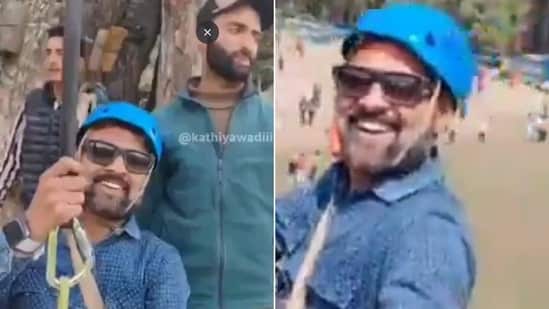
The controversy began late Monday evening when a 15-second video surfaced on the social media platform X (formerly Twitter). The footage depicted a local adventure sports operator at a popular Pahalgam zipline securing a domestic tourist into a harness. As the clearly hesitant tourist was pushed off the platform to glide across the valley, the operator loudly chanted “Allahu Akbar” (God is great).
Stripped of its context, the video was quickly shared by multiple prominent accounts with captions expressing alarm and questioning the safety of Hindu tourists in the region. Within hours, the clip amassed over four million views, generating thousands of anxious comments and sparking a trending hashtag demanding an immediate security investigation.
Local law enforcement agencies intervened swiftly to prevent the spread of panic. According to a statement released by the Anantnag district police, officers visited the zipline site, interviewed the operator, and reviewed the unedited footage. **Authorities confirmed that there was no malicious intent.** The phrase, deeply embedded in the daily vernacular of the region’s Muslim-majority population, was used simply as an exclamation of strength and encouragement to calm a fearful patron before a thrilling activity. [Source: Hindustan Times | Additional: Official J&K Police Press Releases].
## The Shadow of the Baisaran Meadow Tragedy
To understand the intense and immediate public reaction to the video, one must look at the specific date it gained traction. April 22 marks exactly one year since one of the darkest days in the region’s recent history. On April 22, 2025, heavily armed militants infiltrated the scenic Baisaran meadow—often dubbed the “Mini Switzerland” of India—and opened fire indiscriminately.
The tragic event resulted in the deaths of 26 individuals, the overwhelming majority of whom were domestic tourists enjoying the spring weather. The attack sent shockwaves across the nation, shattering a multi-year period of relative peace and record-breaking tourist footfall in the Kashmir Valley.
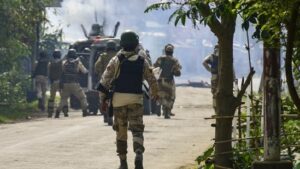
In the aftermath of the tragedy, security forces launched **”Operation Sindoor,”** a massive, months-long counter-terrorism sweep across the Anantnag district and surrounding forested areas. The operation aimed to dismantle the terror infrastructure that facilitated the attack and to restore a sense of security for both locals and visitors. While Operation Sindoor was largely deemed a tactical success, the psychological scars left on the collective consciousness of the nation remain raw. The convergence of the anniversary of this attack with the viral zipline video created a perfect storm for public anxiety. [Source: Hindustan Times].
## Cultural Misinterpretations in a Post-Trauma Landscape
The incident highlights a profound disconnect between everyday cultural expressions and the hyper-vigilance of a traumatized public. In Islamic culture, “Allahu Akbar” is an everyday phrase used in a myriad of mundane contexts: during prayers, when expressing awe at natural beauty, when undertaking a physically demanding task, or as a general exclamation of relief and encouragement.
However, because the phrase has been systematically co-opted by global extremist groups during acts of violence, its perception among non-Muslims—particularly in regions that have suffered from terrorism—is often inextricably linked to imminent danger.
“What we are witnessing is a classic case of conditioned trauma response amplified by cultural mistranslation,” explains Dr. Ananya Sharma, a behavioral sociologist specializing in post-conflict societal dynamics at Delhi University. “For the Kashmiri zipline operator, he was essentially saying the equivalent of ‘God give you strength’ or ‘Here we go!’ But to a tourist from another part of the country, who has been fed a steady media diet associating those specific Arabic words with violence—especially on the anniversary of a horrific local attack—the phrase triggers a primal fear response.”
## Tourism Recovery in Kashmir: A Fragile Resurgence
The viral misunderstanding comes at a critical juncture for Kashmir’s economy. The tourism sector, which contributes to nearly 7% of Jammu and Kashmir’s gross domestic product, took a severe hit following the 2025 Baisaran meadow attack. Hotel cancellations spiked by 60% in the immediate aftermath, and the lucrative summer season suffered heavy economic losses.
Spring 2026 was highly anticipated as the season of recovery. The local administration, alongside the Ministry of Tourism, has poured millions of rupees into promotional campaigns, infrastructure development, and enhanced security grids to reassure travelers. Early data from the Srinagar International Airport indicated a promising 40% year-on-year rebound in arrivals for April.
Local business owners express frustration over how easily digital misinformation can jeopardize their livelihoods. “We have spent the last twelve months rebuilding our reputation and assuring our guests that Pahalgam is safe,” says Farooq Ahmed, a member of the Pahalgam Hotel and Restaurant Owners’ Association. “One out-of-context video clip shared by people sitting thousands of kilometers away can undo months of hard work. Our hospitality is our pride, and it hurts to see it twisted into something sinister.” [Source: Additional industry insights].
## The Role of Social Media in Amplifying Panic
The swift escalation of the zipline video underscores the double-edged sword of social media in conflict-sensitive zones. Algorithms on platforms like X and Facebook are notoriously optimized for engagement, frequently pushing emotionally charged or controversial content to the top of users’ feeds.
In this instance, the video was initially shared by a small-scale travel vlogger but was quickly co-opted by larger aggregator accounts that added inflammatory captions. The nuance—that the tourist was smiling just moments before, and that the environment was relaxed—was intentionally cropped out of the most widely circulated versions of the video.
Digital media analysts point out that this is a recurring pattern. “In an era of hyper-connectivity, context is often the first casualty,” notes Rohan Gupta, a cyber-security and digital rights researcher. “When a population is already on edge due to the anniversary of a tragic event, confirmation bias takes over. People see what they fear to see, and malicious actors often exploit this vulnerability to farm engagement or sow societal discord.”
## Security Protocols and Administrative Sensitization
While the police have ruled out any threat regarding the zipline incident, the local administration is taking proactive steps to prevent similar misunderstandings in the future. The Jammu and Kashmir Tourism Department has announced a new initiative aimed at sensitizing local guides, pony walas, and adventure sports operators.
These workshops, conducted in collaboration with the local hospitality sector, aim to educate workers on cross-cultural communication and the psychological sensitivities of tourists. The goal is not to police the religious or cultural expressions of the locals, but to foster an environment of mutual understanding where communication bridges gaps rather than creating them.
Simultaneously, the security apparatus in Pahalgam remains on high alert. The deployment of the Central Reserve Police Force (CRPF) and the local armed police has been visibly increased around major tourist hotspots, including Baisaran, Aru Valley, and Betaab Valley. These measures are designed to provide a reassuring presence for visitors while maintaining the peaceful atmosphere necessary for holidaymakers.
## Conclusion: Balancing Vigilance with Empathy
The Pahalgam zipline controversy serves as a poignant microcosm of modern India’s broader challenges in balancing national security with cultural harmony. It highlights how the trauma of the April 2025 Baisaran meadow attack continues to echo in the minds of the public, manifesting as hyper-vigilance a year later.
Key takeaways from this incident emphasize the critical need for responsible social media consumption and the dangers of stripping cultural expressions of their local context. Moving forward, the sustained recovery of Kashmir’s tourism sector will rely not just on robust security grids like Operation Sindoor, but also on the resilience, empathy, and mutual understanding between the locals who host and the tourists who visit.
As Pahalgam remembers the 26 souls lost a year ago, the ultimate tribute to their memory will be the continued fostering of a safe, thriving, and unified community where fear is gradually replaced by trust.